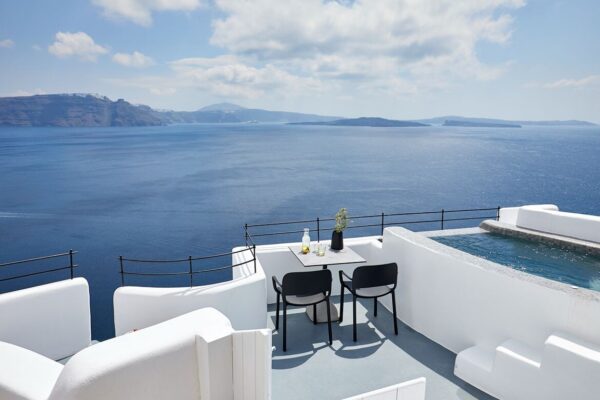
Designed by Plush Interior Design, the decades-old layout of this jumbo flat is thoughtfully refreshed to achieve a calm, welcoming home centred on connection.
6 January 2026

Home Type: Jumbo HDB flat
Floor Area: 1,800sqft
Text by Disa Tan
Located in Ang Mo Kio, this jumbo HDB flat built in 1979 was fully reconfigured to support daily family life across three generations. Led by Chris Zhang, Design Director of Plush Interior Design, the project began while the homeowners were working overseas in Hong Kong, with early discussions conducted remotely. “They needed both private areas and shared spaces, so layout planning was the most important part of the renovation,” Chris shares.
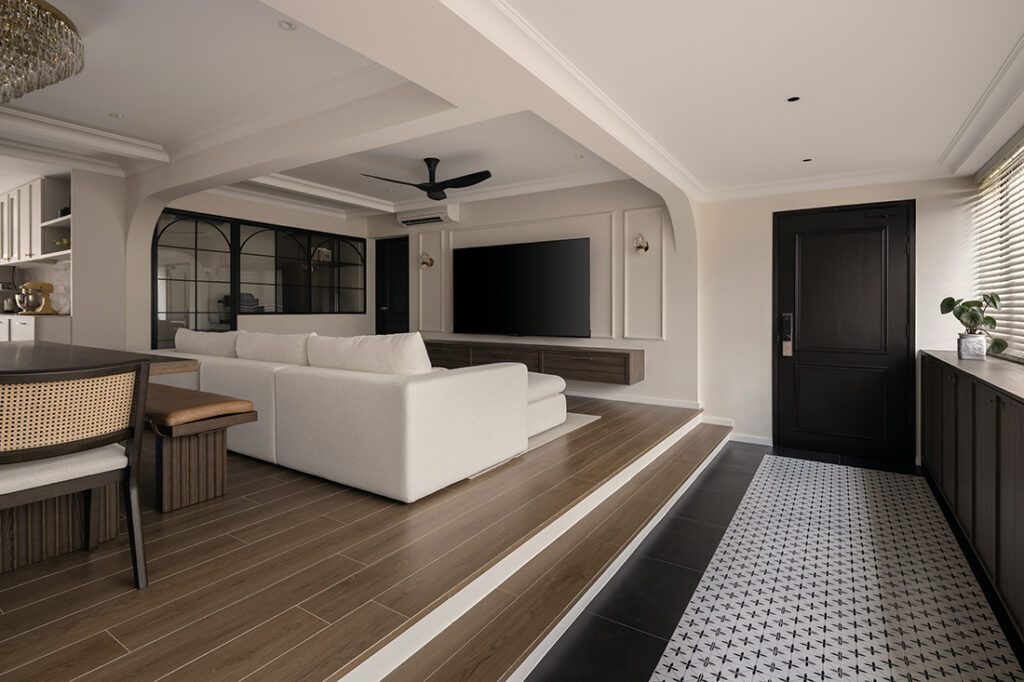
Bringing this sense of openness to life required patience and precision behind the scenes. The home’s layout involved new level changes to the flooring to define the shared spaces, which required approval from HDB before works could commence. “We also had to wait for approval to remove some of the reinforced concrete stiffeners in the house,” Chris explains. “While they were small structural elements, the approval process still took about one to two months.”
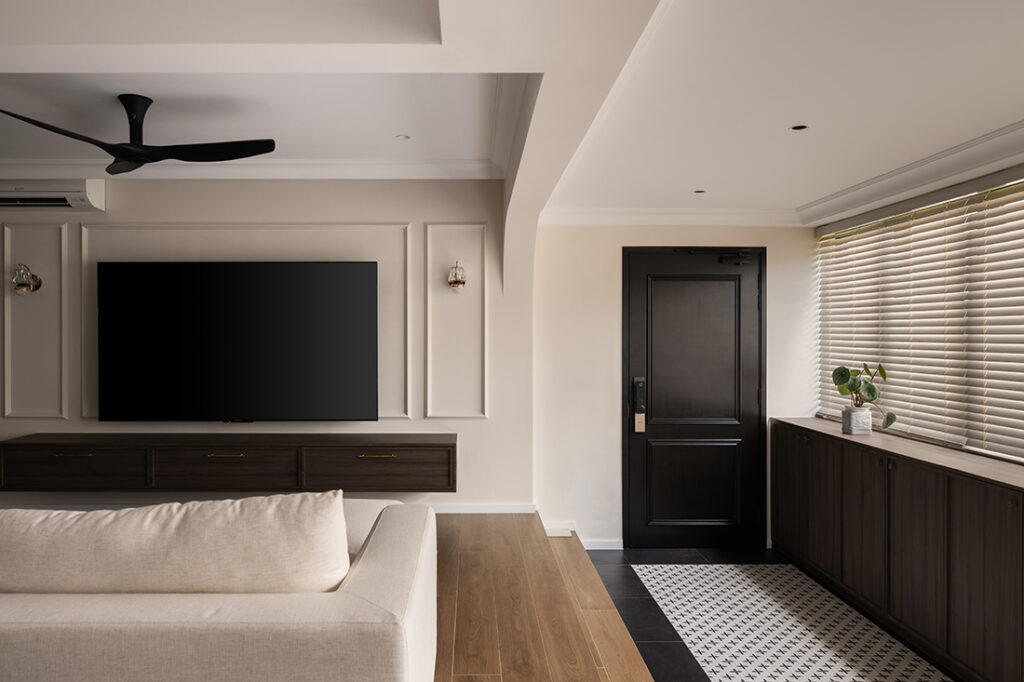
At the main entrance, monochromatic patterned tiles underfoot highlight this passage as a moment of arrival, before giving way to warm wood-patterned flooring as the space opens up into a more relaxed living zone. “We used different sets of tiles from Hafary to segregate the spaces,” Chris says. “It helps strengthen the colonial character and makes the transition feel more intentional.”
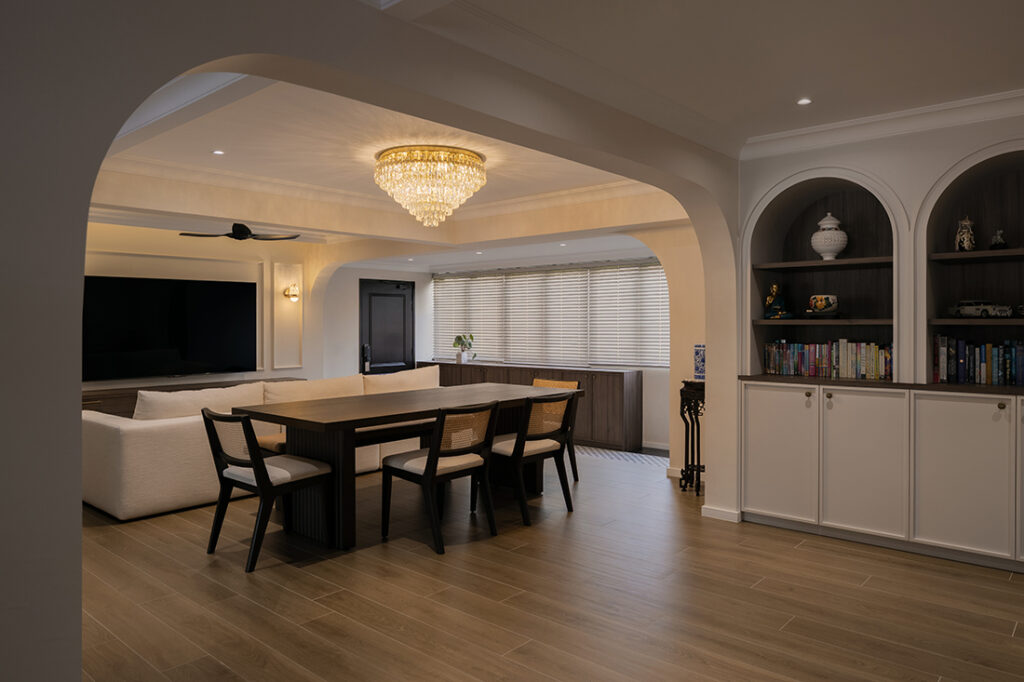
Colonial-inspired arches and mouldings act as subtle framing devices, softening the transitions created by the stepped layout. Rather than reading as decorative gestures, the arches guide movement and sightlines across the living and dining areas, visually linking spaces set at different levels.
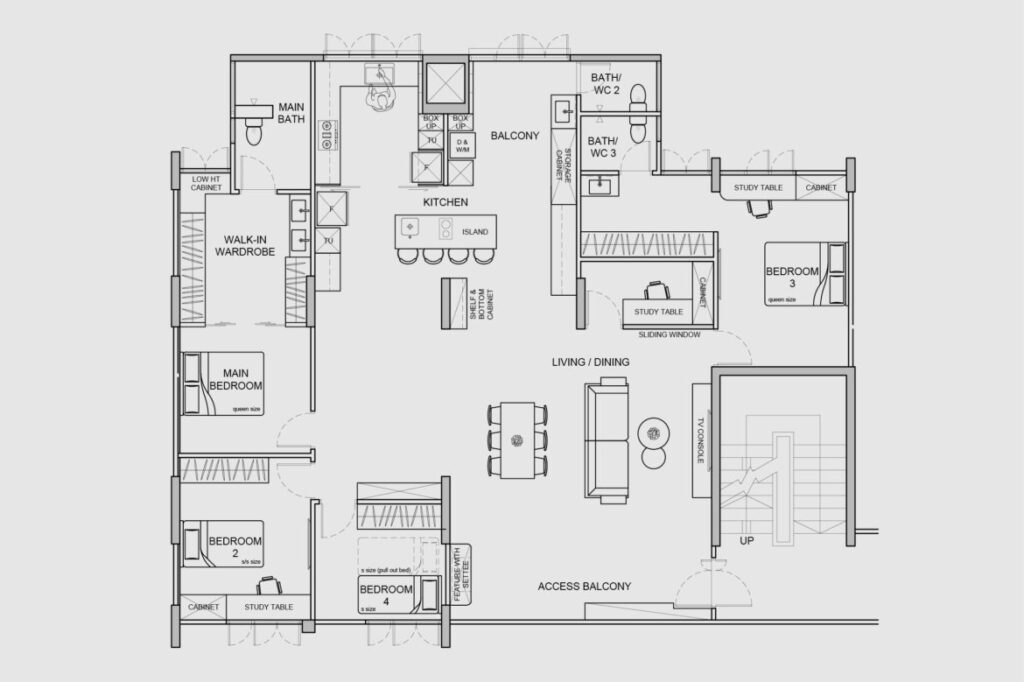
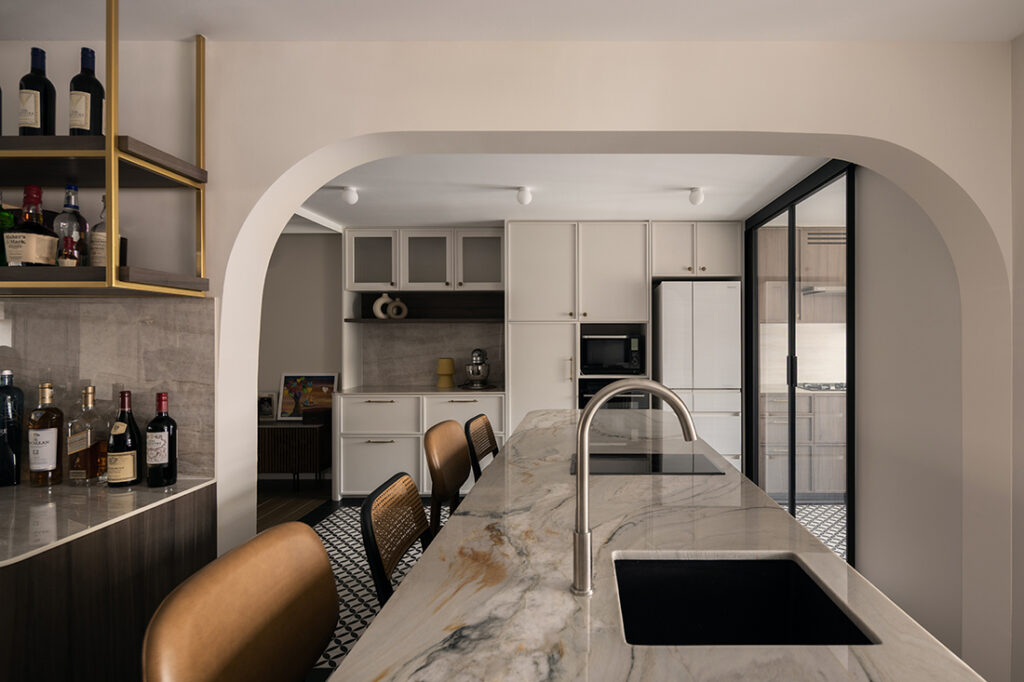
In the original floor plan, the flat had two enclosed kitchens, which limited both light and opportunities for interaction among the family. As part of the reconfiguration, one cookspace was opened up and transformed into a spacious dry kitchen, equipped with ample storage, a laundry area, and even a bar counter.
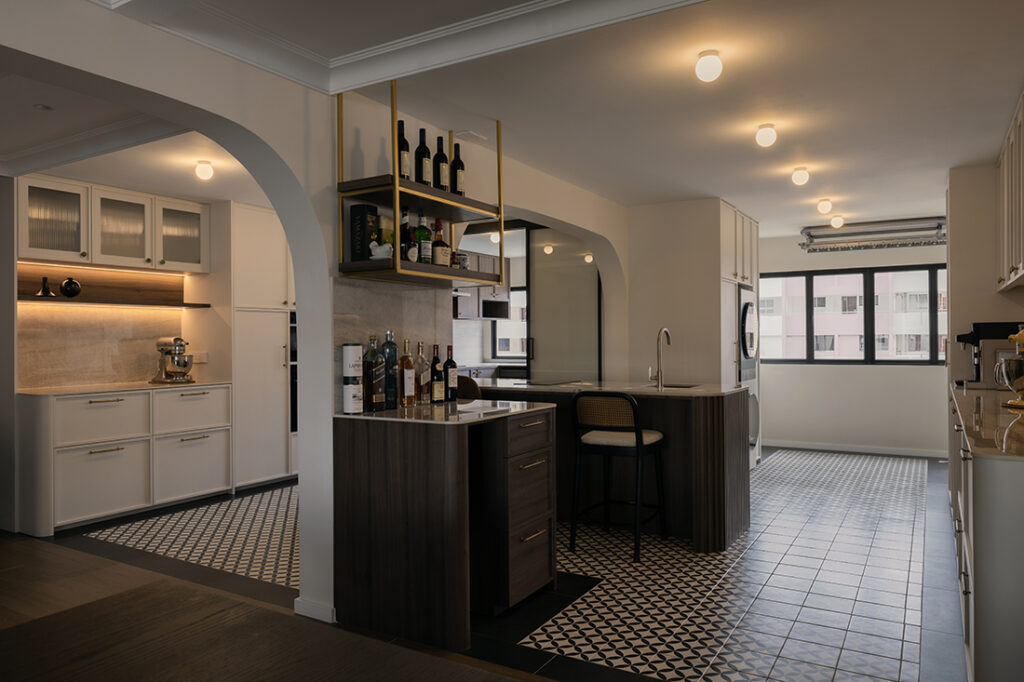
A central island anchors the space, creating a natural gathering point where family members can converge throughout the day. “The highlight of the kitchen is really the island,” Chris shares, pointing to its role as both a functional work surface and a social hub.
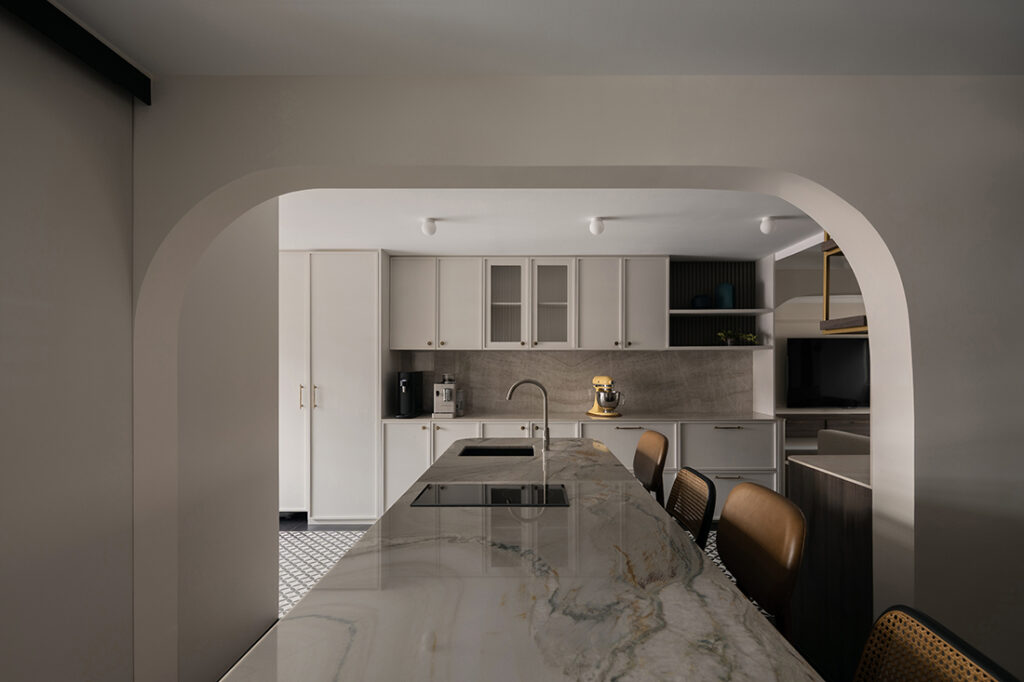
Its presence is elevated through material and detailing. With a quartzite stone countertop and fluted panels at the base lending warmth and quiet character, the island subtly reinforces the home’s colonial-inspired language.
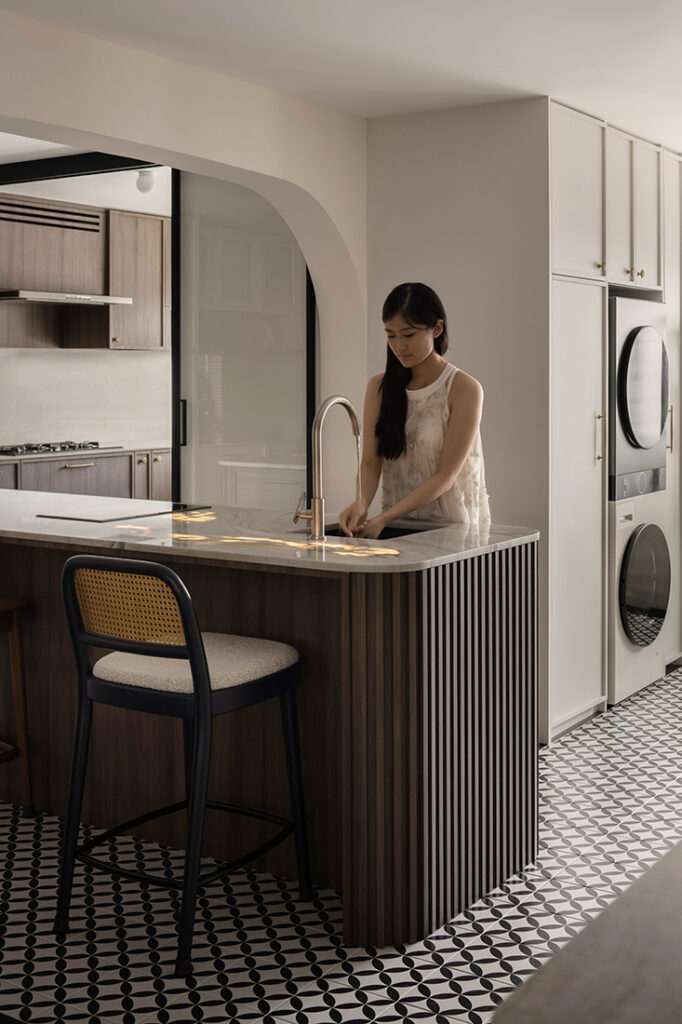
To support regular cooking for a large household, the second kitchen was retained as a separate wet zone. Concealed behind glass sliding doors, it allows heavier cooking to take place without disrupting the openness of the shared spaces. This clear division between dry and wet areas ensures the kitchen remains welcoming and connected, while still meeting the practical needs of multi-generational living.
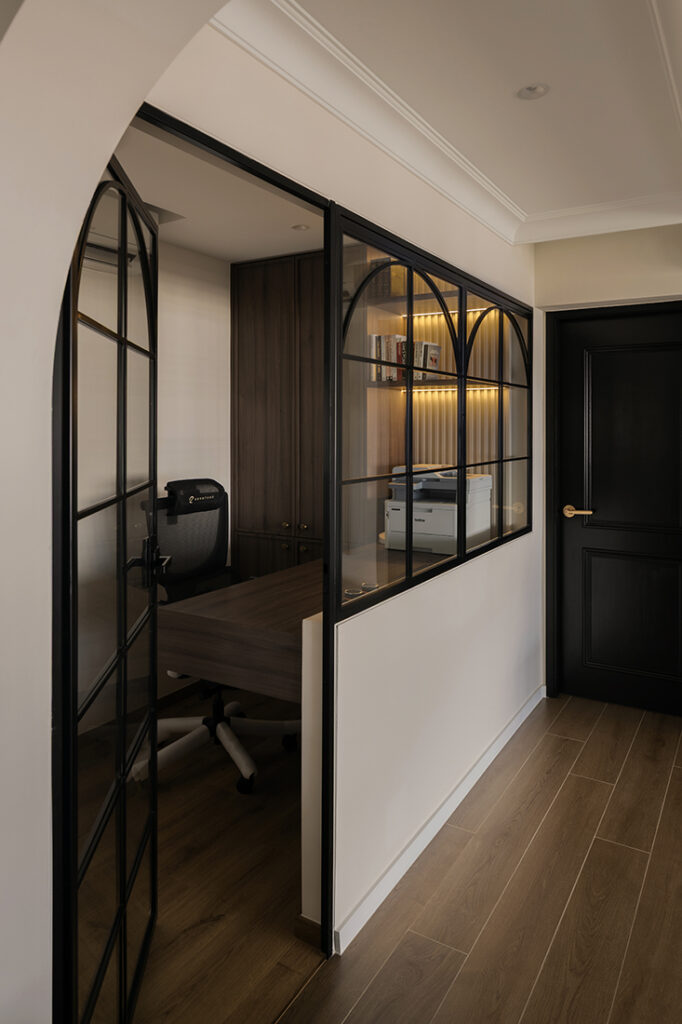
Beyond the shared spaces, a dedicated study area was carved out for the male homeowner to support quieter moments of focus within the home. Enclosed by black-framed glass panels with arched detailing, the workspace remains visually connected to its surroundings.
Positioned alongside the study is the young adult son’s bedroom, designed as a calm and functional retreat. A study desk is placed by the window to maximise daylight, supporting longer hours of work or rest.
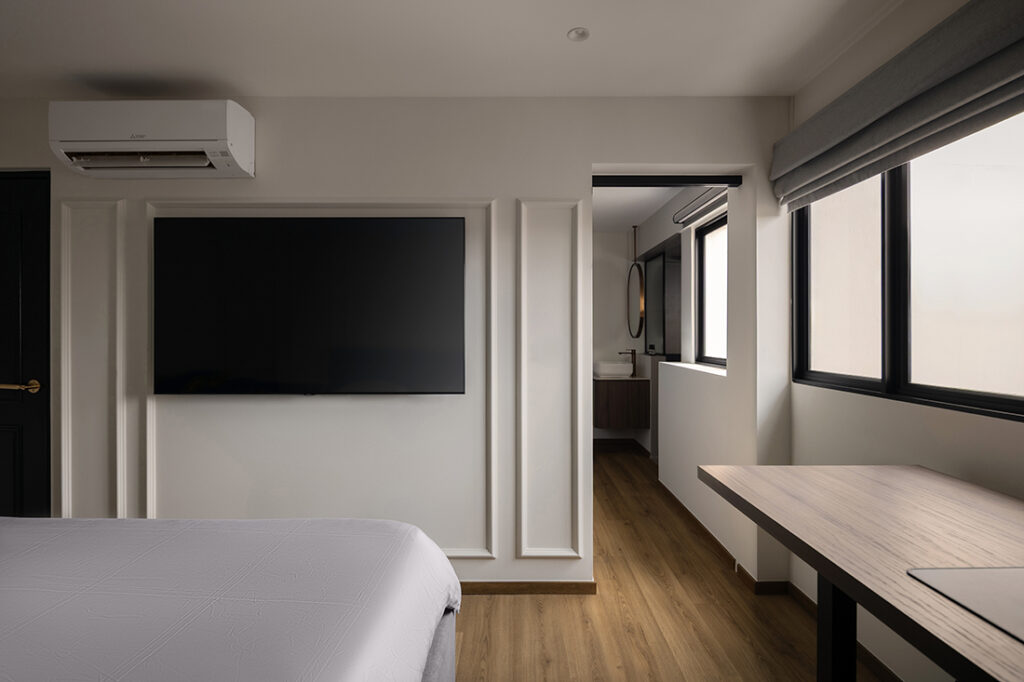
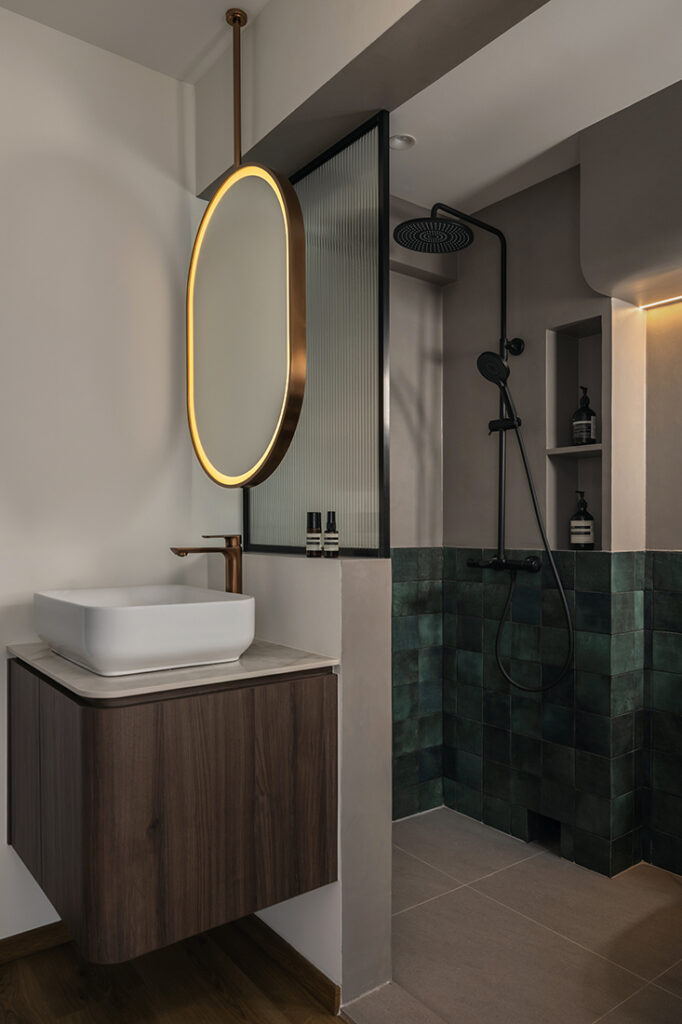
His ensuite bathroom was also reconfigured in response to spatial constraints. As the original bathroom was too small to accommodate a full wet-dry layout, the basin was moved out of the wet zone. This allowed the shower and WC to be contained within a more efficient footprint, while the vanity now functions almost like an extension of the bedroom
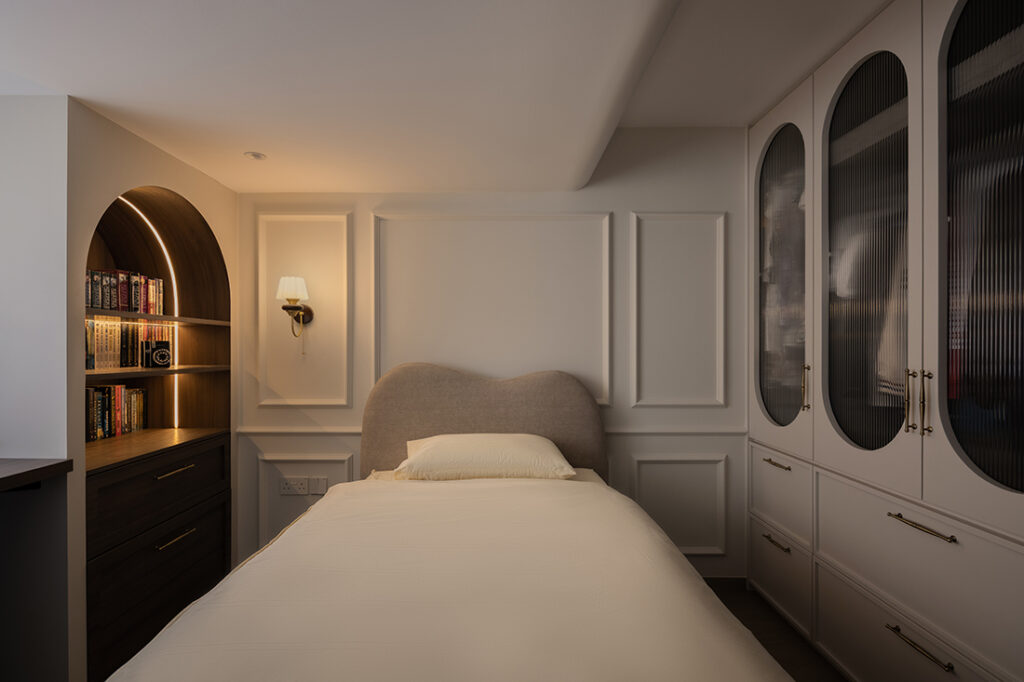
Further into the home, the teenage daughter’s room takes on a more expressive character. By absorbing part of a former corridor, the space was reconfigured despite a lower ceiling height, allowing curved details to flow across the ceiling, custom wardrobes, and a built-in bookcase, lending the room a softer, more intimate quality.
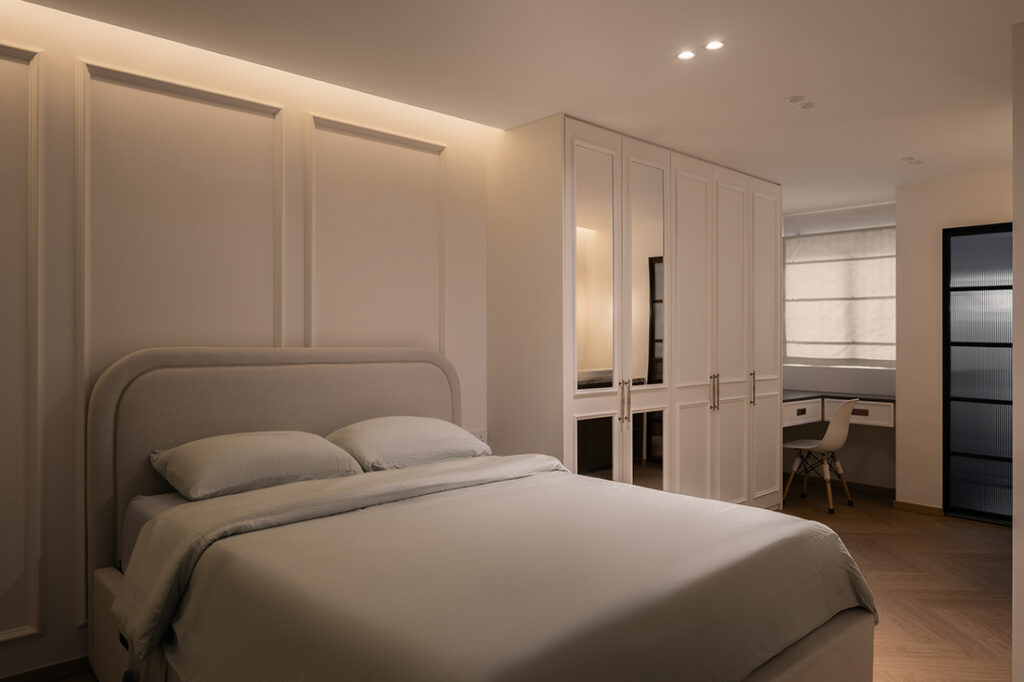
In the master bedroom, the design settles into a calm, restful rhythm. Wall mouldings frame the walls and custom wardrobe doors, lending subtle depth and reinforcing the home’s colonial-inspired style without feeling ornate. An L-shaped vanity positioned beyond the wardrobe adds a practical layer to the room, allowing daily routines to be accommodated without encroaching on the sleeping area.
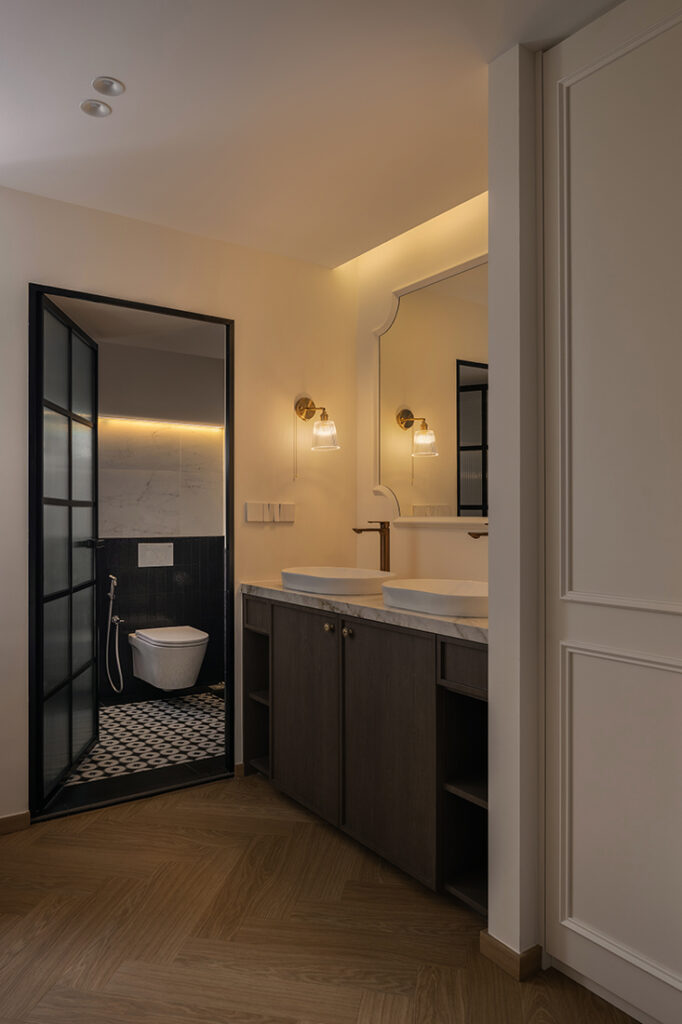
What was originally divided into separate bathroom spaces was combined and reorganised to form a more indulgent ensuite. And to further improve circulation and daily usability, the double sinks were moved outside the wet area.
Completed over a four-month renovation period, the home reflects thoughtful planning and restraint. “This was our first time working on a colonial style, and by carefully refining the layout and details, we were able to bring the concept together in a cohesive way,” Chris shares.
Plush Interior Design
www.plushinteriordesign.sg
www.facebook.com/Plushid
www.instagram.com/plushinteriordesign
We think you may also like Serene family life in Tengah
Like what you just read? Similar articles below
Balmain East House by Studio Johnston reimagines an existing waterfront dwelling into a playful and family-centred home.

With four kids and limited space, this Amber Park apartment needed a total rethink. Super Assembly stepped in with a smart, family-first redesign that’s a perfect blend of function, warmth, and refinement.