Melissa Wan of Studio HP adapts the layout of her four-room flat to create a home where storage, openness and everyday flexibility are carefully balanced.
14 March 2026
Home Type: 4-room HDB flat
Floor Area: 1,000sqft
Text by Olha Romaniuk
When interior designer Melissa Wan of Studio HP began planning her own home, the project presented a different kind of design brief. As a lead designer with the firm, she was accustomed to developing spatial strategies for clients — but designing a home for herself and her husband meant balancing professional instincts with personal priorities.
The four-room BTO flat in Bidadari became an opportunity to rethink how a typical layout could be adapted without extensive reconstruction. “Coming up with the layout was the tricky part,” says Melissa. “I wanted to steer away from the standard arrangement of most BTO homes, while still ensuring we had sufficient storage and flexibility for the years ahead.”
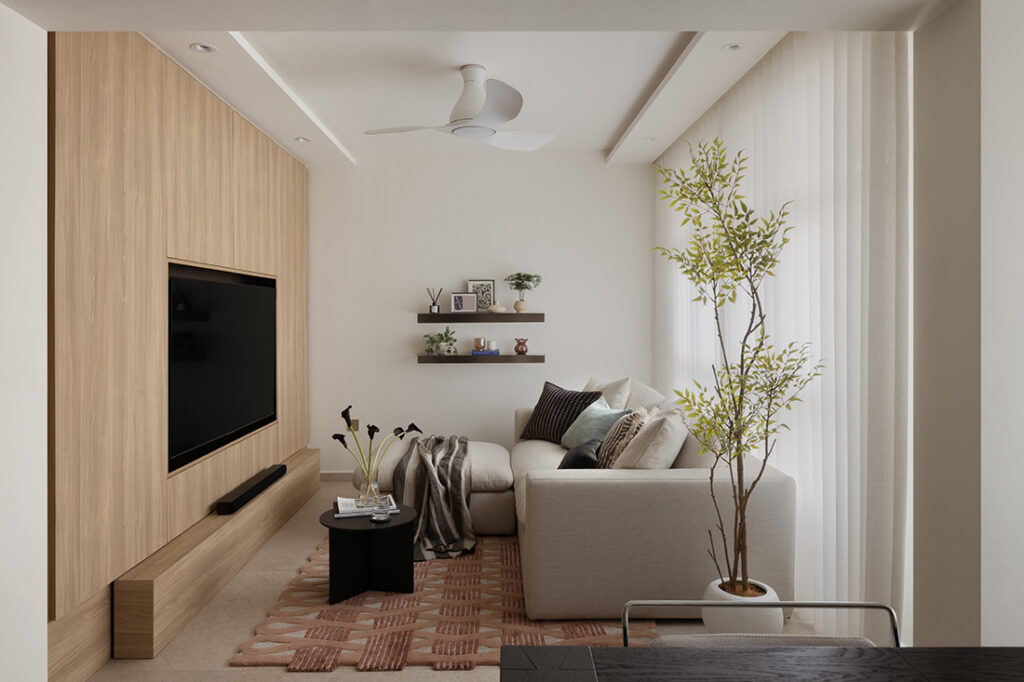
Completed in 12 weeks, the renovation balances spatial openness with thoughtful storage planning. Rather than committing to a strict design theme, the interior draws on a loose palette of recurring elements — geometric patterns, shades of wood, and accents of black and silver — creating cohesion without imposing a rigid aesthetic language.
“While drawing out similar elements throughout the home, it’s important to ensure cohesiveness,” Melissa explains. “Designing without a specific theme allowed me to create something that truly reflects our personalities as a couple.”
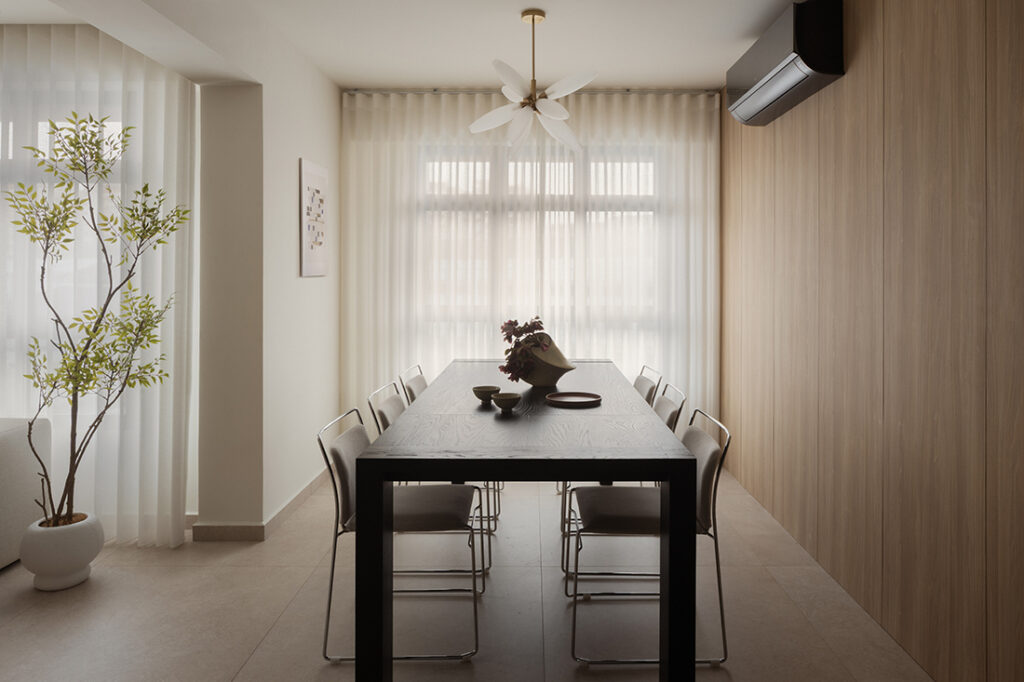
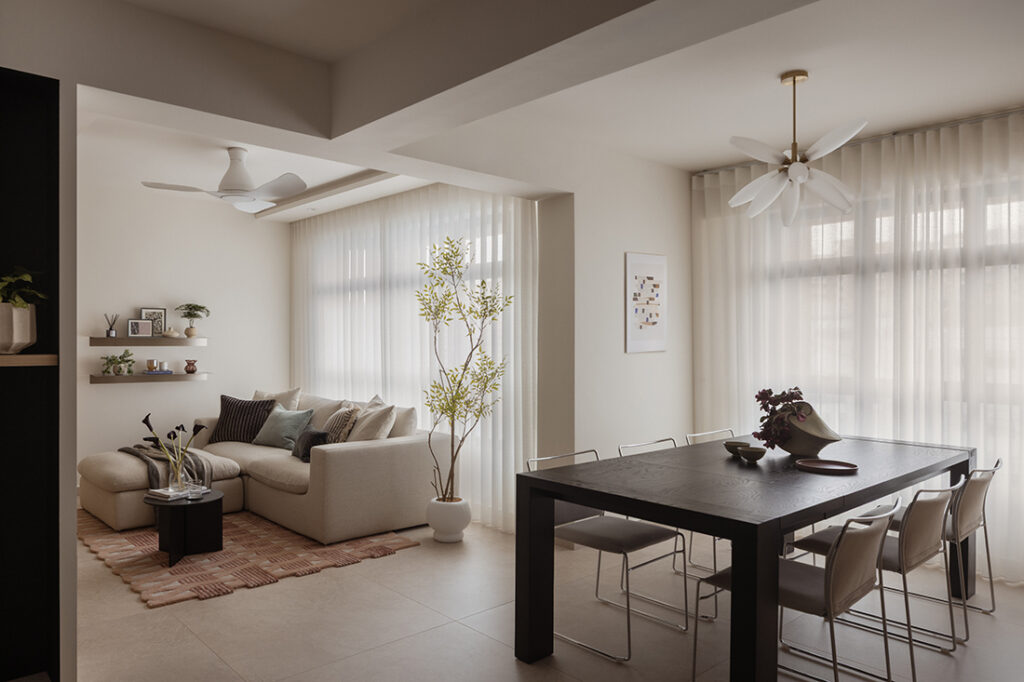
Because the homeowners opted out of the Optional Component Scheme, the flat was handed over as a bare shell, allowing greater freedom to adjust the layout. One of the most significant changes involved hacking the walls of Bedroom 3 to enlarge the dining area and improve circulation between the living and communal spaces — an adjustment that makes the unit feel noticeably more generous for a couple who enjoys hosting friends and family.
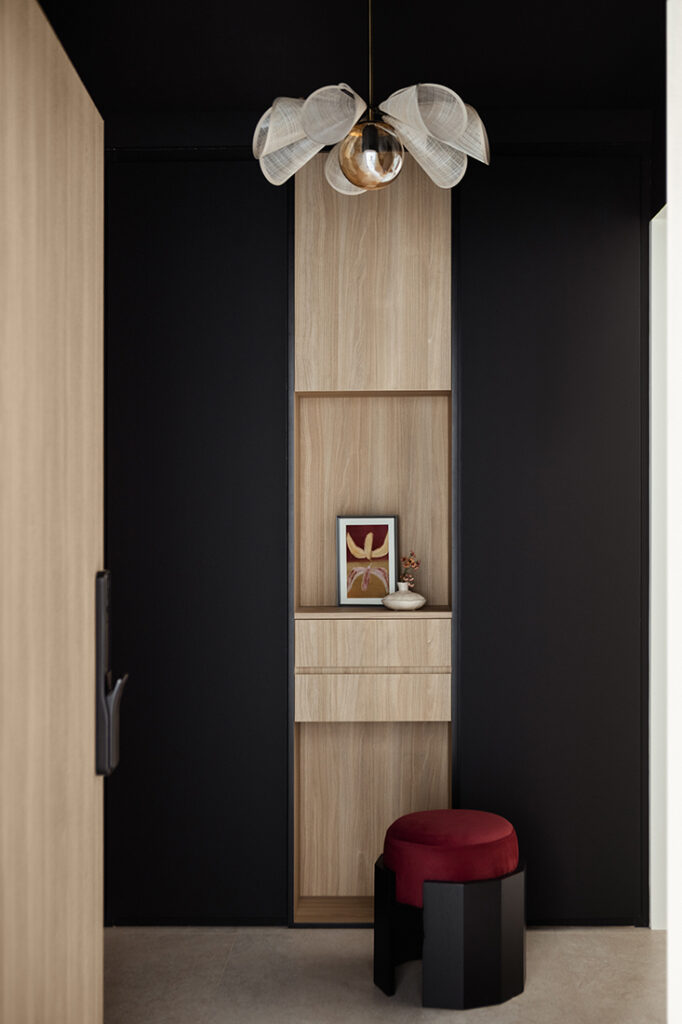
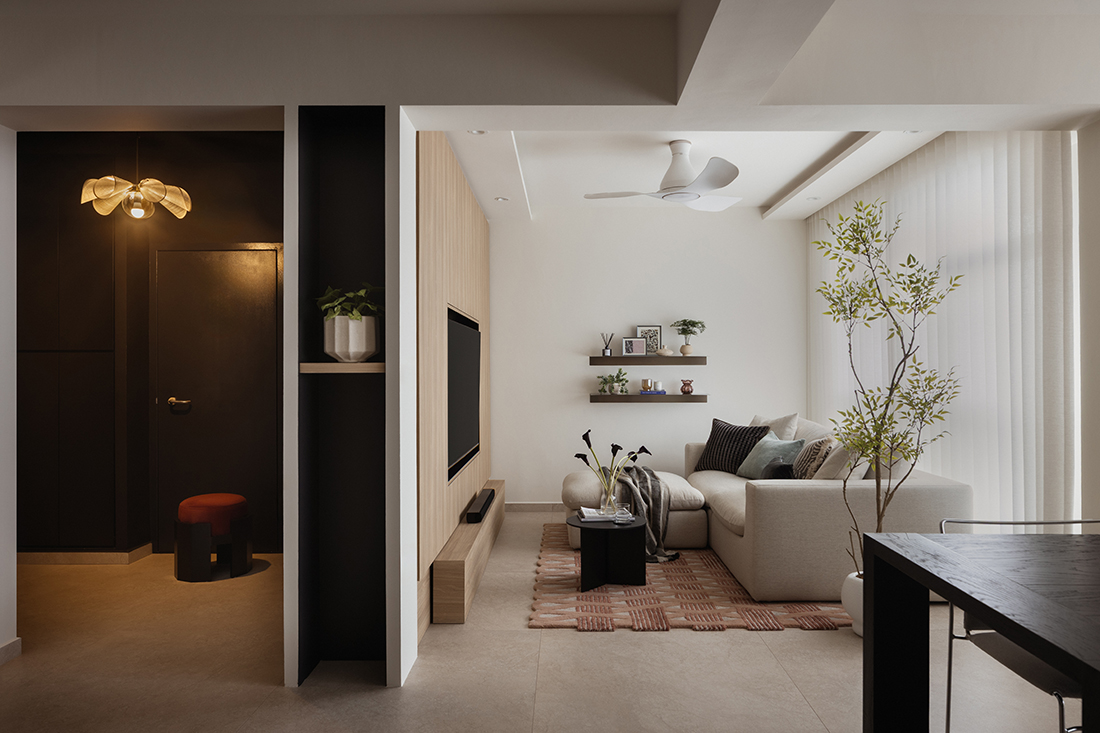
The entrance foyer introduces the home’s design language through a restrained gesture. A colour-blocked black zone defines the entryway, where a custom storage unit performs multiple roles. Designed as a two-sided element, it functions as a shoe cabinet from the entrance while forming the television wall on the living room side. A secondary partition helps mask the bulk of the cabinetry so the space remains visually open.
Large-format floor tiles run throughout the home, reinforcing a sense of continuity and helping the interiors feel more expansive.
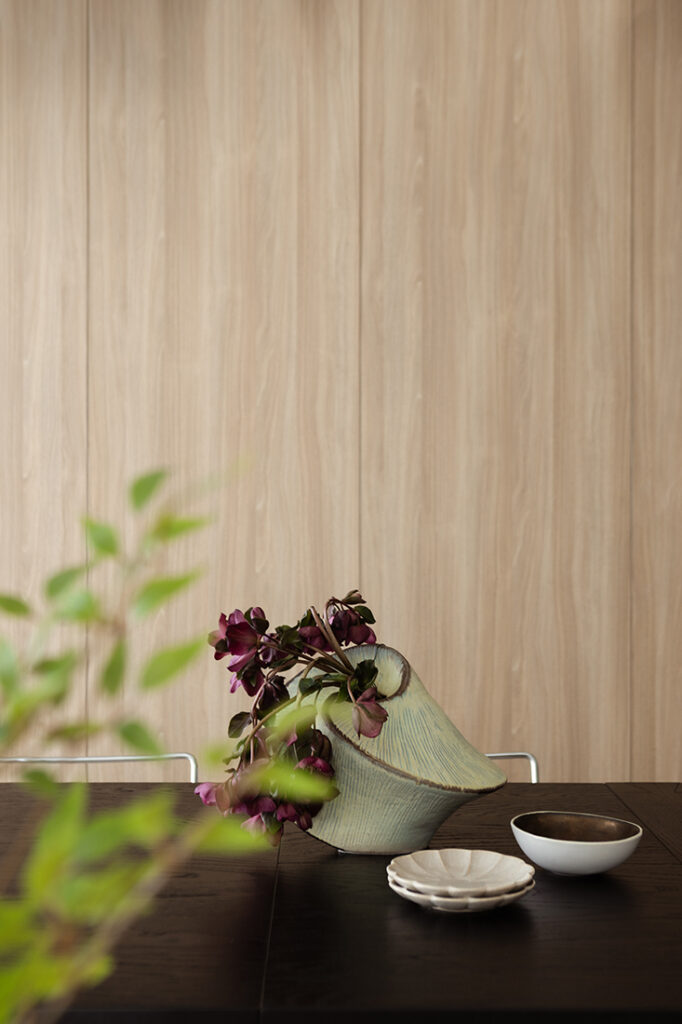
Entertaining plays an important role in the couple’s lifestyle, and the dining area was designed to accommodate gatherings with ease. An extendable dining table allows the space to expand when guests visit while remaining compact for everyday meals.
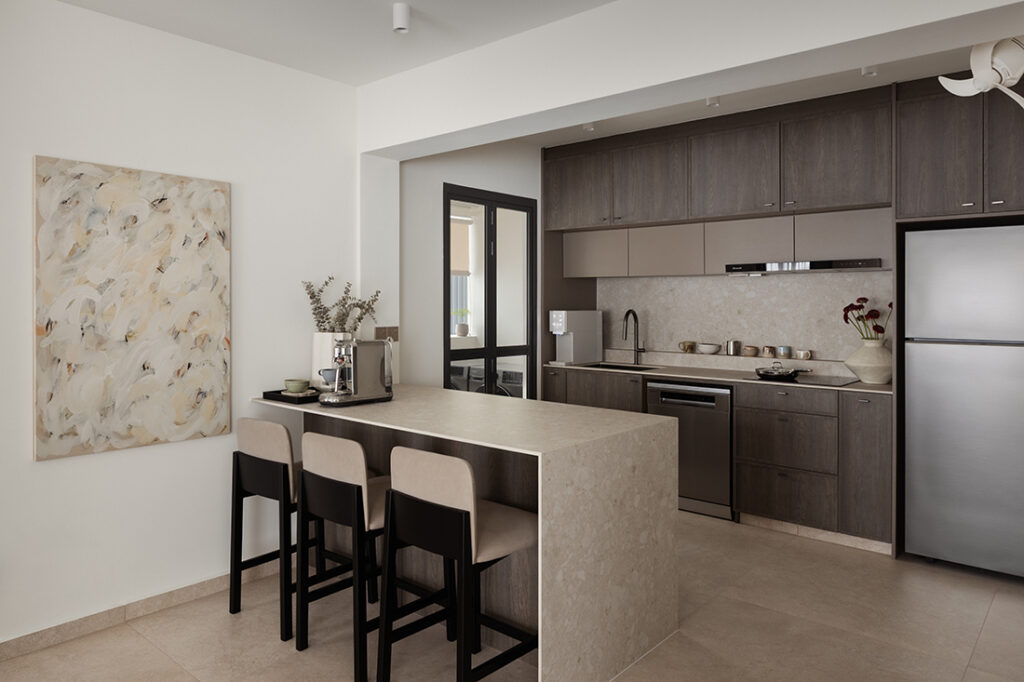
The kitchen contains one of the project’s most inventive solutions. A protruding pipe near the ceiling required an alternative to conventional top-hung cabinets, prompting Melissa to introduce double-layered cabinetry that conceals the obstruction while increasing storage. All the cabinets were brought forward slightly so the wall reads as visually flush, creating a deeper countertop. A slim ledge was then added at the back to make use of this extra depth, doubling as a display shelf for ceramics collected during the couple’s travels.
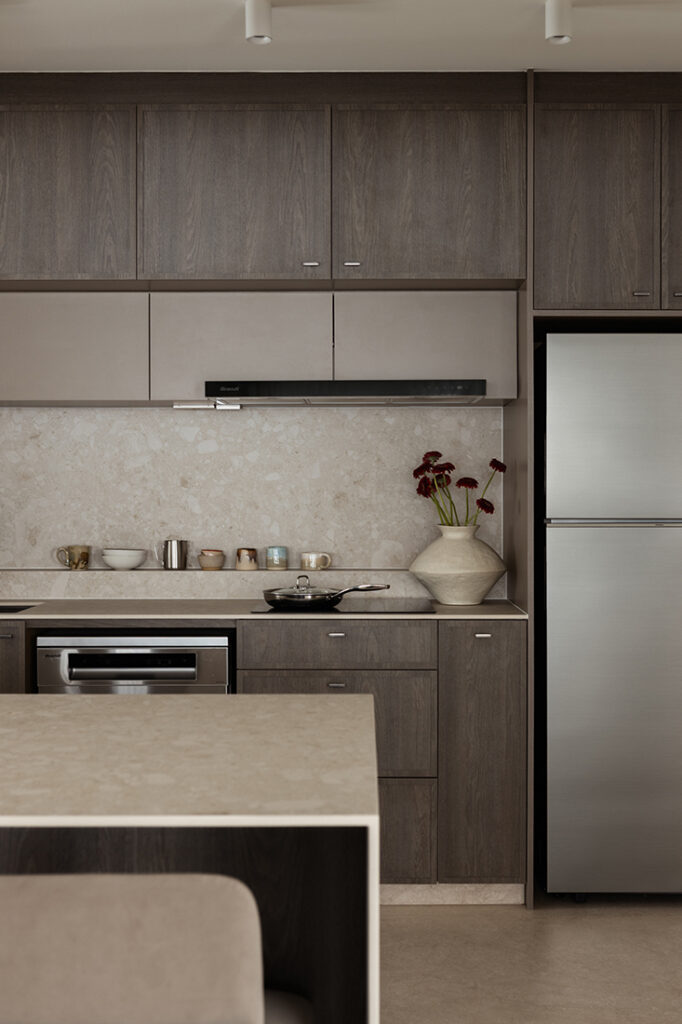
A compact island adds further countertop space, appliance storage and casual seating — quickly becoming the pair’s favourite spot for morning coffee and breakfast.
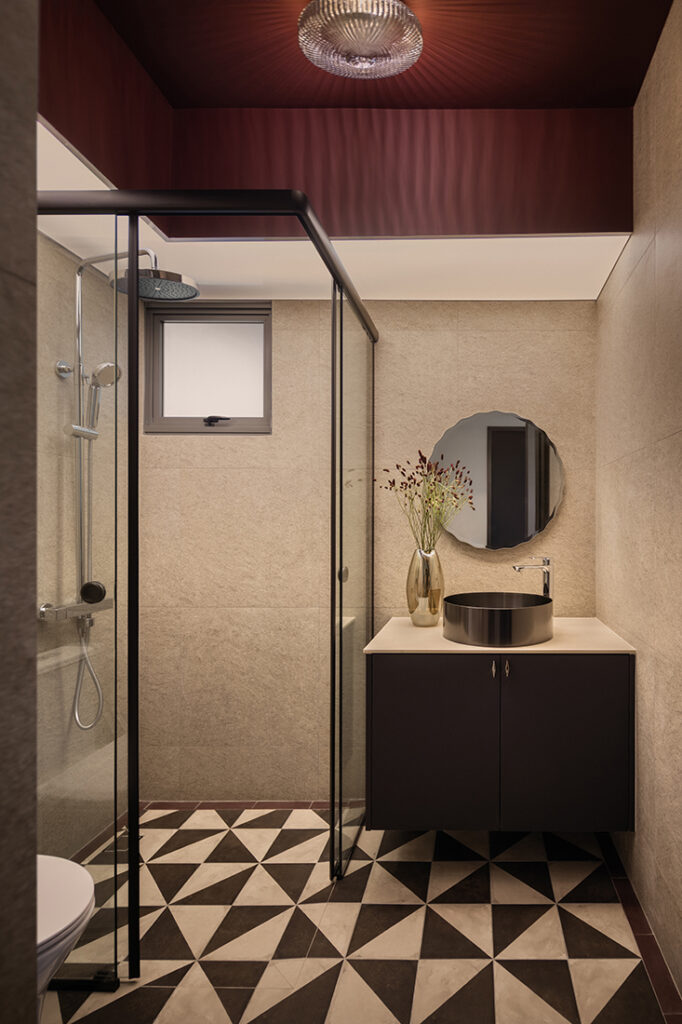
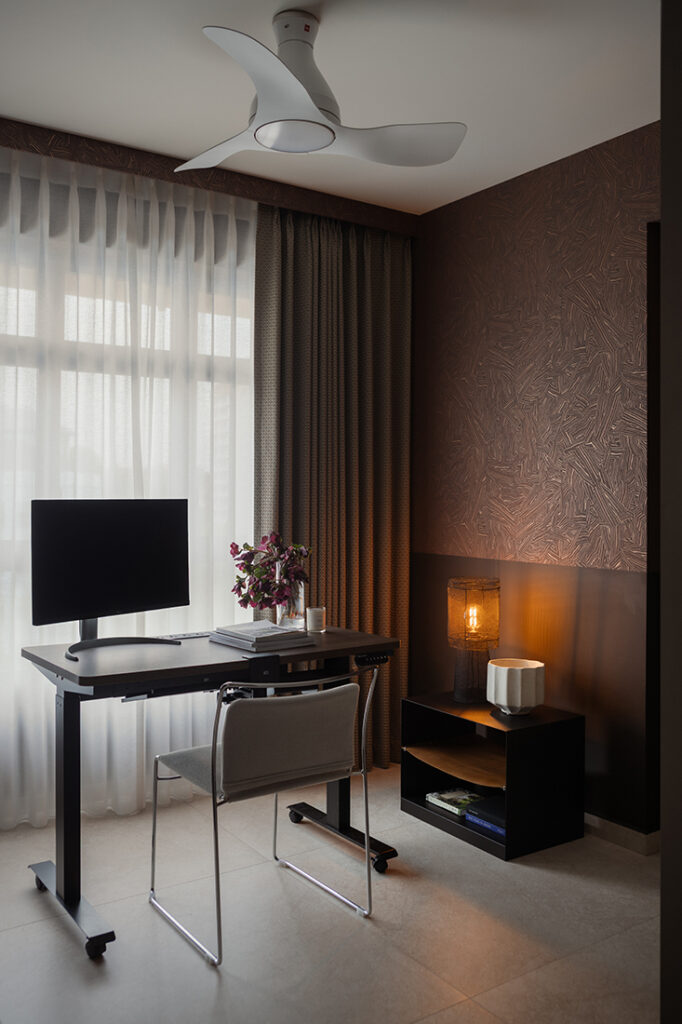
Elsewhere in the home, individual rooms introduce moments of personality. The common bathroom delivers a bold contrast through geometric floor tiles and a wine-red ceiling, while patterned wallpaper in the study injects a playful note. The room’s flexible layout allows it to transform easily into a guest room or future nursery.
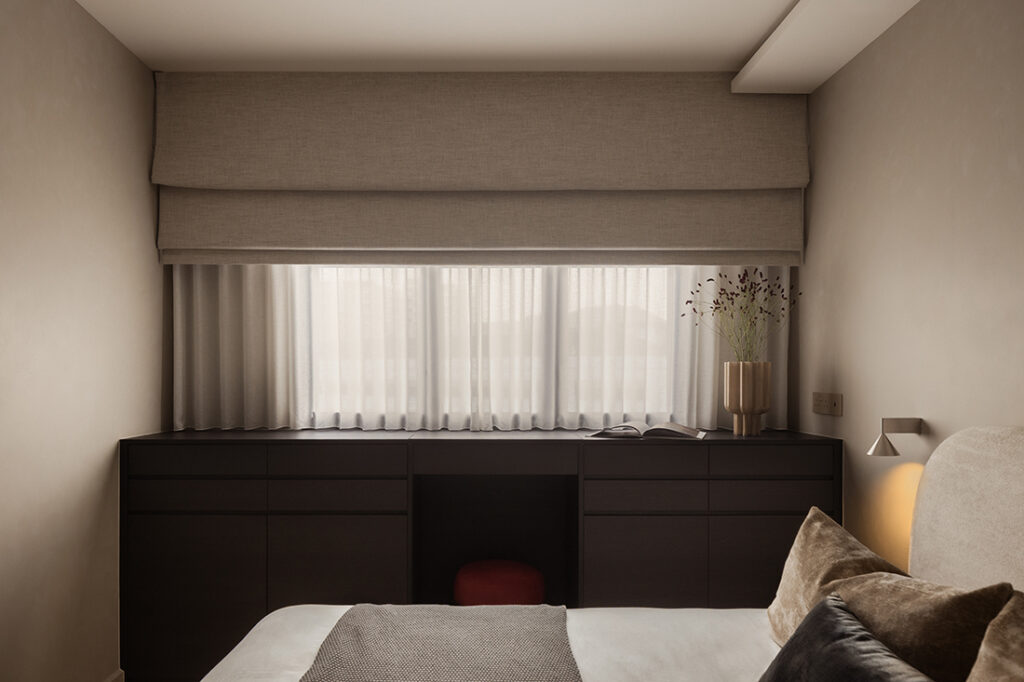
In the master bedroom, spatial planning again takes centre stage. Instead of a conventional L-shaped wardrobe, the cabinetry is divided into two separate sections — a move that increases storage while visually opening up the room. Textured paint finishes lend quiet depth to the walls, while half-height cabinets along the window wall incorporate a concealed vanity compartment. Roman blinds mask the existing window beam, visually lifting the ceiling line.
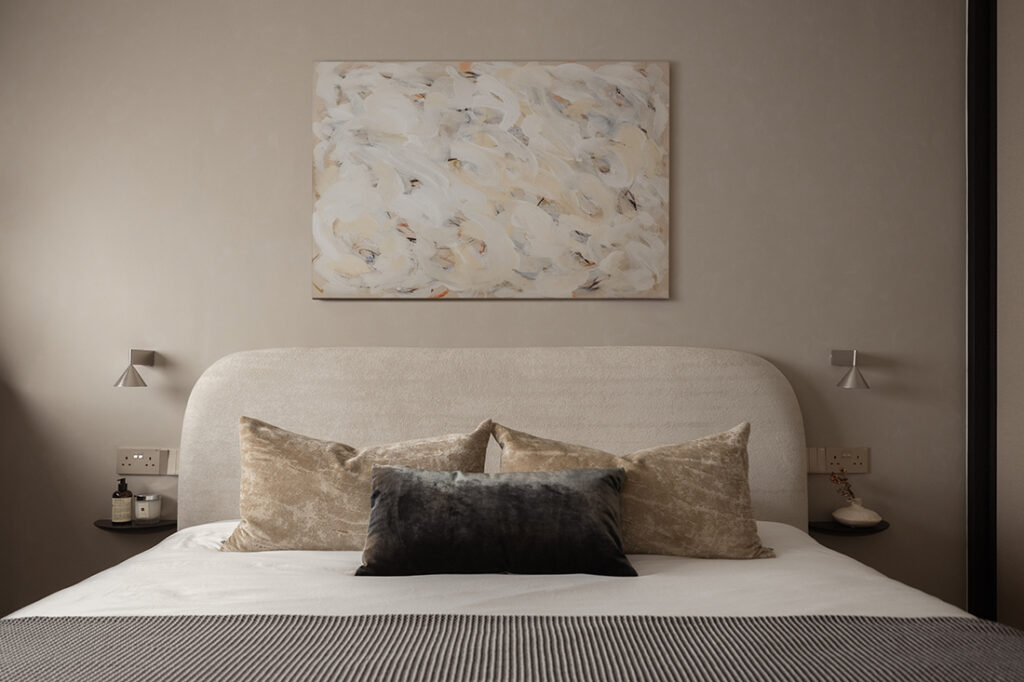
The result is a space that feels restful, organised and quietly refined — an apt reflection of a home designed not for trends but for everyday living.
HP Studio
www.studiohp.com.sg
www.instagram.com/studiohp_sg
We think you may also like A Mount Vernon BTO shaped into a private gallery-style home
Like what you just read? Similar articles below

A request to add back a room to a flat led to a most beautiful proposal for HDB living.

Classy curves lead the way in turning this standard BTO flat into a picture of modern classic design.