From inter-terrace to corner plots, these Singapore projects show how light wells and layout smarts make terraces feel open and airy.
Terrace houses have always had a handful of built-in design challenges: long and narrow floor plates, limited light penetration, party walls on either side, and often—let’s be honest—dark, compartmentalised interiors. But that can change. With the right architectural moves, a terrace can become a luminous, breezy, family-friendly home rather than a “rabbit warren”.
Here are four standout projects that show how good design is turning those constraints into opportunities.
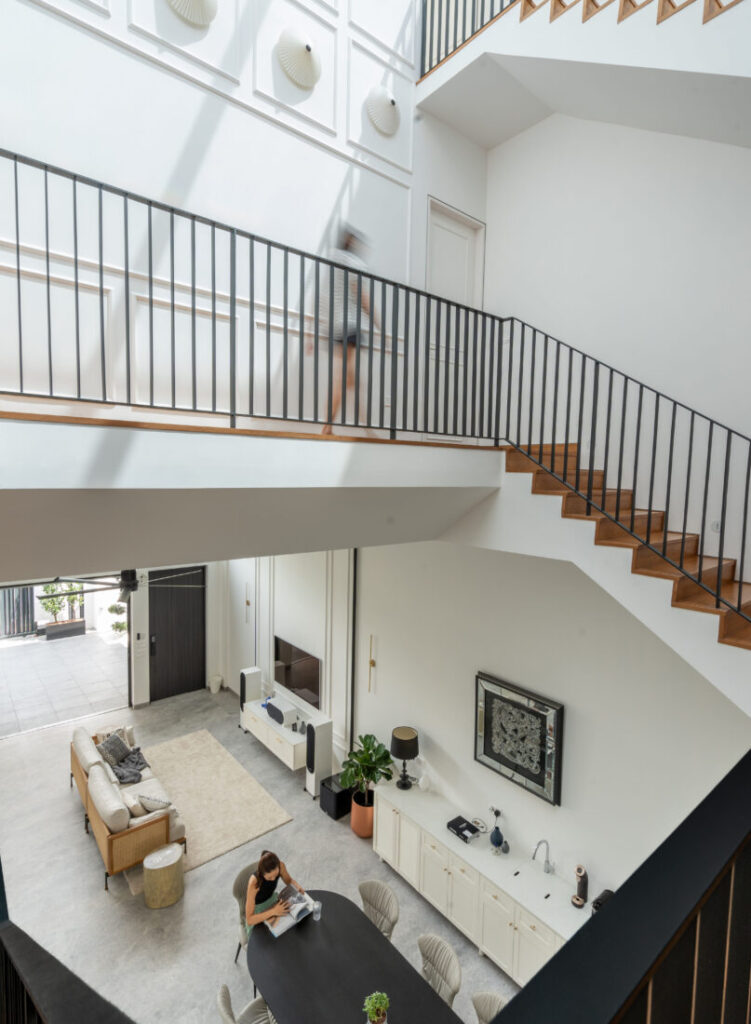
Light is the protagonist in this home by Terrestrial Architects, where a central skylight draws daylight deep into a narrow footprint. By opening the stairwell to the roof and integrating clerestory windows, the design breaks through the “dark core” common in terrace houses. The result: generous brightness, visual connectivity between floors, and a renewed sense of spaciousness that feels effortless yet intentional.
A four-bedroom terrace reimagined for modern family living, this home by Metaphor Studio opens up what was once a tight, enclosed plan. The designers relocated the utility zone to the front and introduced a dramatic sunken living room, creating a flowing communal space filled with air and movement. Warm timber screens and a double-volume rear extension bring in natural light while maintaining privacy — proving that even the most constrained terrace can feel expansive with the right spatial hierarchy.
In Kovan, a 5,200-square-foot corner terrace by Uncommon Studio channels cathedral serenity through sculptural arches and soaring ceilings. Every detail — from the lime-plaster walls to the arched French doors aligning the living and kitchen zones — plays with light and shadow. The result is a home that feels both grounding and ethereal, balancing quiet luxury with lived-in warmth. It’s a masterclass in how architectural form can infuse calm into a long, linear structure.
Space Sense Studio transforms a typical inter-terrace into a breezy, sun-drenched escape inspired by coastal calm. Walls were stripped back, a glass roof introduced, and open transitions created between the kitchen, dining, and living areas. The interiors lean into soft whites and warm timber tones, balancing natural light with an easy, timeless aesthetic. Proof that even without side windows, a terrace can feel refreshingly open and full of charm.
We think you may also like Colonial-style homes in Singapore that blend heritage with modern living


