A bathroom can look beautiful and still prove frustrating to live with. The key is choosing finishes that suit the space, the household and the budget.
Top image: Project by OVON
Bathroom finishes are often selected for how they look in a sample, showroom or completed project. Yet once installed, they must contend with water, humidity, frequent cleaning and daily contact. From tile format and vanity surfaces to grout and tapware finishes, here is what homeowners should consider before committing during a renovation.
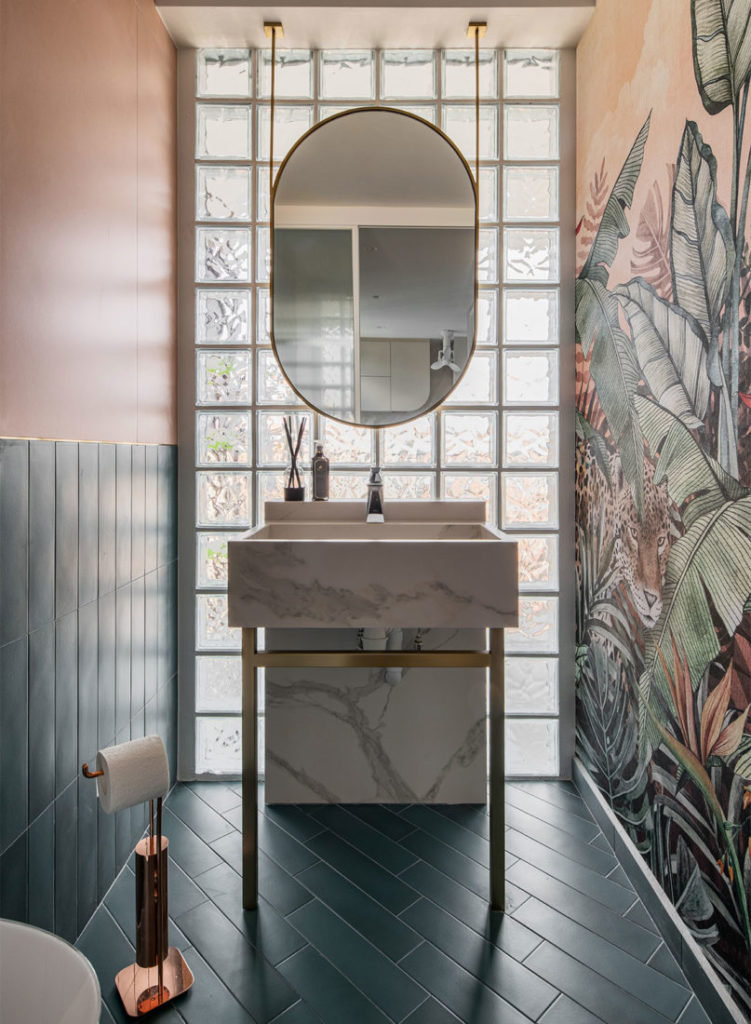
Begin with how the bathroom is used
A bathroom material should not be judged in isolation. Its suitability depends on who uses the room, how frequently it is used and how much maintenance the household is prepared to take on.
A lightly used powder room, for instance, may accommodate a more delicate surface than a common bathroom shared by an entire family. Children may create more splashing, while older users may require greater attention to grip and accessibility.
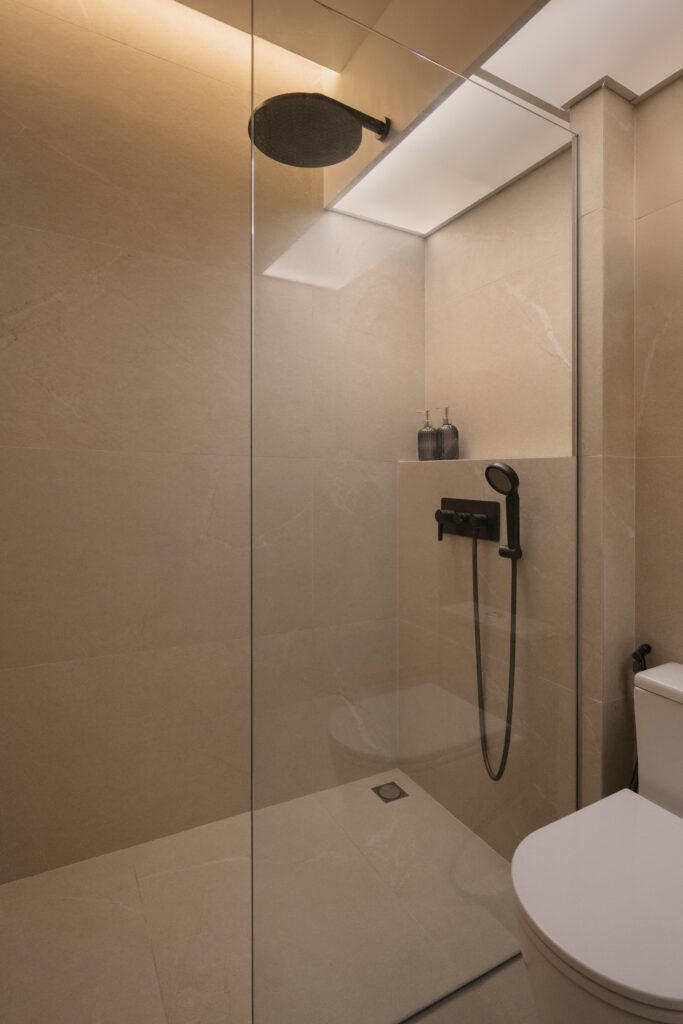
“We need to understand who uses the bathroom, their bathing and cleaning habits, any accessibility needs, their maintenance preferences, budget and the overall look they want to achieve,” says Raymond Soh, creative director at interior design firm OVON.
The question is therefore not simply whether a finish is suitable for bathrooms, but whether it can meet the demands of that particular space.
Consider where it will go
Where a material is used within the bathroom can matter as much as the material itself. Walls and floors place different demands on a finish: wall tiles may be selected largely for appearance and ease of cleaning, while flooring must also account for grip, drainage and regular water exposure.
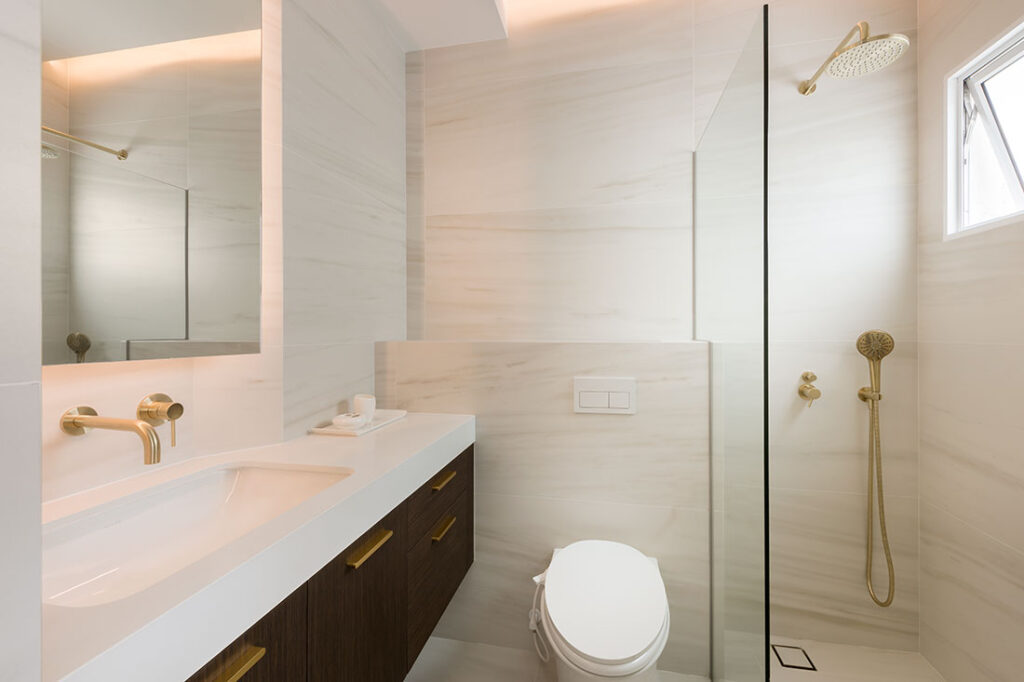
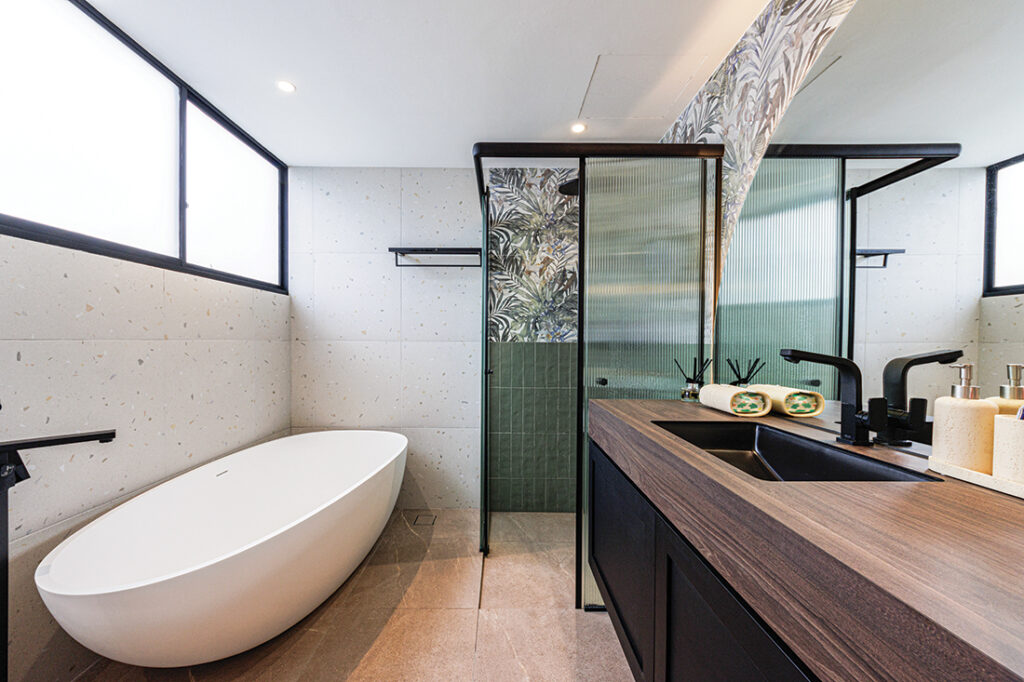
Large-format tiles can work particularly well on walls, where they create a cleaner visual field and reduce the number of grout lines. “With fewer grout lines, they are easier to clean, while the larger format allows stone-like grains or patterns to read more clearly,” says Mark Chen, business manager at interior design studio Artistroom.
On floors, however, tile size and layout must accommodate drainage falls, while texture and slip resistance become more important. This is why a bathroom need not rely on one material or format throughout; a more expressive finish might be used on a vanity or feature wall, with a more practical surface underfoot and in heavily exposed areas.
Look beyond the initial effect
Some finishes are appealing precisely because they create a distinctive visual result. That does not make them impractical, but homeowners should understand the maintenance and workmanship they require.
Microcement is a case in point. Its lack of grout lines can give a bathroom a cleaner, more seamless look, but the success of the finish depends heavily on how it is applied.
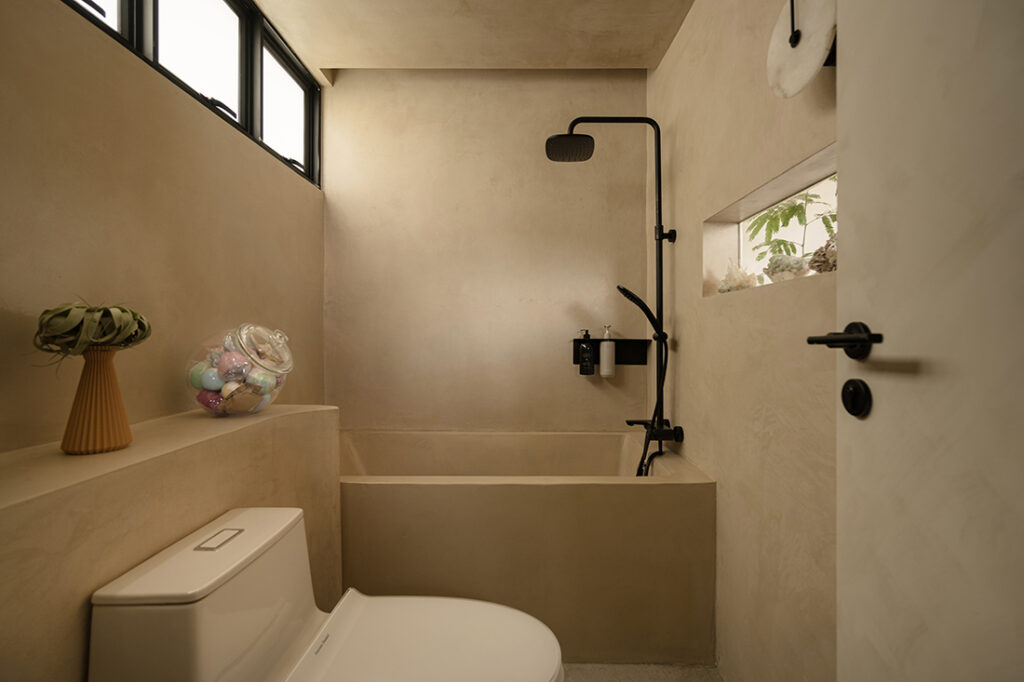
“Microcement needs to be resealed every five to eight years depending on wear, and more often in high-traffic areas such as a family bathroom floor than in a guest powder room,” says Raymond. “It is also unforgiving of inexperienced hands. If the application is wrong, the surface can crack as the substrate shifts.”
Resealing schedules can vary according to the particular system, its location and the level of use, so homeowners should also check the manufacturer’s maintenance guidance before committing.
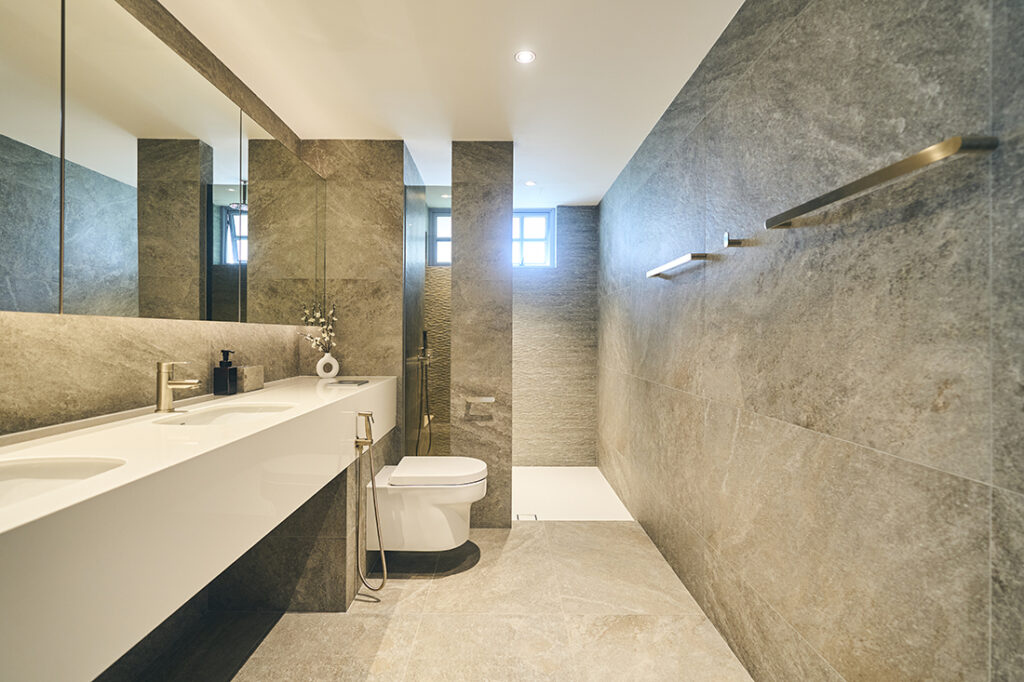
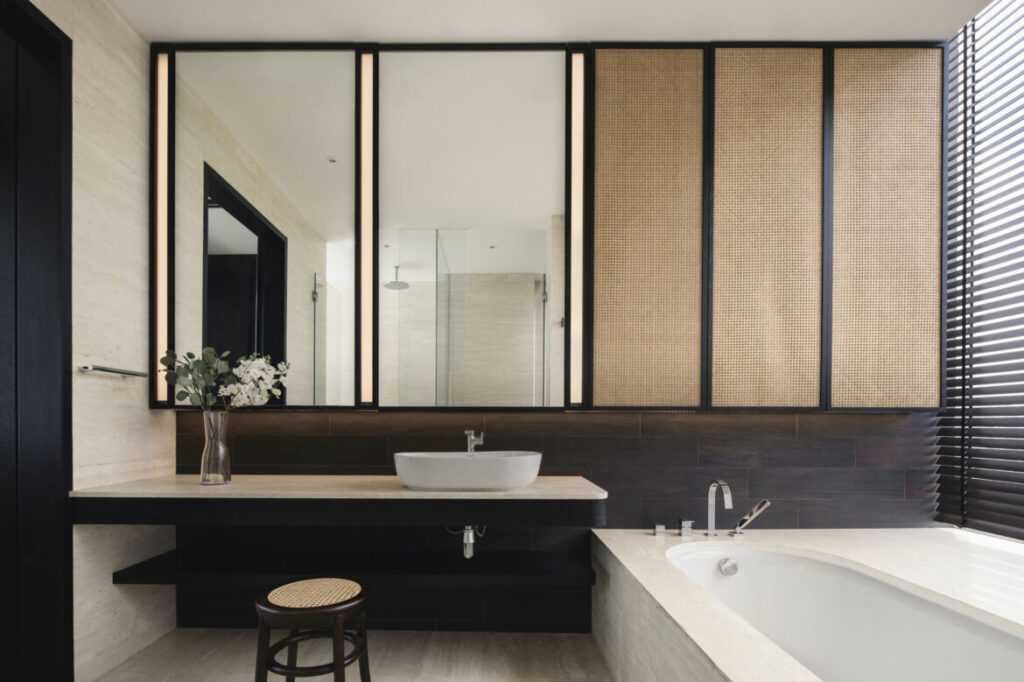
Natural marble presents a different set of considerations. Its veining and variation are difficult to replicate, but its porosity can make it vulnerable to staining, particularly on vanity tops. Mark advises that proper sealing can make it easier to maintain, while sintered stone may provide a stone-like appearance with less upkeep for homeowners who prefer a more forgiving alternative.
The lesson is not to avoid these materials. It is to understand what preserving their intended appearance involves before making the investment.
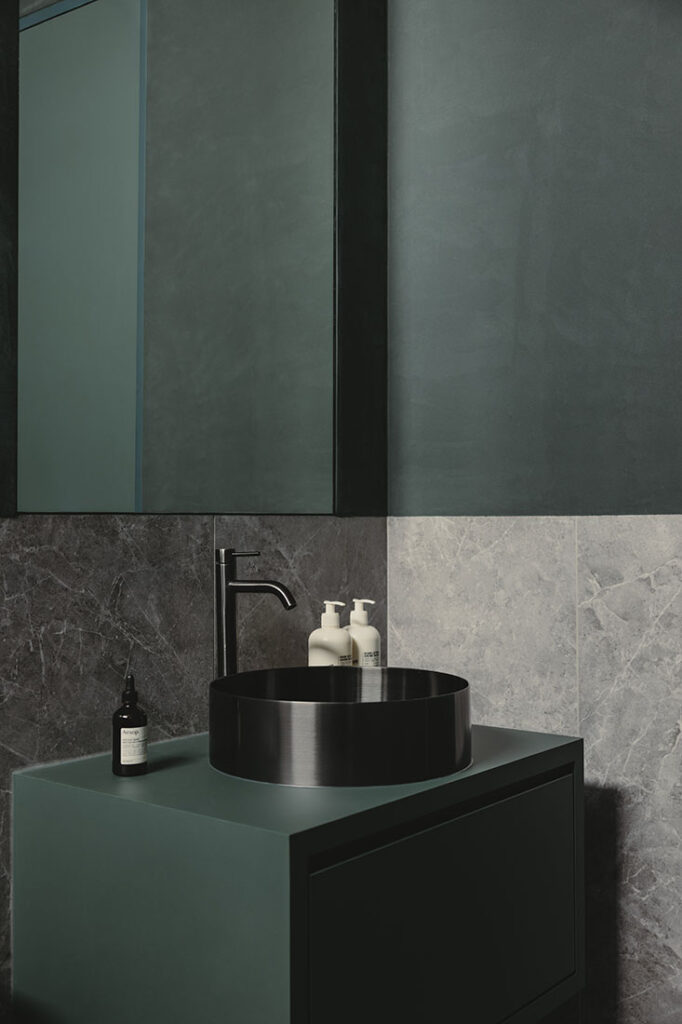
Pay attention to the smaller details
The main tile or vanity surface may dominate the mood board, but the supporting details often have a greater effect on how easily a bathroom is maintained.
Grout is one of them. Small tiles and mosaics introduce more grout lines, creating more joints to clean. OVON points out that traditional cement grout is porous and can absorb soap, shampoo and body oils, making discolouration and mould harder to control if the area is not properly maintained.
Edges and junctions deserve similar attention. Water repeatedly collects around basins, shower screens, walls and vanities. Poorly protected cabinetry edges, weak sealant lines or unresolved transitions between materials can undermine an otherwise durable selection.
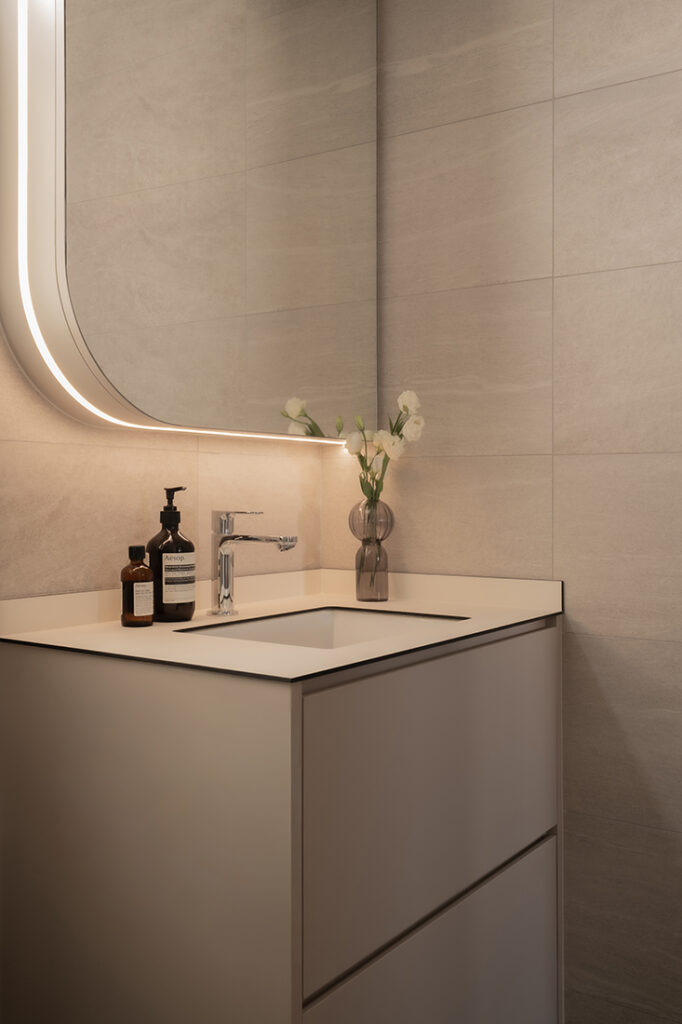
Tapware is another area where appearance and upkeep need to be weighed. Powder-coated and coloured finishes can give the bathroom a more distinctive character, but they may require gentler cleaning. OVON cautions that coatings may show wear or become damaged at frequently handled points, particularly when abrasive cleaning products are used, and often recommends chrome where straightforward maintenance is the priority.
This does not make coloured tapware a poor choice. It simply means homeowners should understand how the finish needs to be cared for and whether visible wear will bother them.
Renovating soon? Get matched with interior designers suited to your home.
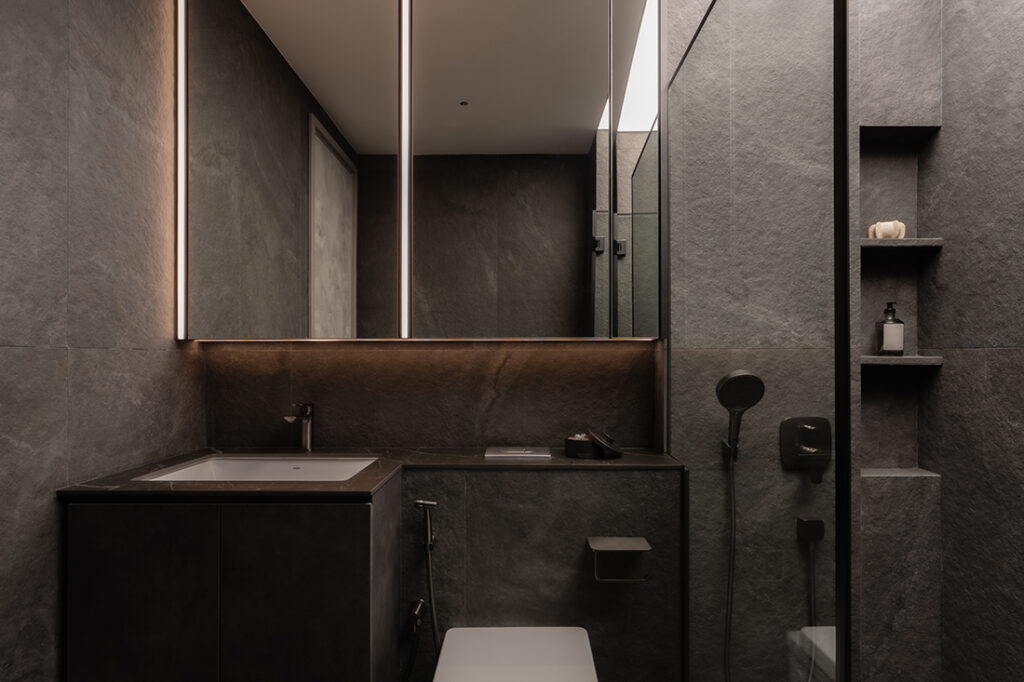
Spend where repairs would be disruptive
A higher price does not automatically guarantee a better bathroom. A more useful approach is to prioritise spending where failure would be difficult or expensive to rectify.
Components concealed behind finished walls deserve particular consideration, as repairs may require surfaces to be opened up. “If a concealed fitting fails, fixing it usually means removing and replacing the tilework around it,” says Raymond. “Getting it right at the start costs far less than undoing a finished wall later.”
The same principle applies to waterproofing, substrate preparation, installation, vanity construction and hardware exposed to repeated moisture. These may be less visible than a feature stone, but they have a direct bearing on how the bathroom performs.
How to keep material costs down
Savings can often be found in the more decorative layers of the bathroom. Marble-look porcelain, for example, may provide some of the visual character of natural stone at a lower material cost and with less ongoing care.
Another option is to use a premium finish selectively — perhaps on a vanity, inside a niche or across one feature wall — and pair it with simpler tiles elsewhere. This retains the intended focal point without extending the expense and maintenance across the entire room.
Material price, however, is only part of the overall cost, so homeowners should compare the total installed quotation as well. Particularly oversized tiles, for example, may require additional preparation, specialist handling and more complex cutting, which may be reflected in installation costs.
Before making the final choice
Rather than asking only whether a material looks right, homeowners should also consider:
- Where it will be used and how often it will become wet
- Whether it is safe and practical for the people using the bathroom
- How it needs to be cleaned, sealed or maintained
- How its edges, joints and adjoining materials will be resolved
- What would be involved if it needed repair or replacement
The right bathroom finish is not necessarily the toughest or most expensive. It is the one that suits the users, its position in the room and the realities of the renovation, with its maintenance requirements and trade-offs understood from the outset.
We think you may also like How to design a home that truly works for your pets
Material Matters: How to choose finishes for a bathroom renovation