The best short-stay rentals feel instantly liveable – considered, cohesive and easy to inhabit. We look at four boutique Airbnb units in Malaysia to unpack the design thinking behind spaces that feel good immediately, and what everyday homes can take from them.
Top image: Nanyang LOFT @ Sunway Grid, Johor Bahru
There’s a particular feeling you get in a well-designed Airbnb. The room settles around you almost immediately – nothing needs explaining, nothing feels out of place. It’s a quality that’s harder to achieve than it looks, and it has less to do with styling than with deliberate design decisions made long before any guest arrived.
Unlike a family home that evolves gradually over years of living, a short-stay rental has to earn its comfort from the moment the door opens. Every decision – layout, materials, lighting, focal points – has to work immediately. There’s no grace period, no time for a space to grow on you. That constraint, paradoxically, makes well-designed Airbnb spaces worth paying attention to. The thinking behind them is more visible precisely because it had to be so deliberate.
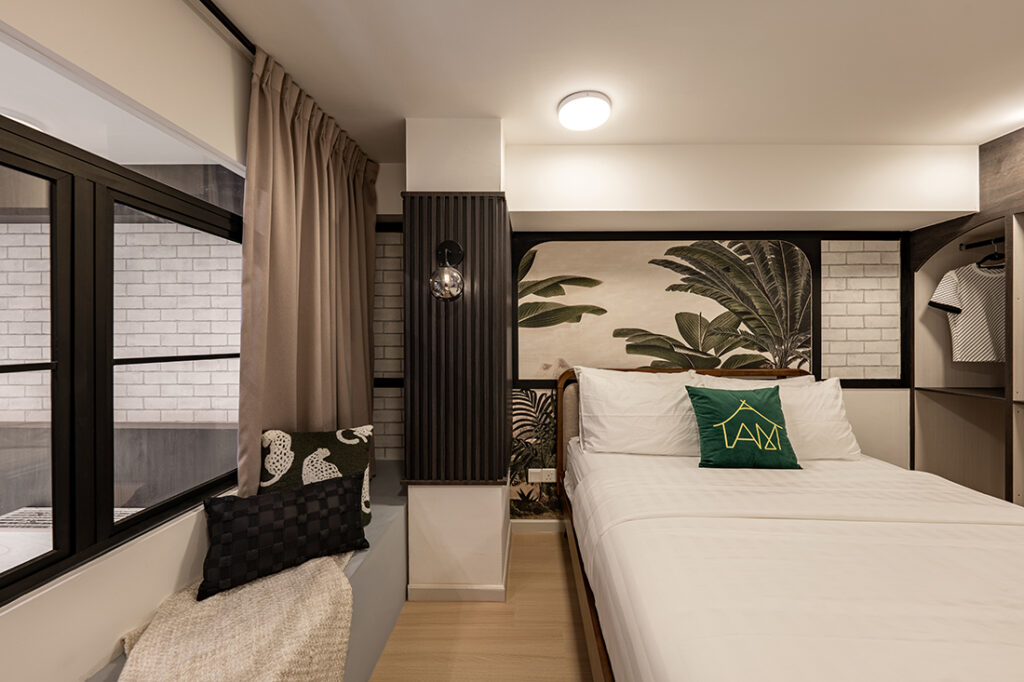
The AL’AM Residences collection – four boutique units across Johor Bahru and Kuala Lumpur designed by AMP Design Co. – is a case in point. Each unit has a distinct personality. Rather than repeating a single design formula, each apartment was given its own identity, allowing guests to experience a different interpretation of contemporary Southeast Asian living.
It reflects what Amanda Pang, Founder and Design Director of AMP Design Co. describes as a contemporary Nanyang sensibility. “It’s not a fixed aesthetic of rattan and Peranakan tiles, but a way of designing that conveys the layered cultural identity of this region,” she says. In other words, it’s a concept that’s rooted in place rather than imported from elsewhere. It’s also a sensibility that translates just as naturally into permanent homes.
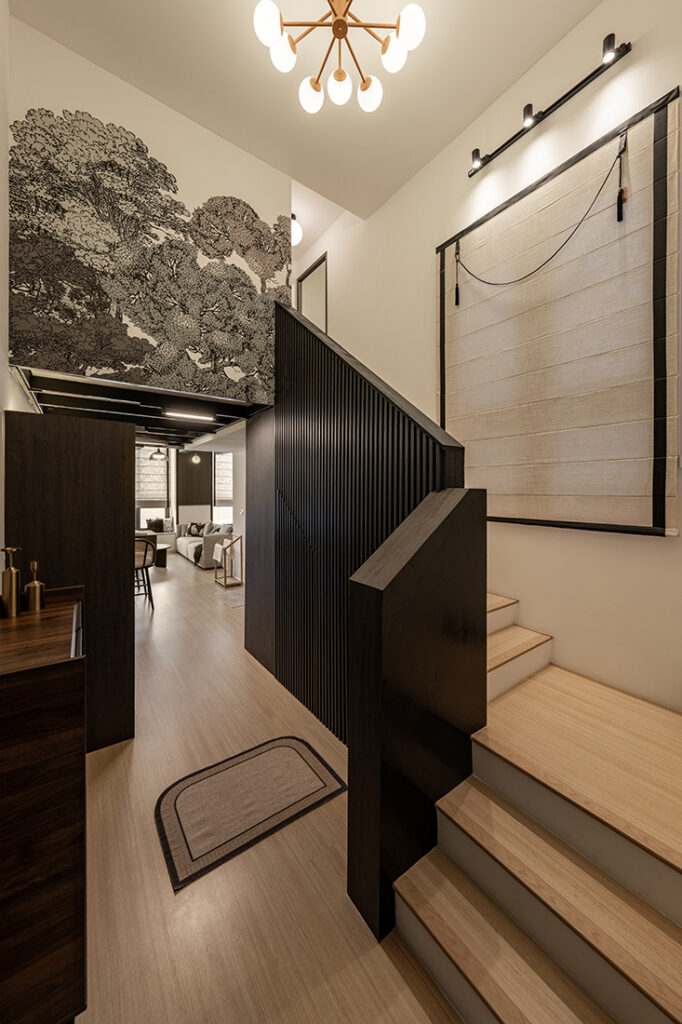
Every detail has to work from arrival
In a permanent home, comfort accumulates. You learn where the light falls in the afternoon, which corner of the sofa is yours, how the spaces connect. In a short-stay interior, none of that prior knowledge exists – the design has to do all of it upfront.
“Unlike a family home that evolves over time, a guest forms an impression within the first few minutes,” says Amanda. “That means every detail has to work immediately – from the arrival experience and lighting to the furniture layout, tactile materials and visual focal points. The space needs to feel intuitive, comfortable and memorable without requiring explanation.”
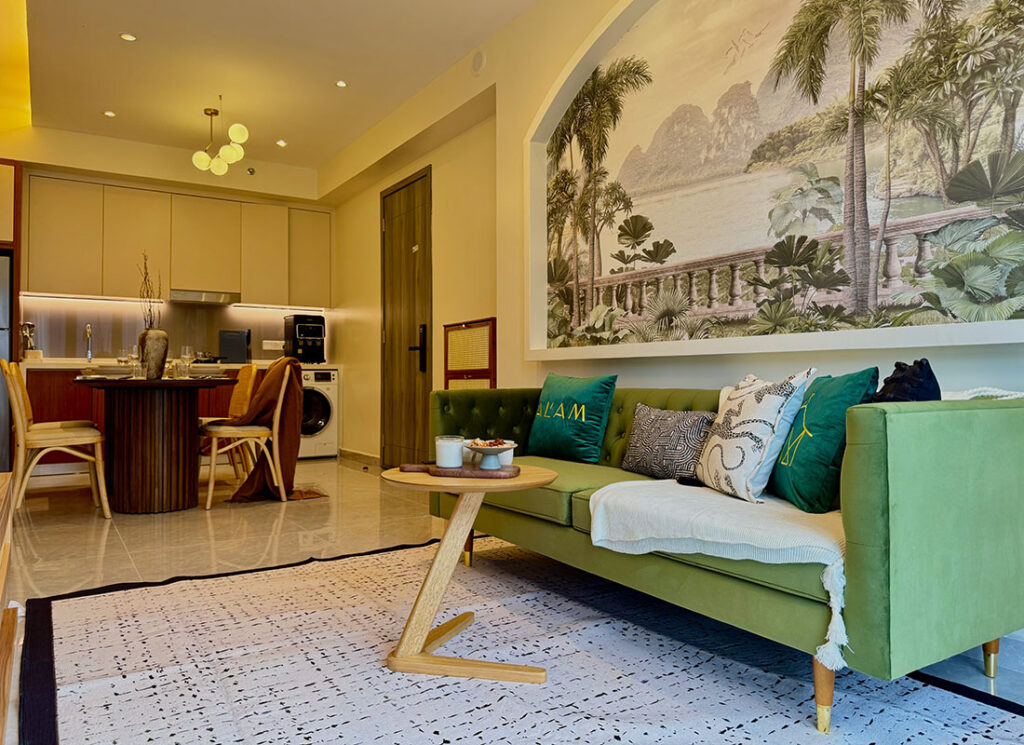
In the AL’AM units, this plays out in deliberate ways – tropical foliage that greets guests on arrival, lighting calibrated for warmth as well as function, furniture arranged for instinctive ease rather than visual symmetry. These elements work together to make the experience feel considered from the moment guests arrive.
For homeowners, this is a useful discipline to borrow. Comfort in a permanent home is sometimes treated as something to layer on after the renovation is done – the cushions, plants and objects accumulated over time. What these spaces suggest is that comfort is better understood as a design decision made at the brief stage. “Hospitality design teaches you how to create an immediate emotional connection,” Amanda adds, “and that’s something I also bring into residential projects.”
Open, intuitive spaces over closed rooms
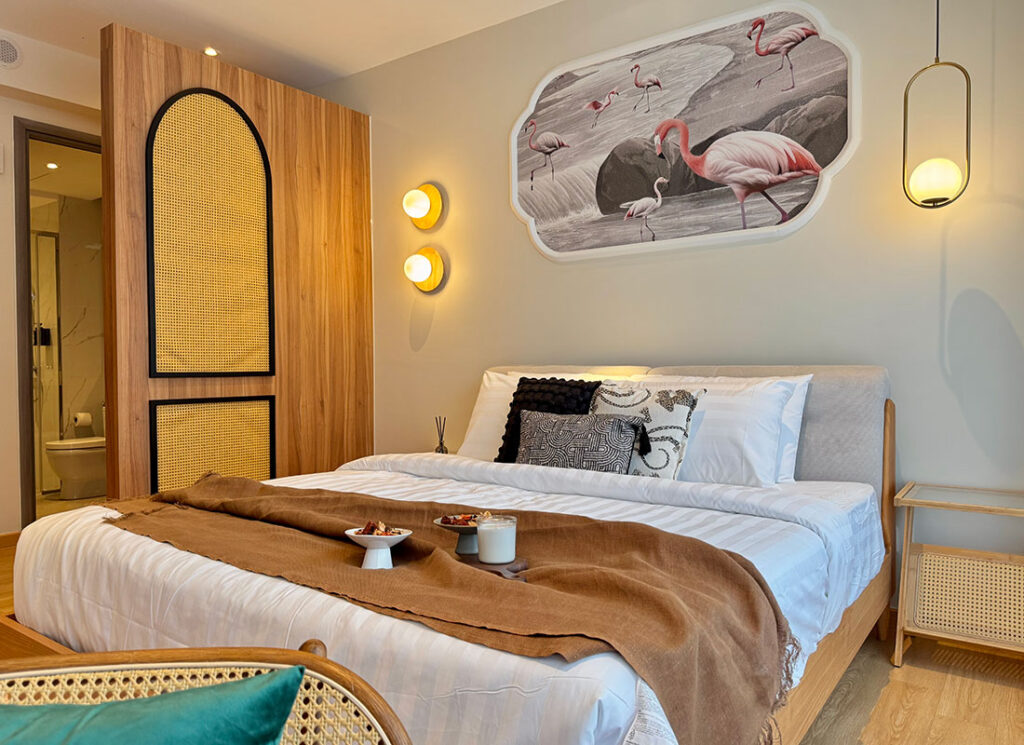
Across all four AL’AM units, AMP Design Co. prioritised openness – natural light, cross ventilation and generous communal areas designed for gathering. These aren’t incidental qualities. They reflect a considered response to how people actually use short-stay spaces: families and multigenerational groups who want to cook together, gather comfortably and move fluidly between zones after a day out.
“We prioritise intuitive layouts, generous communal spaces, accessibility and everyday functionality,” Amanda explains. “After a full day of exploring, guests want to return to a place where they can gather comfortably, cook a meal together, relax and reconnect.”
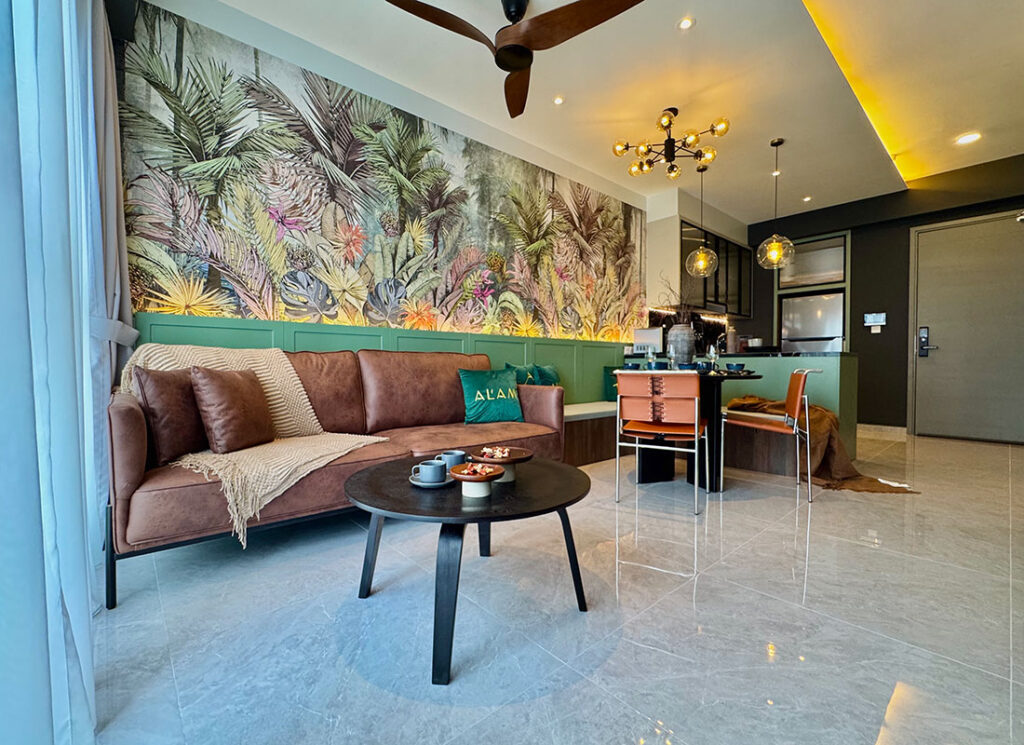
These are also qualities deeply rooted in tropical Southeast Asian living – the spatial generosity, the connection between inside and out, the preference for spaces that breathe over rooms that contain. It’s a Nanyang instinct as much as a hospitality one, and it’s directly applicable to everyday homes. For Singapore homeowners working within typically compact layouts, the lesson isn’t necessarily to knock down walls – it’s to question whether every closed room is earning its keep, and whether the connections between spaces are working as hard as they should.
Cultural, not themed
What gives the AL’AM units their character is a design sensibility that feels rooted without being costumed. Some units feature dramatic tropical murals while others are more restrained and contemporary, but each is distinct without tipping into pastiche.
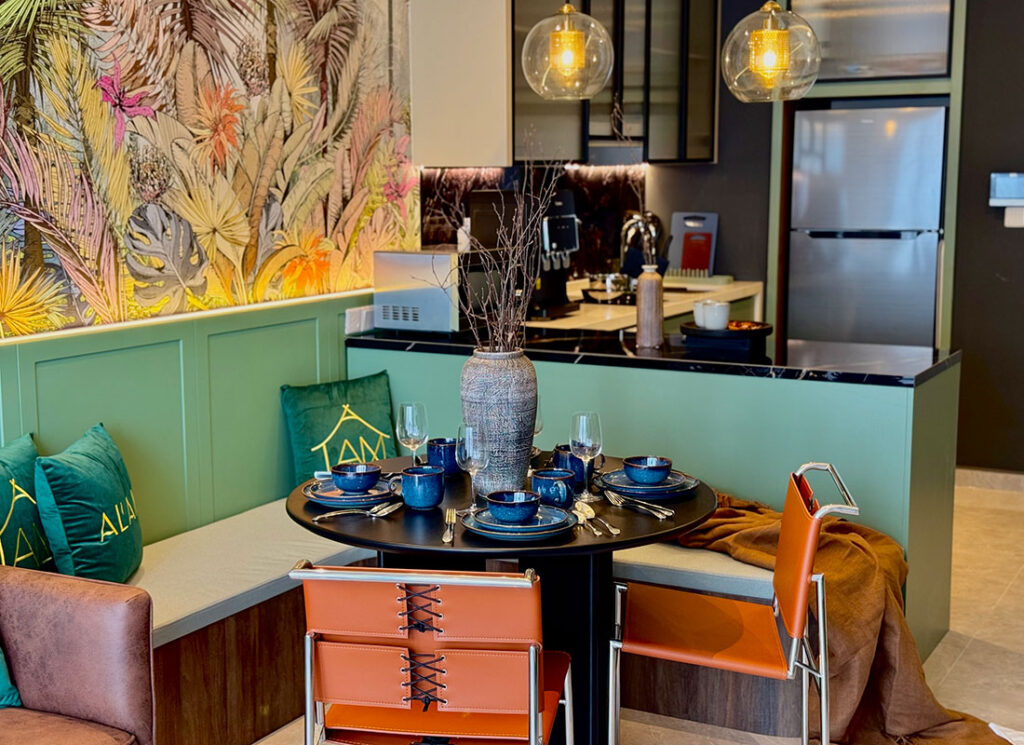
The reason, Amanda says, is restraint. “Rather than copying traditional ornamentation, I focus on the principles behind them – craftsmanship, proportion, material honesty and the way people experience a space. Culture should feel naturally integrated into everyday living instead of becoming a theatrical backdrop.”
For homeowners, this is the most transferable principle. The instinct when designing a home is quite often additive – more texture, more colour, more personality. What these spaces demonstrate is that the editing matters as much as the choosing. A single well-handled material or motif reads as considered. The same element applied across every surface becomes a theme. The question at every decision point isn’t “what can I add?” but “what is the one thing that carries the feeling I’m after?”
What to take home
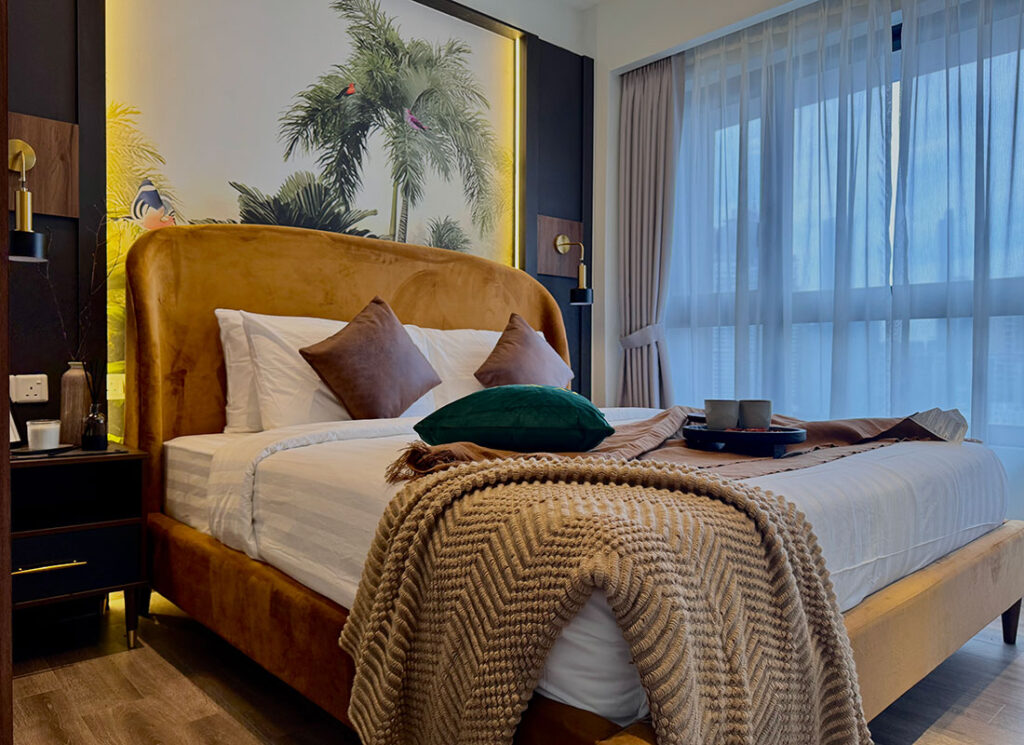
Amanda distils the hospitality design approach into three priorities that apply directly to residential renovations.
The first is spatial planning. “Homeowners often underestimate its impact. Beautiful materials alone don’t create memorable spaces.” Getting the layout right – how rooms relate to each other, how light moves through a space, how daily life actually flows – is the foundation everything else builds on. It’s also the decision hardest to undo once construction is complete, which makes it the one most worth investing in early.
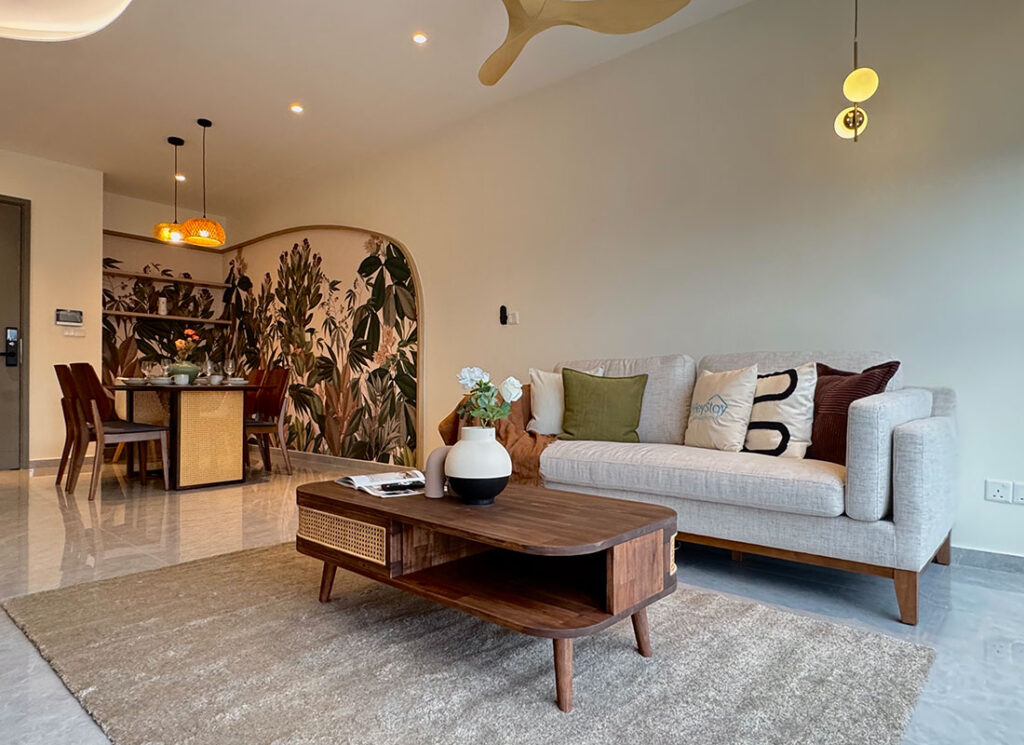
The second is material restraint. A considered palette of quality natural materials will serve a home better over time than trend-driven finishes that date. Warm timber, handcrafted ceramics, textiles with weight and texture – these are materials that age well and accumulate meaning. The goal is an interior that feels better the longer you live in it.
The third is the focal point. “Create one or two meaningful focal points – whether it’s a feature wall, custom joinery, lighting or artwork – that reflect the personality of the people living there,” Amanda says. In a short-stay space, a strong focal point gives guests an immediate read on the room. In a permanent home, it gives a space its identity. Without it, an interior tends to feel pleasant but unmemorable.
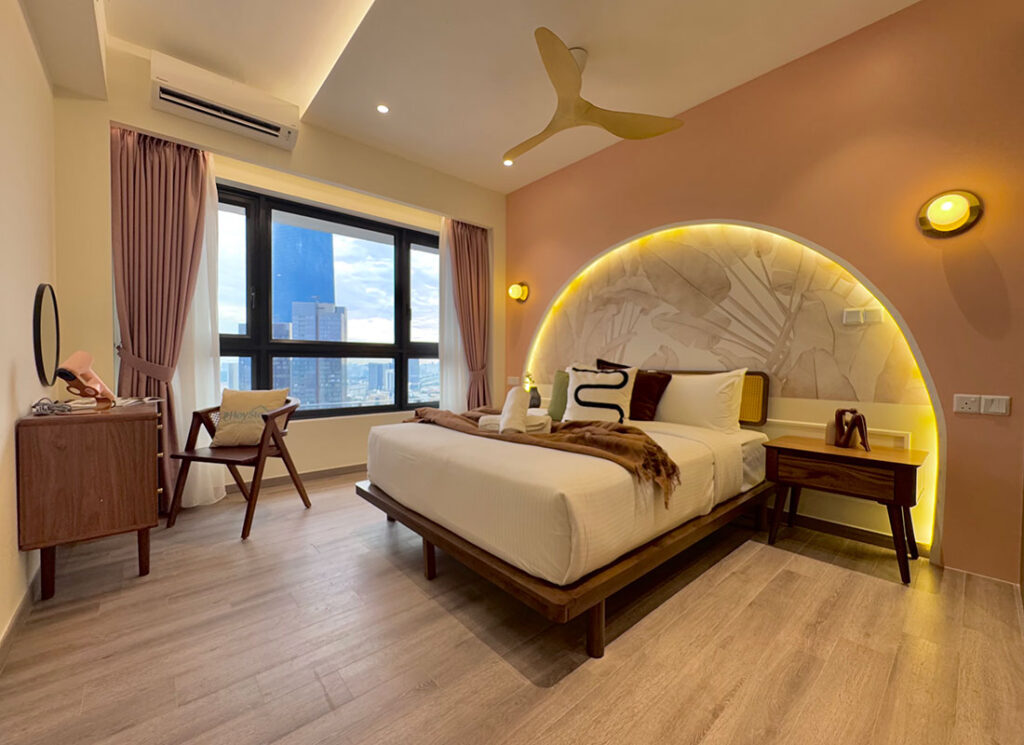
“The most memorable homes are never the ones with the most decoration,” Amanda adds. “They’re the ones that tell a genuine story about the people who live in them.”
It’s a principle honed through the discipline of designing for strangers, but it applies just as much to designing for yourself.
AL’AM Residences properties are managed by HeyStay Management and OurStay Sdn Bhd.
Photography by Bricks Begin (Sunway Grid unit)
We think you may also like How to design a home that truly works for your pets
What Airbnb interiors get right — and what your home can learn from them