A kitchen can look impressive on completion, but the real test comes after months of cooking, cleaning and daily use. Here’s how to choose countertops, backsplashes, cabinet fronts and finishes that suit the way you live.
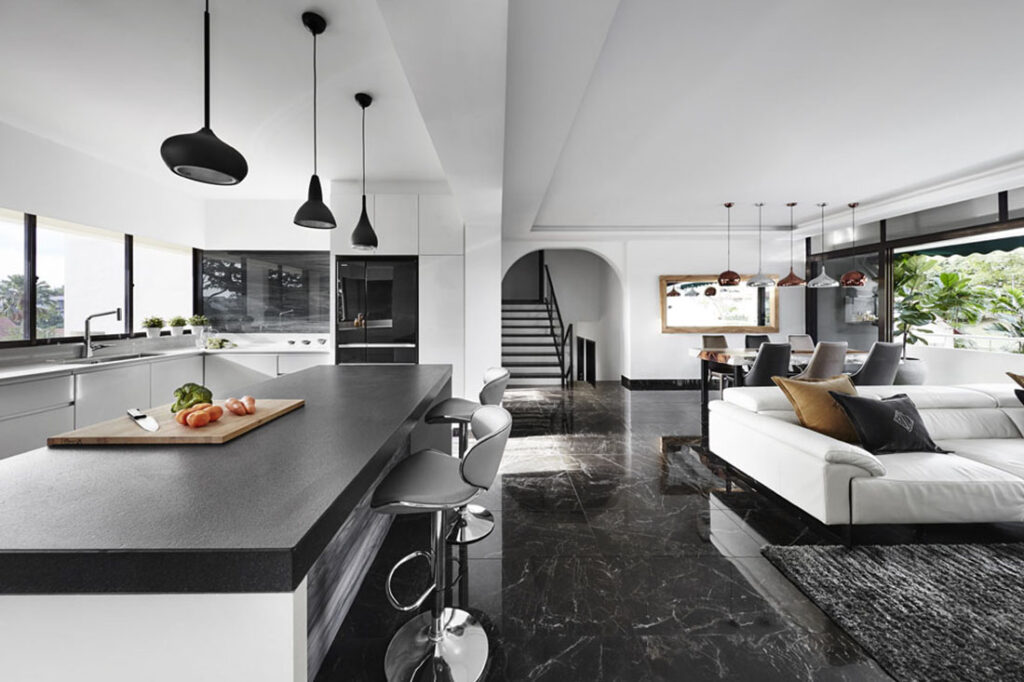
Top image: Reborn Interior
Kitchen materials are asked to do a lot. They need to look good, hold up to daily cooking, clean easily and still feel right with the rest of the home. In many Singapore homes, where kitchens are often compact, open to the living and dining areas, or split between wet and dry zones, those demands become even more layered.
A marble-look island, matte cabinet front or timber counter may set the tone of a kitchen, but its success depends on more than appearance. The real question is how each surface behaves once the home is in use: whether it can take heat, oil, water, fingerprints, scratches and the cleaning habits of the people who live there.
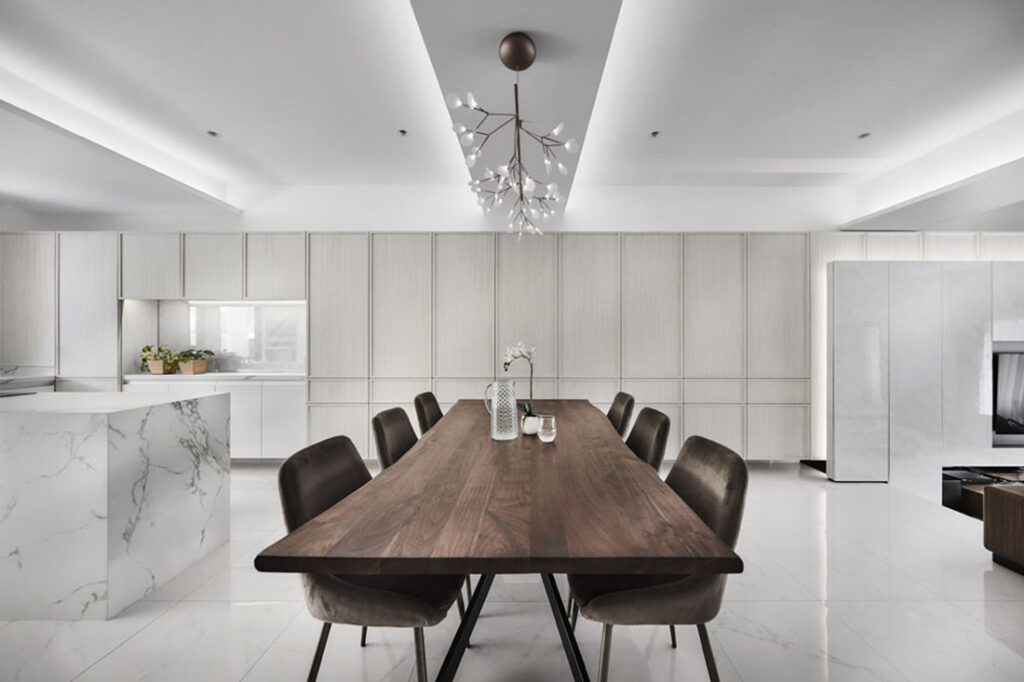
Begin with how the kitchen is used
A kitchen material should not be judged in isolation. Its suitability depends on the household, cooking style, layout and level of maintenance the owners are prepared to accept.
“We always start with lifestyle questions before aesthetic ones,” says Lawrence Puah, design director of akiHAUS Design Studio. His team asks whether homeowners cook daily or mostly reheat and order in, whether the kitchen is a wet-and-dry setup or a single open-concept space, and who will be using or cleaning it.
Hengky, founder of Reborn Interior takes a similar approach, looking at the homeowner’s preferred finishes, maintenance expectations and budget before recommending a surface. These questions help prevent a common mismatch: choosing for the look of the kitchen, rather than the life it has to support.
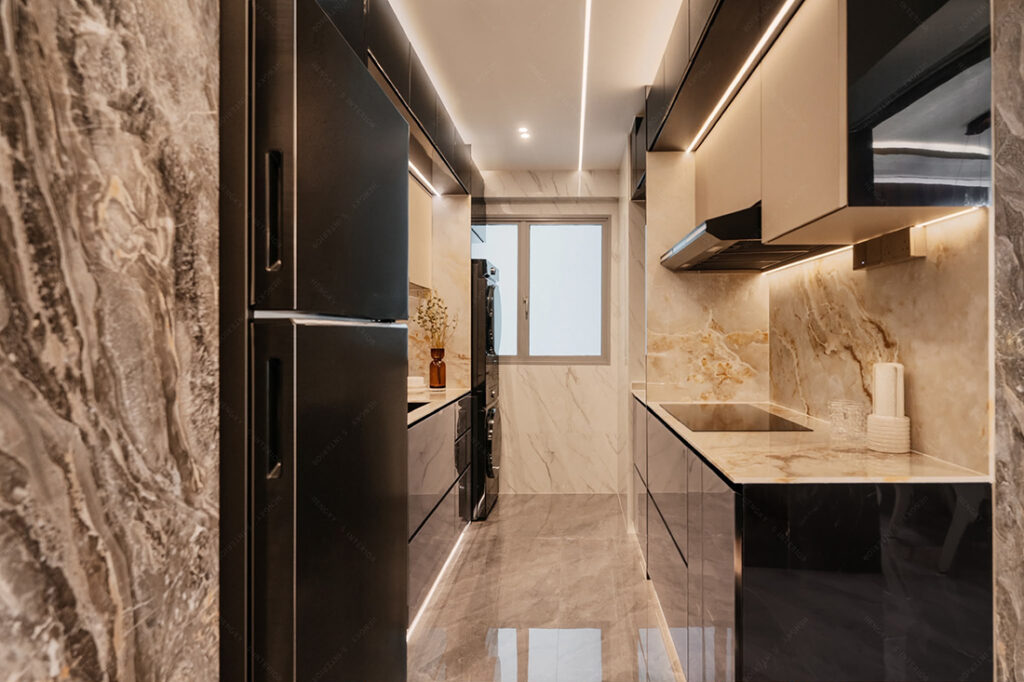
Understand what the countertop has to endure
The countertop is usually the most scrutinised kitchen surface. It carries daily contact, from chopping and plating to hot cookware, spills and cleaning, while also shaping the visual character of the room.
Natural marble remains one of the most desired options because of its veining, depth and variation. “No engineered surface can truly replicate the depth, veining and character that each slab possesses,” says Lawrence. But marble is also porous and susceptible to staining, etching from acidic ingredients such as lemon juice or vinegar, and gradual wear from everyday use.
This does not make marble unsuitable. It simply means homeowners need to understand what living with it involves. Those who appreciate patina and are willing to care for the surface may find it rewarding. For those who prefer a countertop that stays more consistent with less upkeep, quartz or sintered stone may be a better fit.
Hengky encountered this in a project where the homeowners initially wanted a marble countertop for its luxurious look. As they cooked almost every day and had young children, he explained the maintenance implications and showed them alternatives such as sintered stone. The final choice was a marble-look sintered stone countertop paired with a matching backsplash. “They achieved the luxurious appearance they originally wanted, but with a surface that was far more practical and easier to maintain for a busy family,” says Hengky.
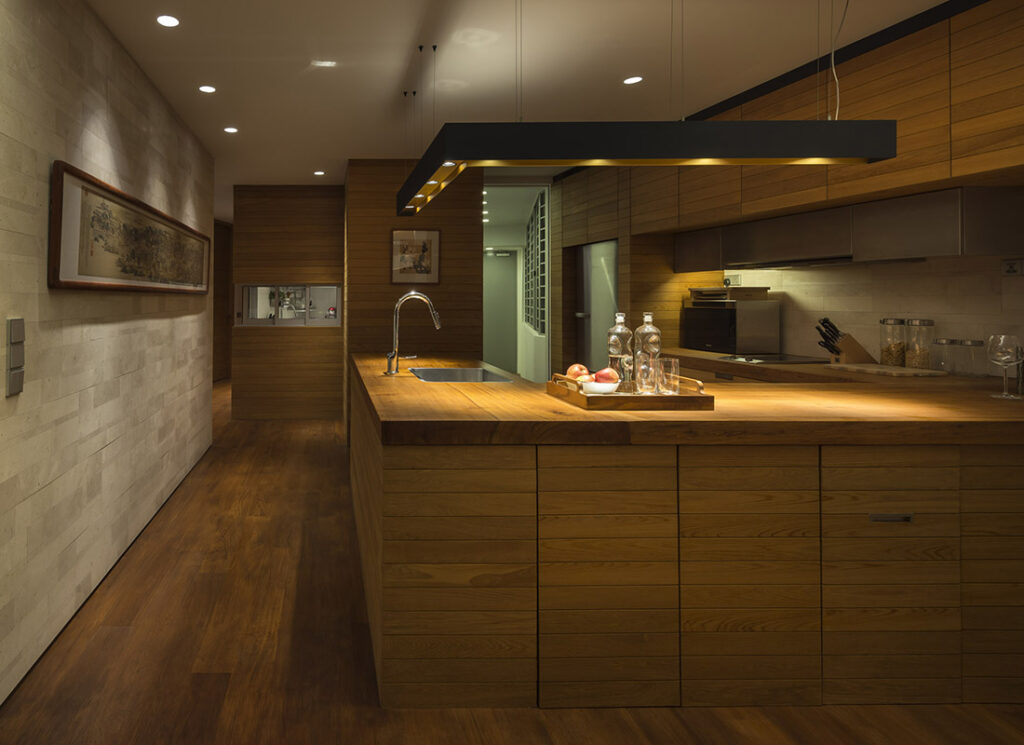
Consider the layout before ruling a material out
Some materials are not impractical in themselves; they simply need the right setting.
In one akiHAUS project, the homeowners loved the warmth and character of solid timber countertops. Timber, however, is softer than conventional countertop materials such as quartz or sintered stone, making it more vulnerable to scratches, dents, moisture and staining.
Rather than rejecting the idea, the design team reworked the planning. A separate enclosed wet kitchen was introduced for heavy-duty cooking, washing and preparation, allowing the timber-topped dry kitchen to remain the social heart of the home. The material stayed, but its role was adjusted.
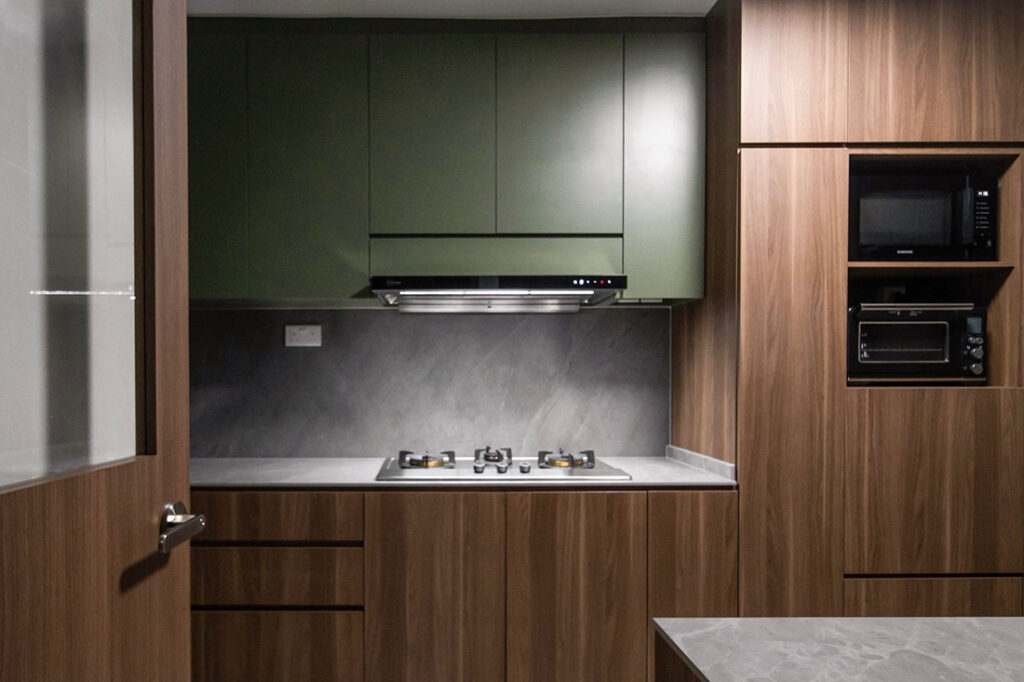
Do not overlook the backsplash
The backsplash is sometimes treated as a decorative extension of the countertop, but in a working kitchen it is also a cleaning surface. Behind the hob and sink, it has to cope with oil, water, heat and repeated wiping.
Large-format surfaces, full-height backsplashes or easy-clean panels can make practical sense, especially for homeowners who cook often. Smaller tiles may bring texture and charm, but grout lines require more attention. A pale or highly textured surface behind the hob may look beautiful when new, but the maintenance routine should be understood before committing.
For homeowners who want the look of marble or stone without the same level of upkeep, a matching sintered stone countertop and backsplash can create a strong, continuous effect while reducing some maintenance concerns.
Look closely at cabinet finishes
Cabinet fronts may not face the same heat as countertops, but they are touched constantly. Fingerprints, grease marks, moisture and repeated opening and closing all affect how the finish performs.
Matte cabinet finishes are a good example of a surface that can be misunderstood. Hengky notes that homeowners often assume matte finishes are easier to maintain because they appear less reflective than glossy surfaces. In reality, some matte finishes can show fingerprints, grease marks and scratches more readily, especially in busy homes with children or frequent cooking. For those who like the soft, low-sheen look, higher-quality anti-fingerprint laminates are worth considering, as they can offer a similar matte appearance while being more forgiving in high-touch areas.
Lawrence also points to open-pore or textured wood-look laminates and veneers. These can look warm and tactile in showrooms, but textured surfaces may trap grease and dust in the grain, particularly in Singapore’s humidity. Stainless steel, especially in brushed or matte applications, also requires a realistic maintenance conversation, as water spots and fingerprints can show up visibly if the surface is not wiped down regularly.
Renovating soon? Get matched with interior designers suited to your home.
Spend where performance matters most
A higher price does not automatically make a kitchen better. A more useful way to think about budget is to spend where wear, failure or replacement would be most disruptive.
For Lawrence, the countertop is worth prioritising because it takes the most daily abuse. He also highlights cabinet carcasses and hardware, including hinges and runners, as these affect how solid the kitchen feels after years of use. The point is not simply to choose the most expensive surface, but to invest in materials and details that will hold up well over time.
Granite is one material he believes homeowners should reconsider. While many default to quartz or sintered stone, granite can be a hard-wearing, heat-resistant option when properly sealed. Its perceived limitation is often aesthetic rather than practical: some homeowners associate it with a more conventional polished look. In an akiHAUS project at Hillcrest Arcadia, a leather-finished granite island countertop gave the surface a soft, low-sheen texture with more visual depth, showing how a familiar material can feel more design-led when homeowners look beyond the standard finish.
More measured spending can often apply to cabinet door finishes and backsplashes. Well-specified laminates can convincingly mimic wood grain or stone at a lower cost, while mid-range tiles or large-format panels can achieve a refined effect without extending premium materials across every surface.
Before making the final choice
Rather than asking only whether a kitchen material looks right, homeowners should also consider:
- How often they cook, and what kind of cooking they do
- Whether the kitchen is open, enclosed, or split into wet and dry zones
- Where heat, oil, water and food stains are likely to land
- How much cleaning they are realistically willing to do
- Whether scratches, patina or fingerprints will bother them
- How the material needs to be cleaned or maintained
- Whether the material is being used in the right part of the kitchen
- What repair or replacement would involve
The right kitchen material is not necessarily the most expensive, the most dramatic or the most indestructible. It is the one whose strengths and compromises suit the household, the layout and the way the kitchen is used every day.
We think you may also like Material Matters: How to choose finishes for a bathroom renovation
Material Matters: Choosing kitchen materials you won’t regret