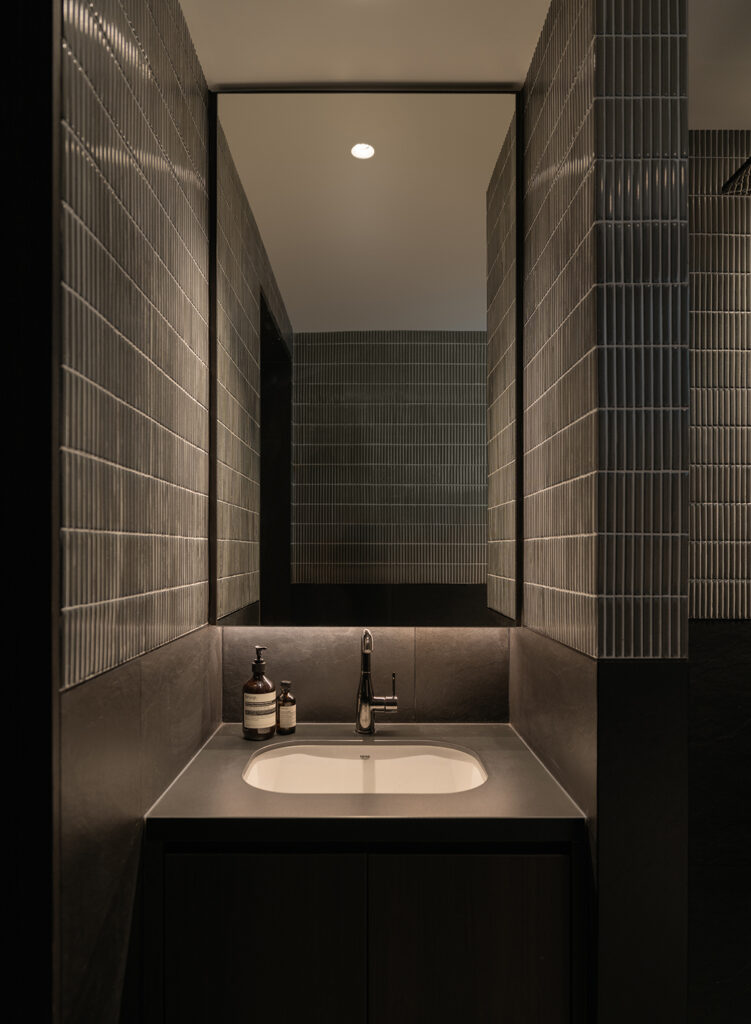
A BTO designed from within
description
As an interior designer working on her own home, Lim Si Ling (@ceiling.plans) of LXY Designs was not responding to someone else’s brief, but to the routines and contrasts of her own household: work-from-home days that require focus, material samples that need to stay within reach, a preference for quiet, and a husband who enjoys having friends over.
The four-room BTO is a top-floor corner unit in a mature estate, with enough height and separation to feel quietly set apart from the movement below. Si Ling wanted the interior to build on that quality — not by shutting the world out, but by creating a home that turns inward while still being able to open up when needed.
“My husband and I have quite different personalities: I tend to be more introverted and value quiet, while he’s more outgoing and enjoys having people over,” says Si Ling. The design therefore had to allow retreat and sociability to coexist.
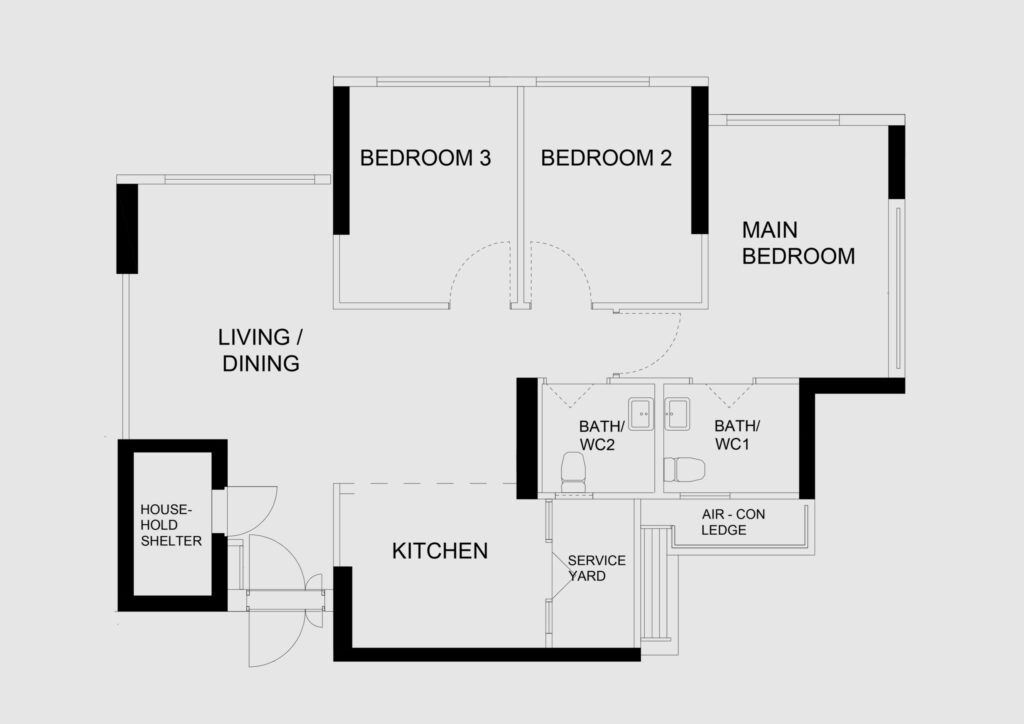
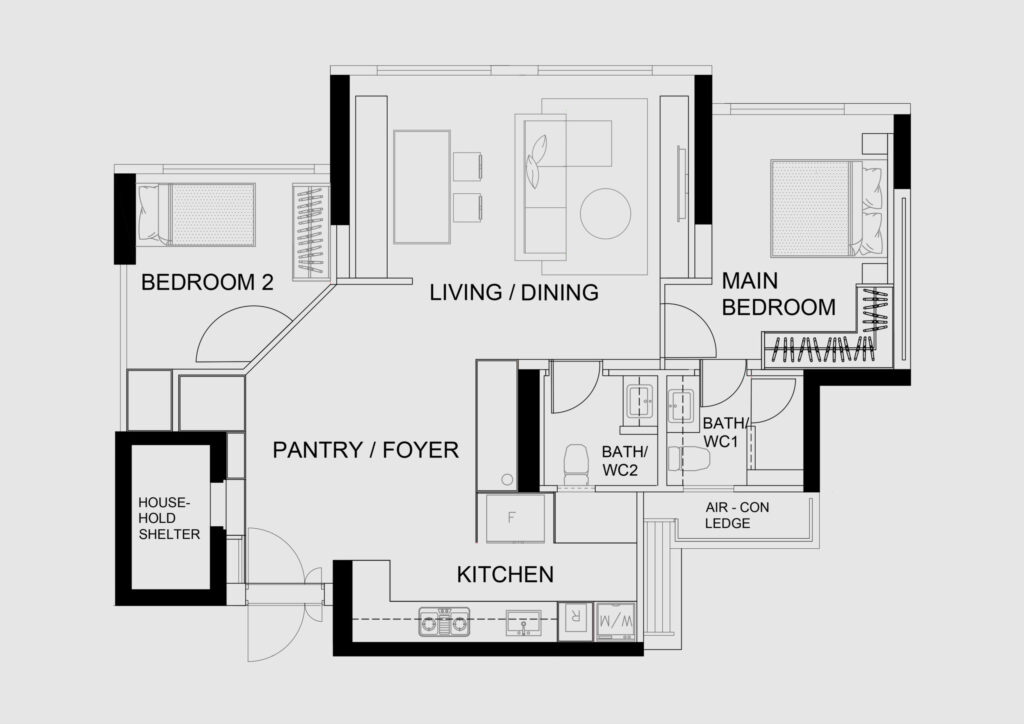
A conventional three-bedroom layout was reworked into a two-bedroom home with a more generous communal core. Bedrooms 2 and 3 were opened up to form the new living and dining area, while part of the former living and dining zone near the entrance was carved out as a guest room. The main bedroom remains in its original position, allowing the rest of the flat to be reorganised around a more open, shared space.
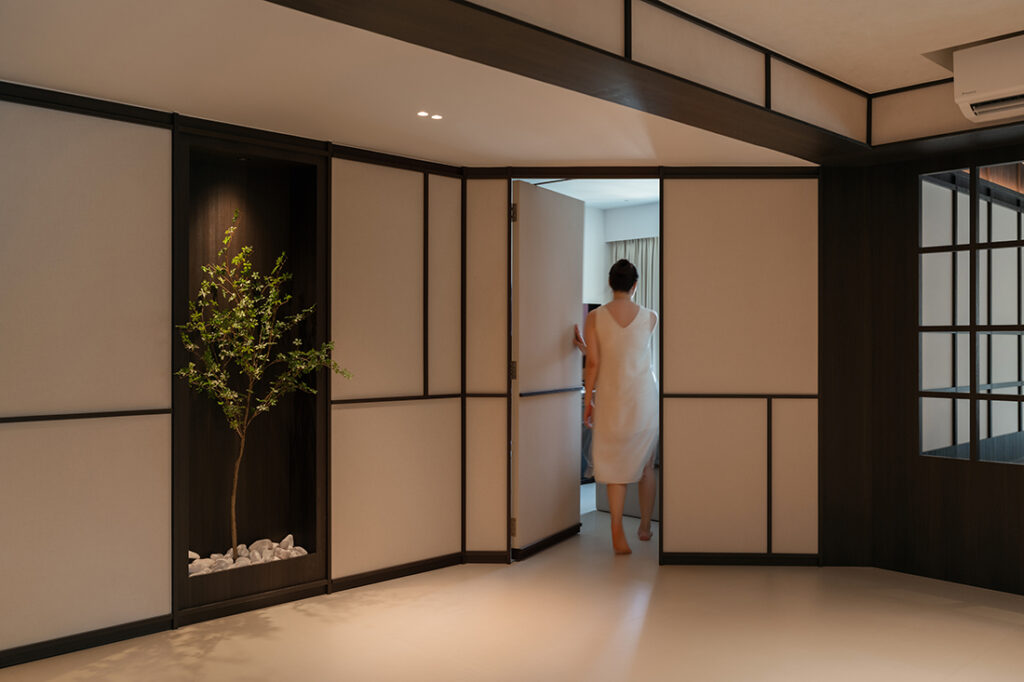
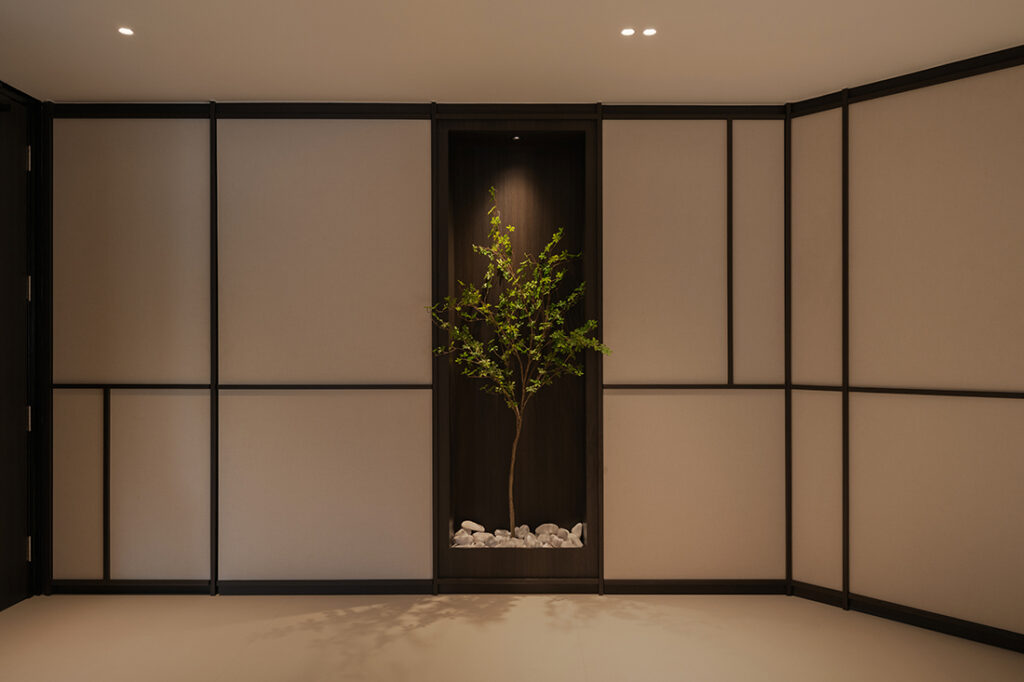
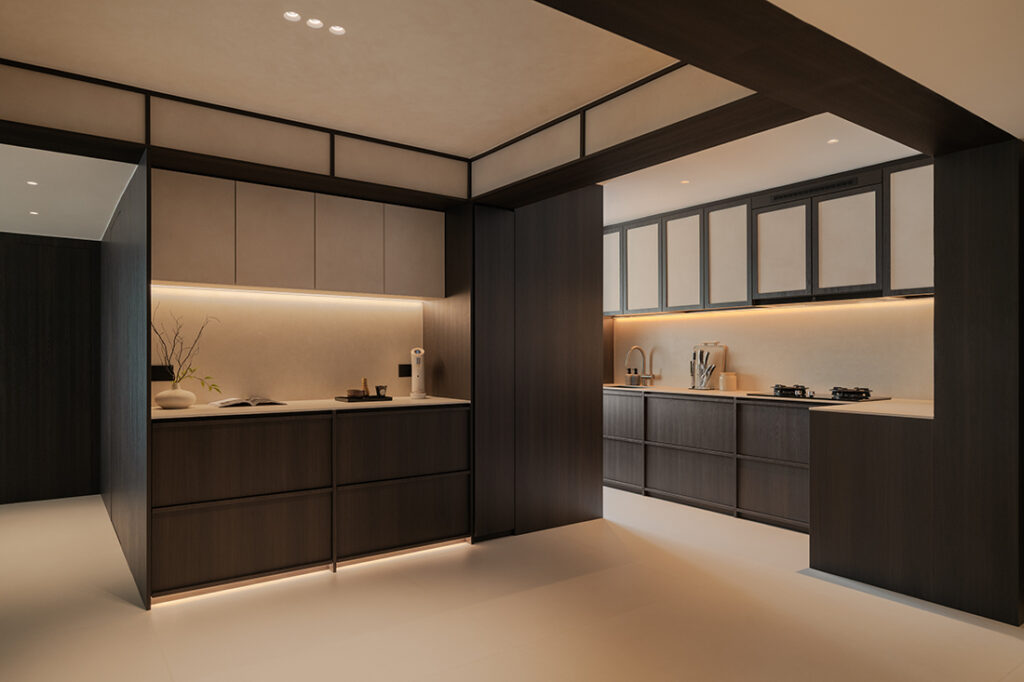
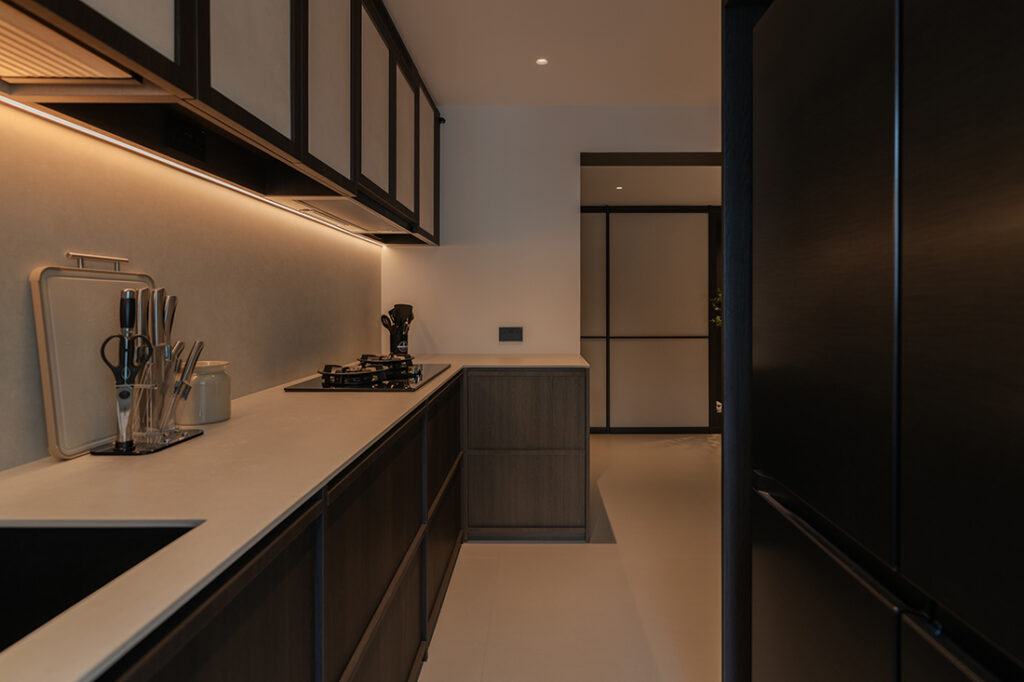
Recast as a combined pantry and foyer, the entry sets up the home’s rhythm of compression and release. A lowered ceiling and a run of concealed storage create a quieter threshold, with panels, doors and storage receding into one continuous surface. Past this compressed arrival, wrapped beams and concealed cove lighting give the pantry a soft lift, opening the ceiling plane without making the move feel overt.
The pantry becomes one of the home’s social buffers rather than just a passage. Drinks and snacks are kept close by, and the area allows for longer hosting sessions, including mahjong, without taking over the living and dining zones. This lets the open plan work in pockets, with activities able to run together or separately.
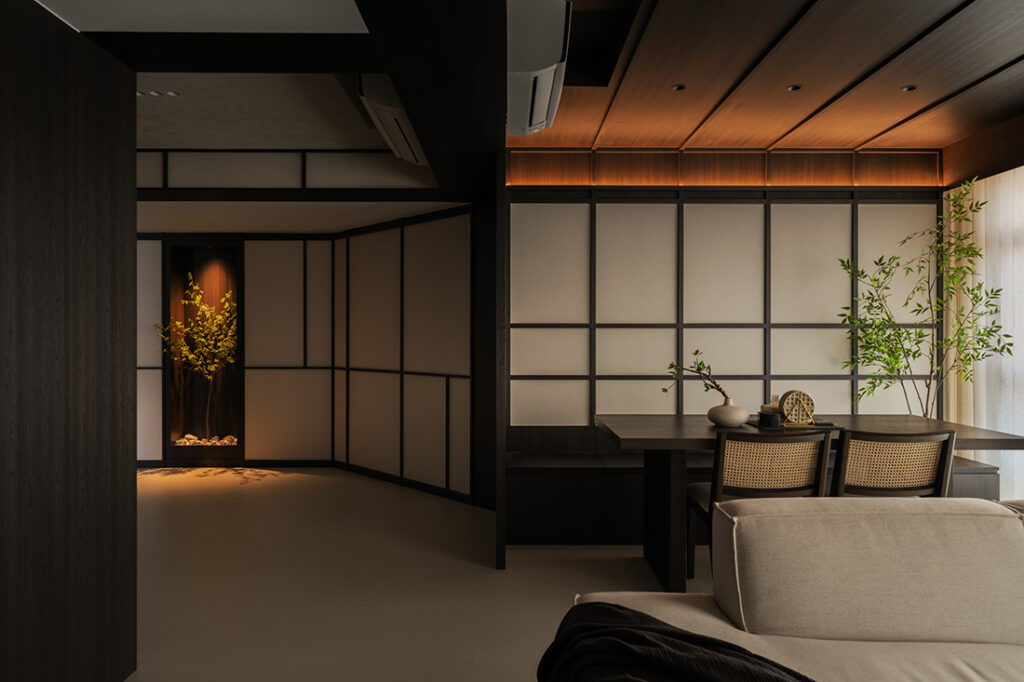
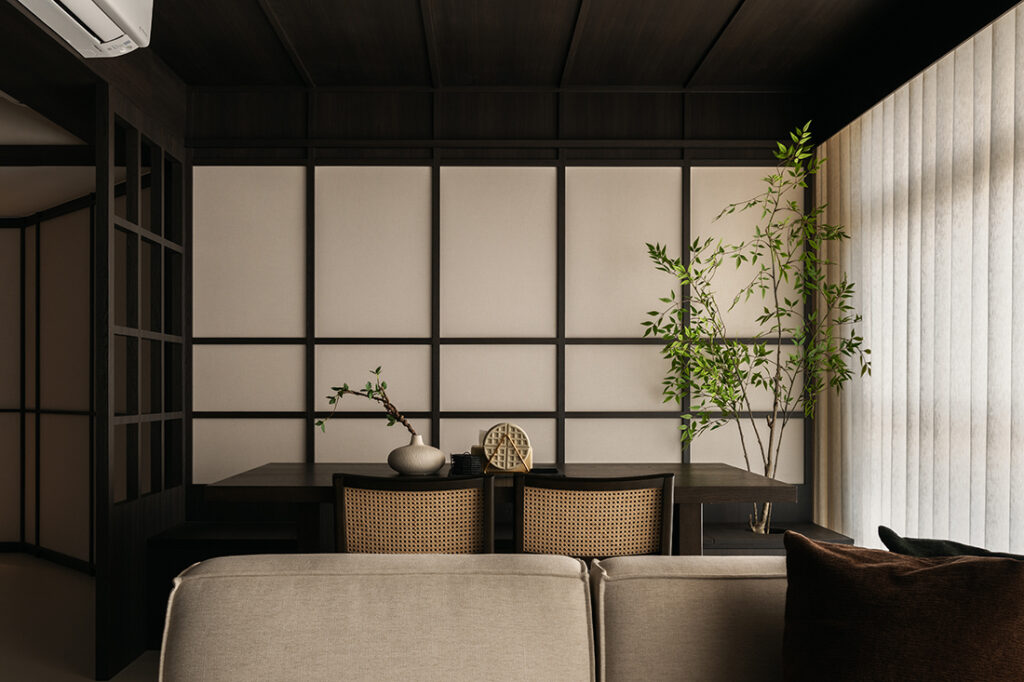
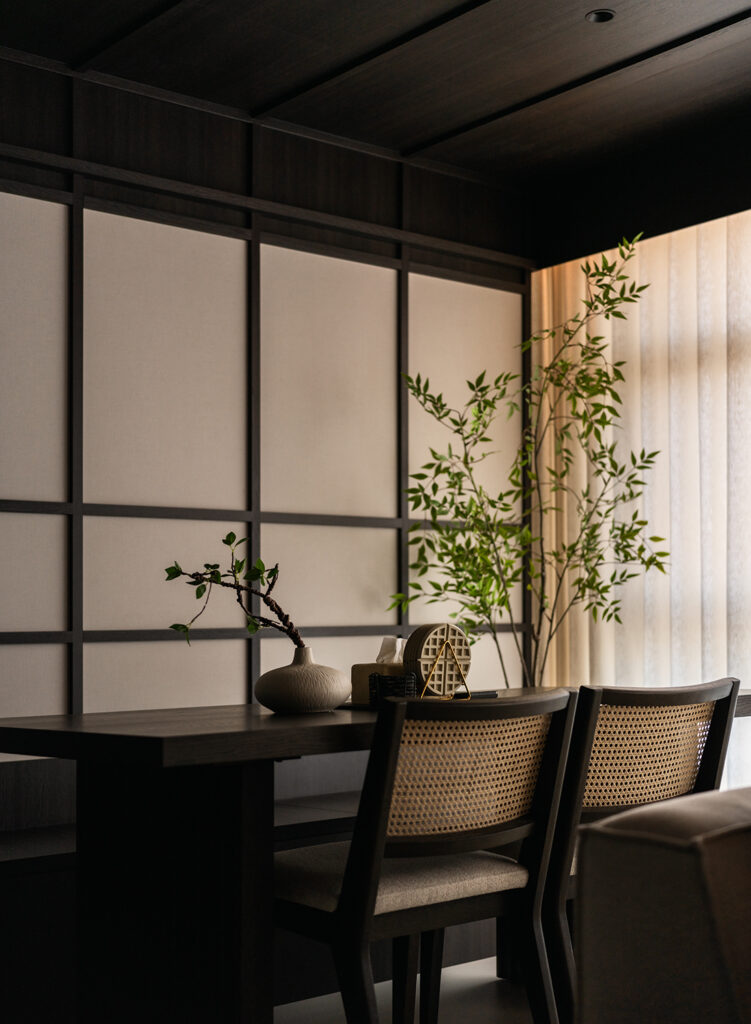
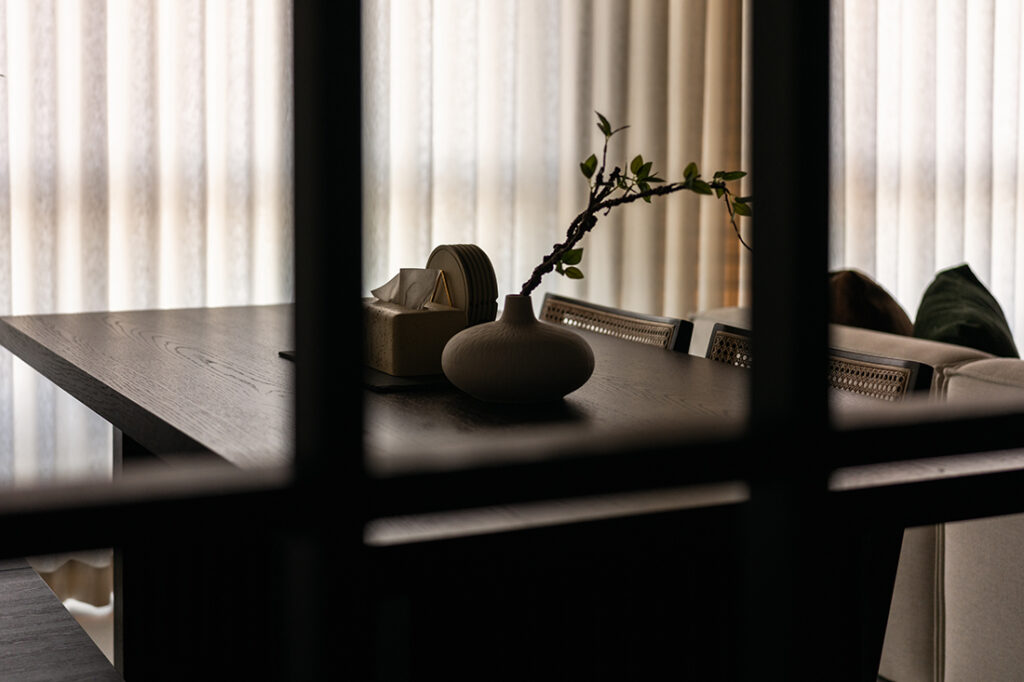
Positioned deeper within the flat and close to the window, the dining area is shaped by Si Ling’s work-from-home routine. “Because I work from home quite often, the dining area was intentionally positioned deeper within the space and closer to the window,” she says. “It allows me to look out when I need a break, but also gives a sense of depth when I’m working, which helps me stay focused.”
A built-in settee anchors the dining area and conceals storage for the materials Si Ling uses in her work. A divider wraps lightly around the zone, giving her some privacy even when her husband is hosting nearby. The space is open, but not exposed.
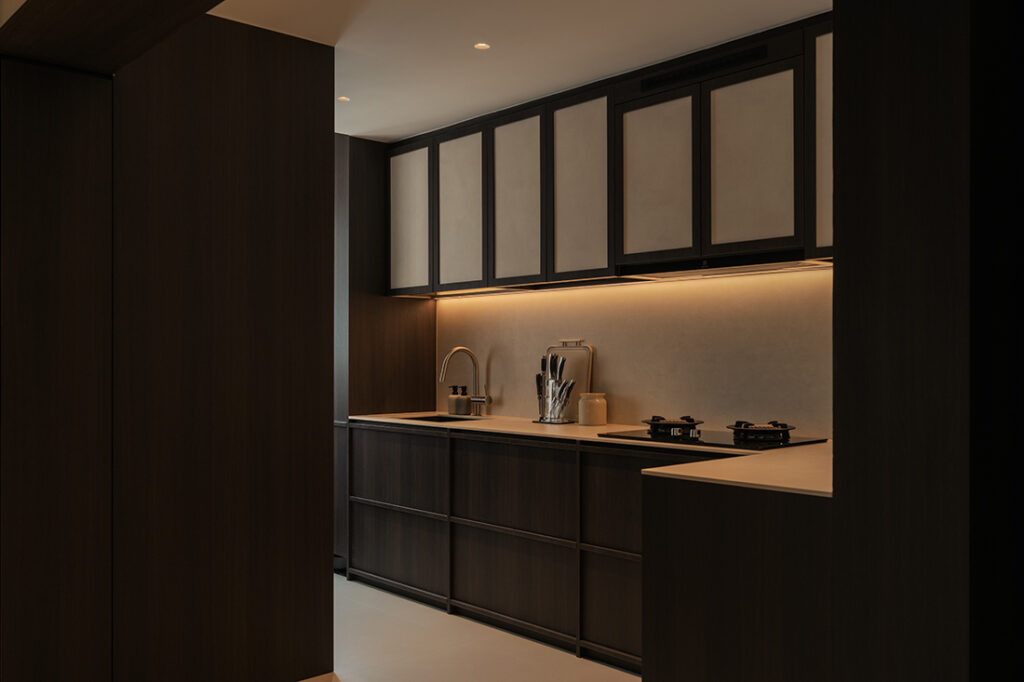
The kitchen is open but not visually loud, designed to dissolve into the common areas rather than stand apart from them. Its frontage is kept clean and uninterrupted, with the fridge pulled flush into the cabinetry and laundry functions tucked into the yard. It remains a practical working zone, but reads as part of the wider living space.
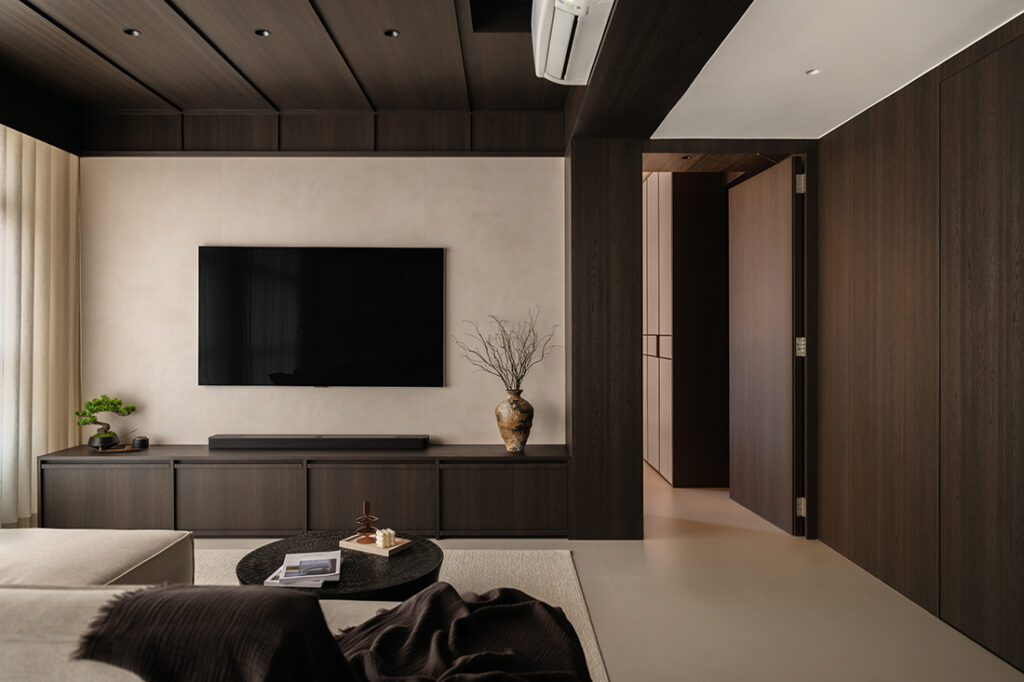
Japanese Zen influences inform the flat without becoming literal. Dark wood-patterned laminates frame ceilings, walls and cabinetry, while lighter microcement-effect surfaces and fabric-textured laminates soften the palette. Depth comes through subtle shifts in material, texture and light rather than a few dominant features.
Across the living area, a dark laminated ceiling extends through the communal zone, visually linking the dining feature wall to the TV wall. The TV wall is kept lighter, with a concealed door to the master bedroom integrated into the same plane, so screen, storage, circulation and wall read as one composition.
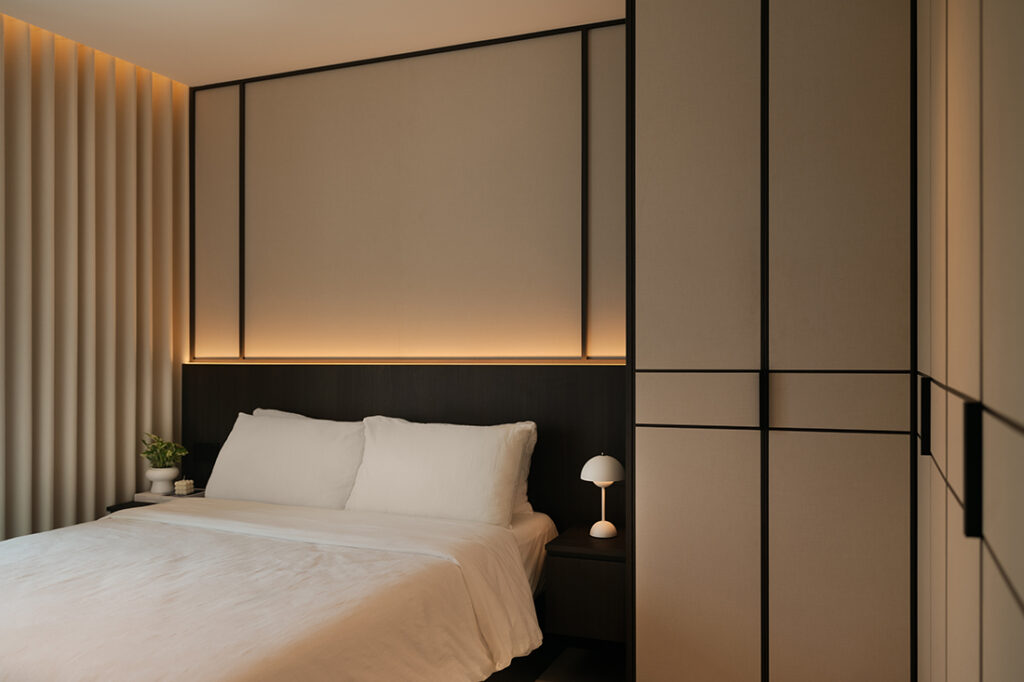
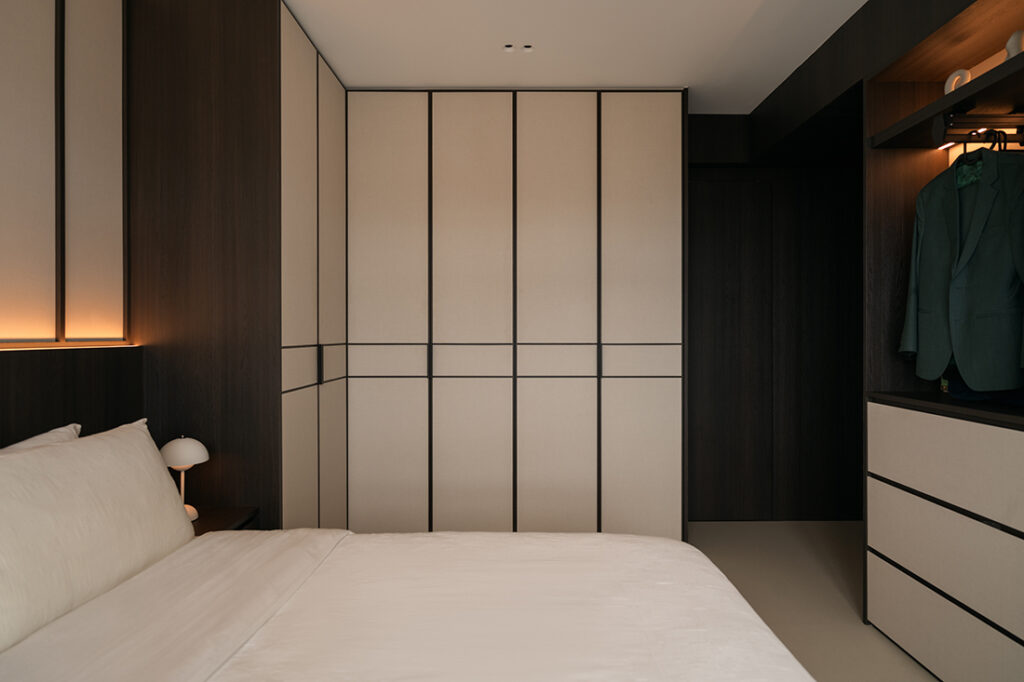
Private spaces continue the same restraint at a more enclosed scale. In the master bedroom, a gridded wardrobe wall quietly references shoji proportions, while concealed lighting warms the darker headboard. Hidden behind the foyer wall, the guest room is planned for future flexibility.
Beyond its distinctive mood, the home is memorable for how precisely it assigns space to different parts of daily life. Work happens near the window, with materials stored within reach. Hosting can extend into the pantry, while mahjong has its own place without overtaking the dining area. Designed by Si Ling for her own household, the flat feels personal in the most useful sense: it does not simply express her style, but makes room for the way each day unfolds.
LXY Designs
www.instagram.com/lxydesigns.sg
Photography by Studio L’arc
We think you may also like Turning Corners: A Jalan Dusun home finds its rhythm
DETAILS
PROJECT GALLERY
PROJECT GALLERY
Foyer
Living Room
Dining Room
Kitchen
Bedroom
Bathroom