A Bishan flat with a Wonder Wall
description
As an architectural designer, working on your own home comes with a different kind of pressure. There is no client brief to interpret and no polite compromise to lean on — only the responsibility of making decisions you will live with every day. For Clifford See, Co-founder and Director of Local Architecture Research + Design (LAR+D), this five-room HDB resale flat in Bishan is exactly that: a home he designed (together with firm partner Cheung Yu Ting), for himself, his wife Valerie, their two daughters, and two cats who treat the space as shared territory.
The move to this home was driven by a simple shift in family needs. As the household grew, the couple decided to relocate from their previous four-room flat (see that story here) to a five-room resale unit — also in Bishan — to gain more space while staying within a familiar neighbourhood. Rather than approaching the renovation as a blank slate, Clifford took a measured approach, allowing existing conditions to shape the design response.
That restraint was partly driven by time. With only two months to move out of their previous home, the renovation had to be strategic. As Clifford explains: “The existing bedrooms were adequately sized for the growing family so they needed to be kept as is. This also helped to minimise the hacking and construction period given that we had limited time to vacate our previous place.” Retaining the private rooms meant attention could be focused where the family spends most of its time — the shared living spaces.
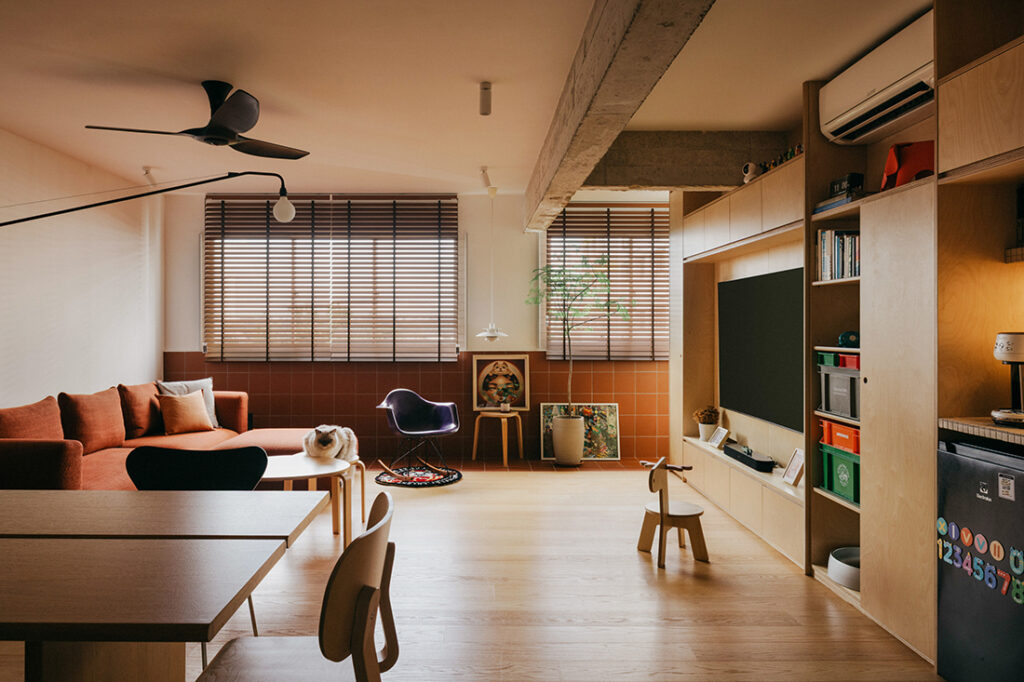
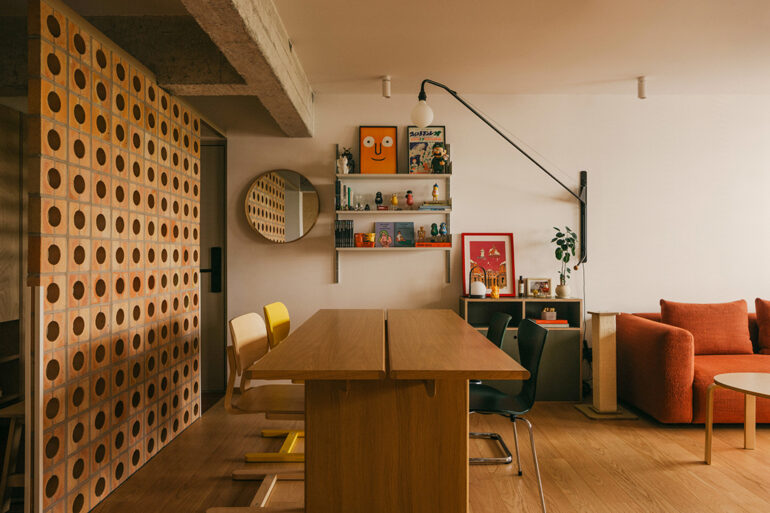
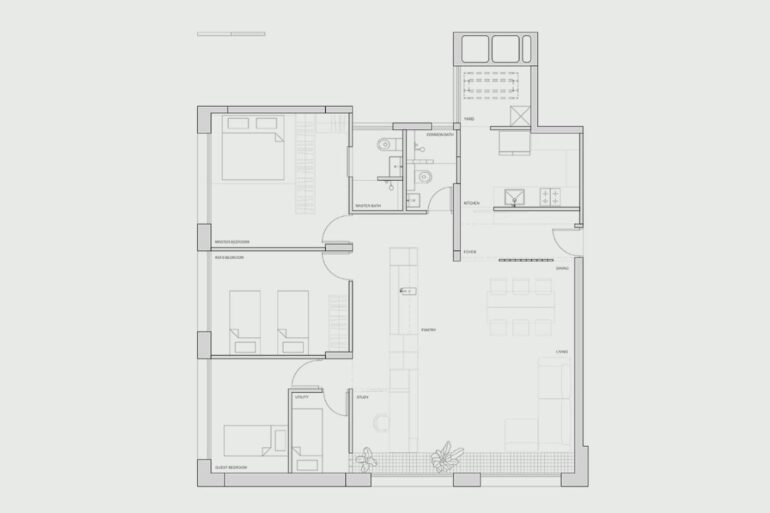
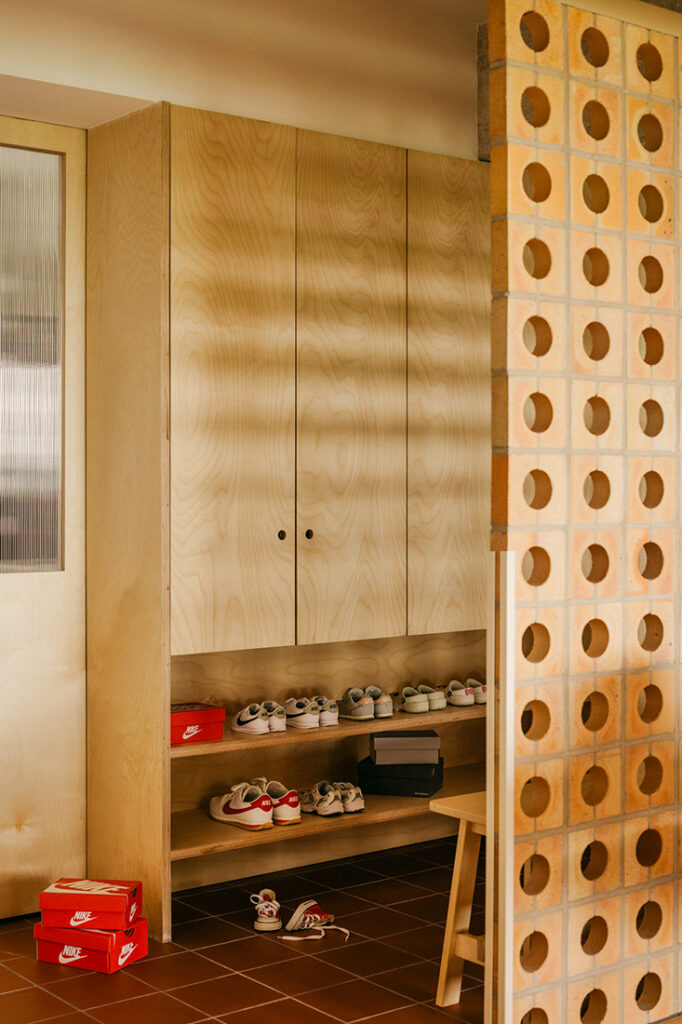
The design effort centred on reorganising these common areas to feel open yet controlled. A newly inserted concrete vent block screen establishes a foyer and a clear transition between the entrance, kitchen and living spaces, preventing the home from being immediately visible and creating a more measured sense of arrival.
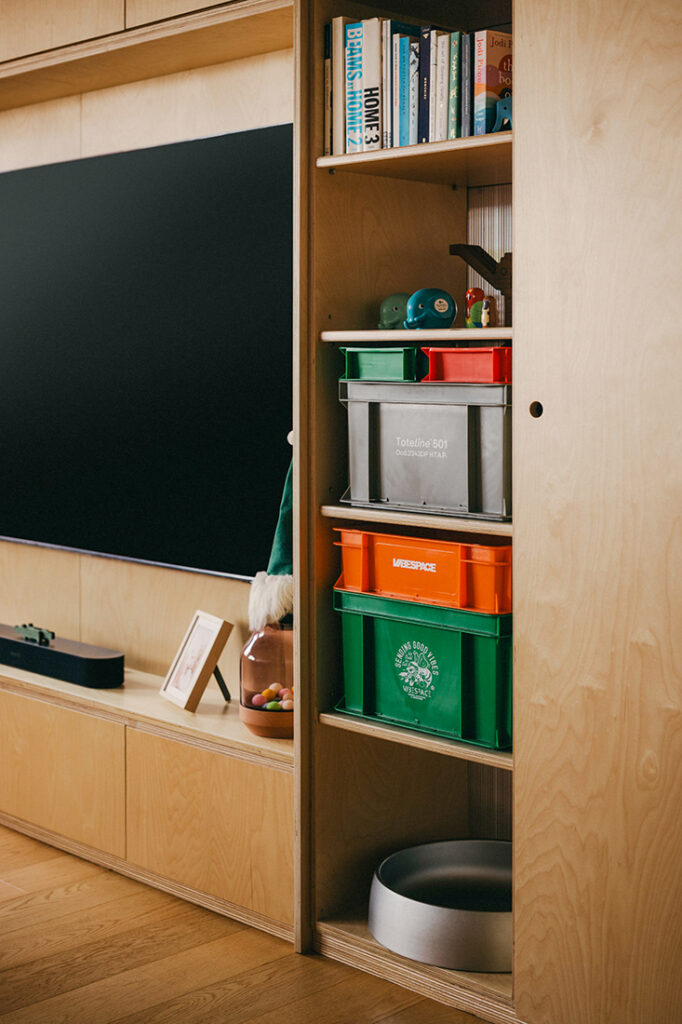
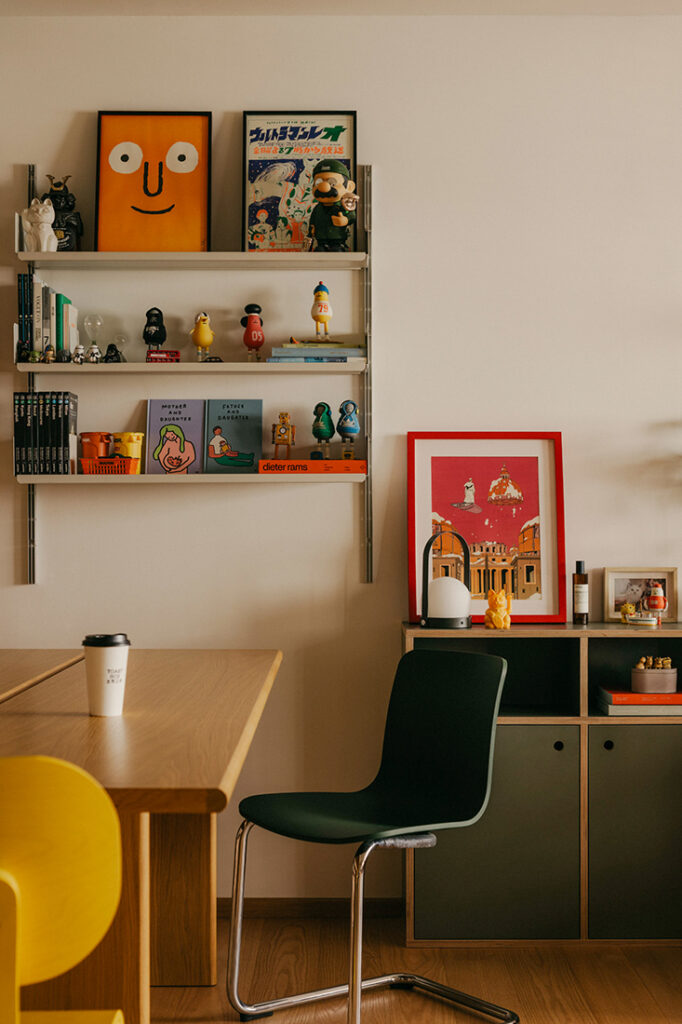
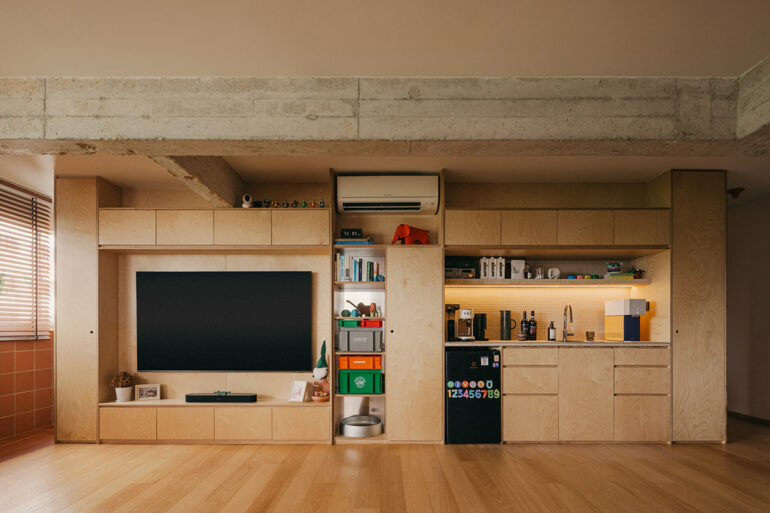
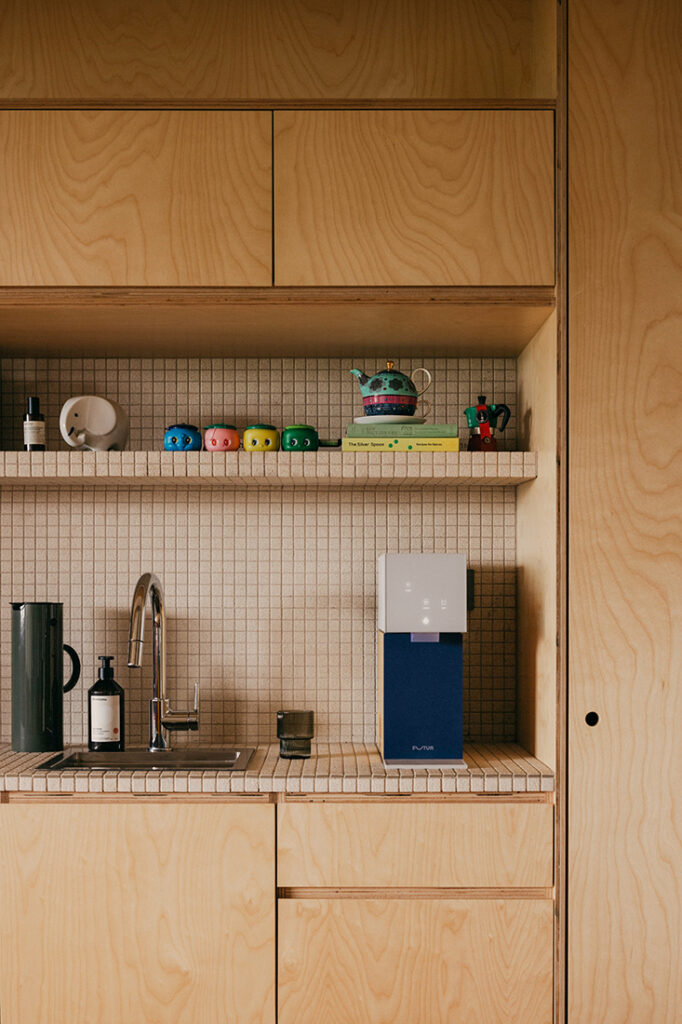
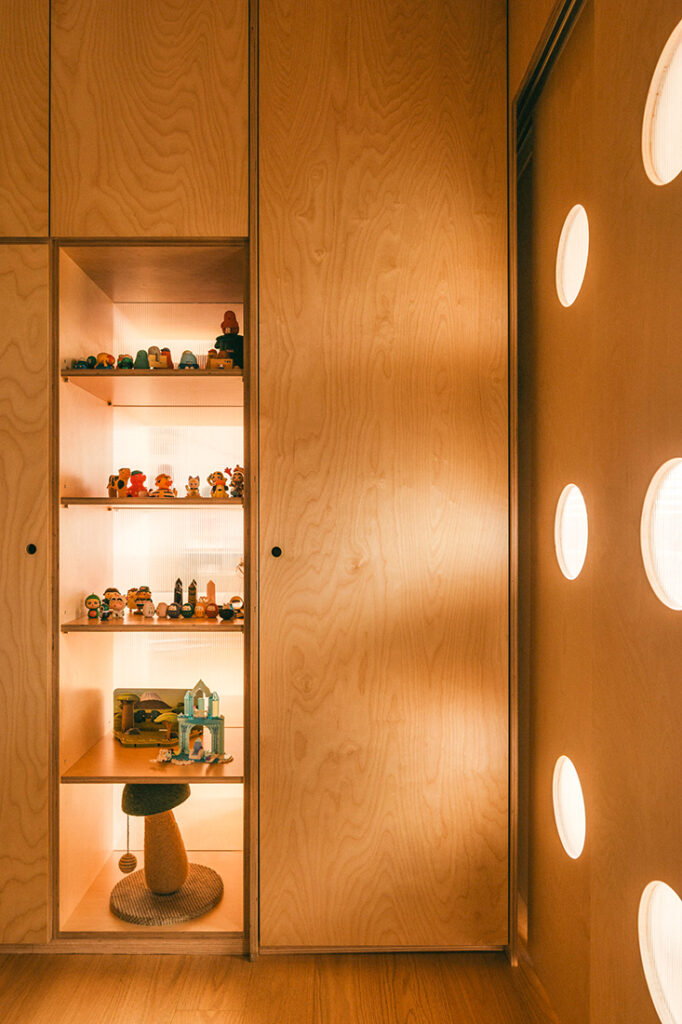
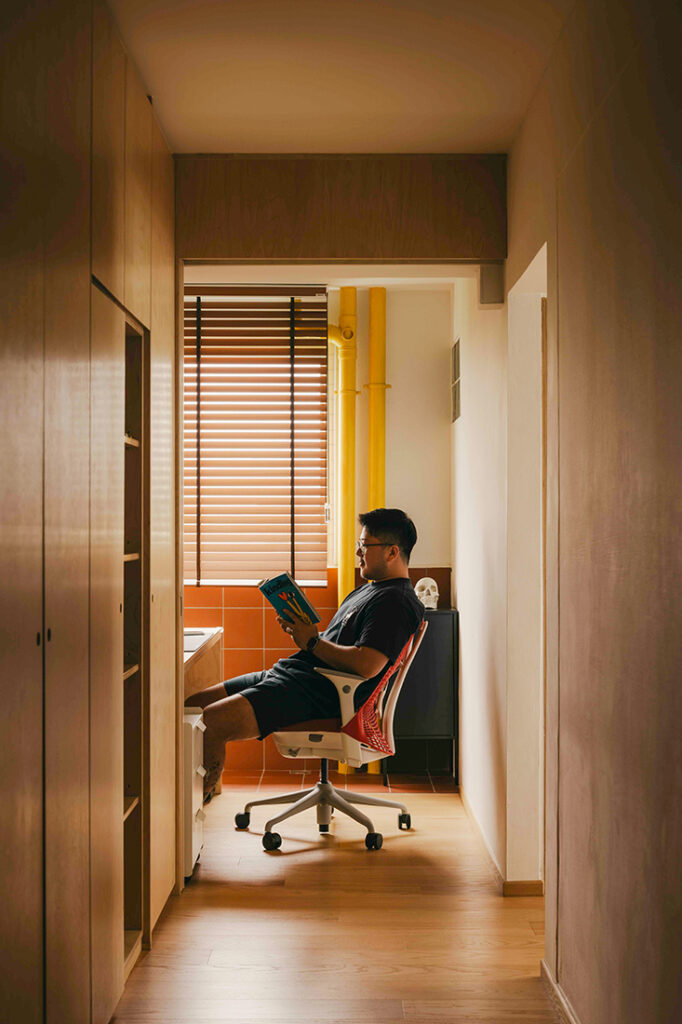
At the heart of the layout sits the project’s defining feature: the “Wonder Wall”. Conceived as a spatial device rather than a conventional partition, it anchors the plan while softly separating shared spaces from the home’s private zones. Beyond serving as a divider, it consolidates multiple functions — from storage and display to a dry pantry and study nook (in the bedroom facing side) — while allowing the existing bedroom layout to remain intact.
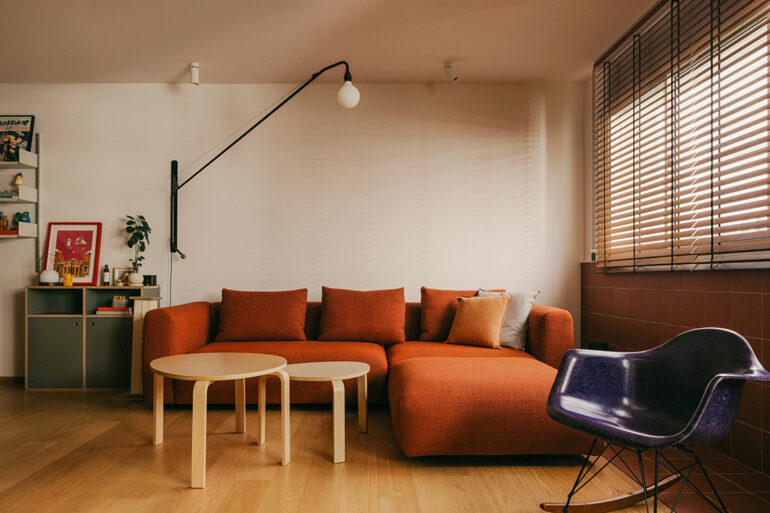
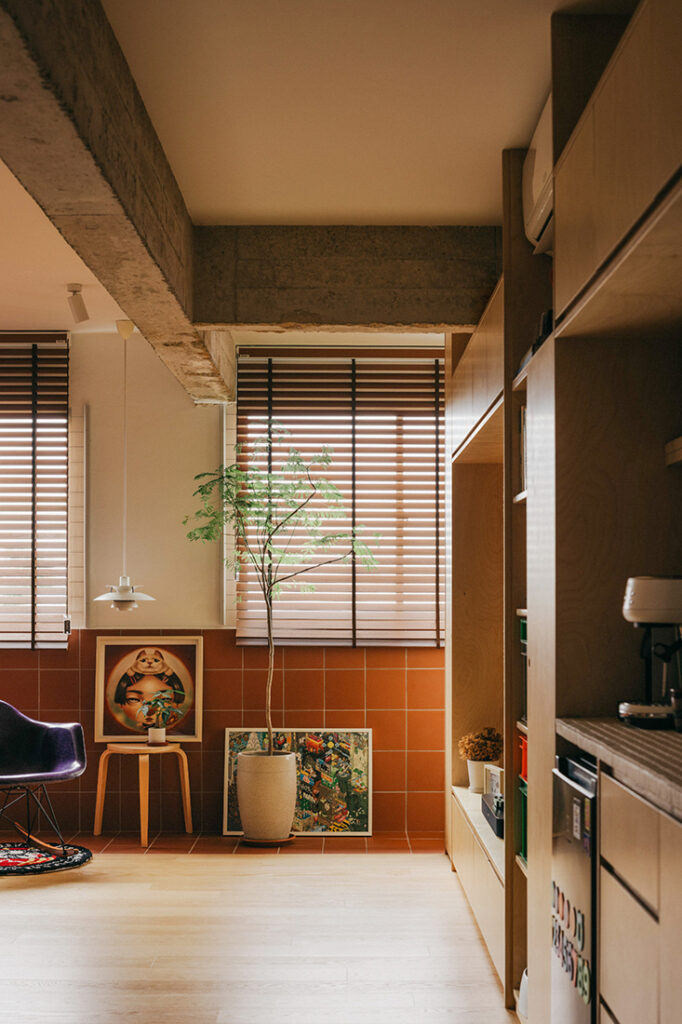
Material decisions further articulate these shifts in space and use. To regularise the living room into a more functional footprint, the original balcony was removed, but not erased entirely. “As an homage to the removed balcony, a small strip of terracotta tiles sits in its place, giving another layer of colour and texture that is reminiscent of an outdoor material, where plants were placed to take advantage of the natural daylight along the perimeter,” says Clifford. The gesture introduces warmth along the window edge while acknowledging what once existed.
That change in material also plays a spatial role. “This deliberate move allows an offset of the “Wonder Wall” from the edge of the windows, creating a fun little area for the kids and the cats to run around,” says Clifford. What might otherwise have been leftover space becomes an informal loop for movement and play — a reminder that this is a home shaped by daily routines rather than display.
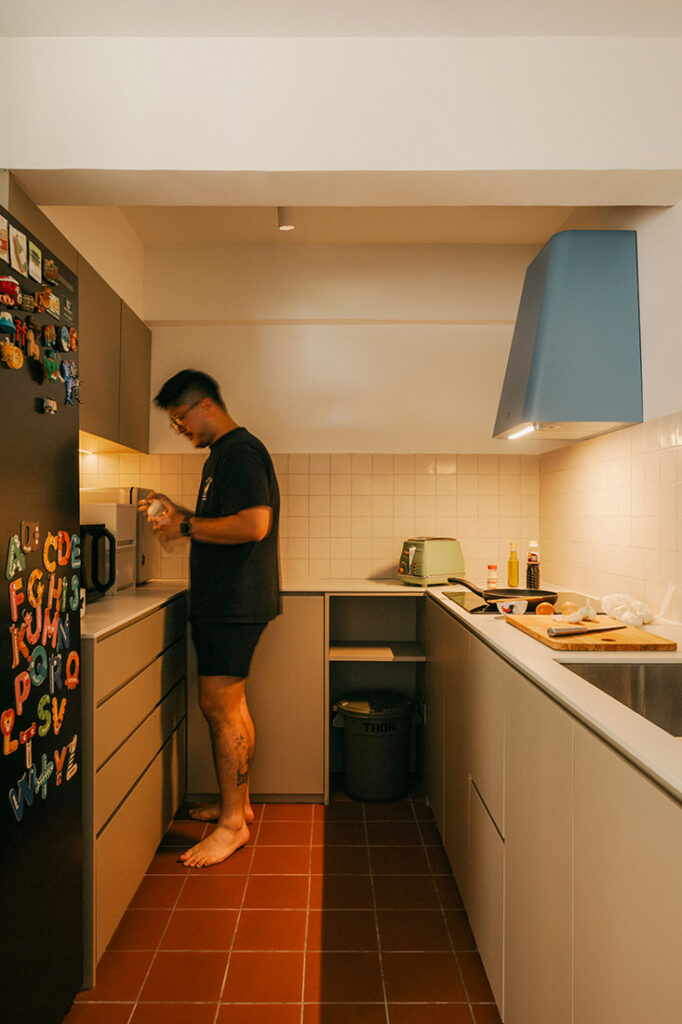
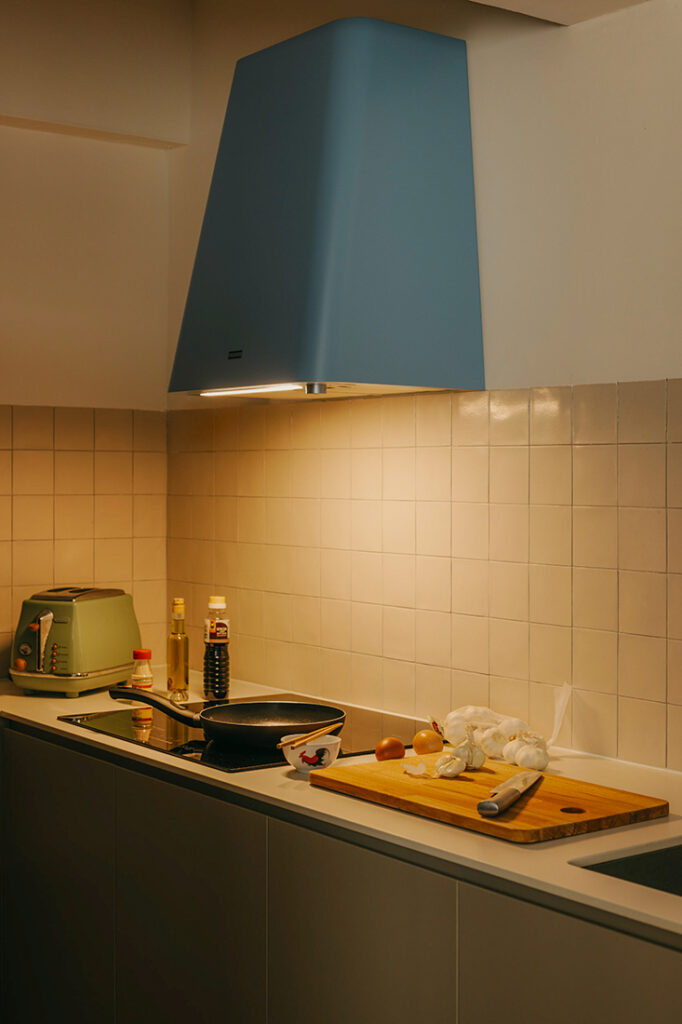
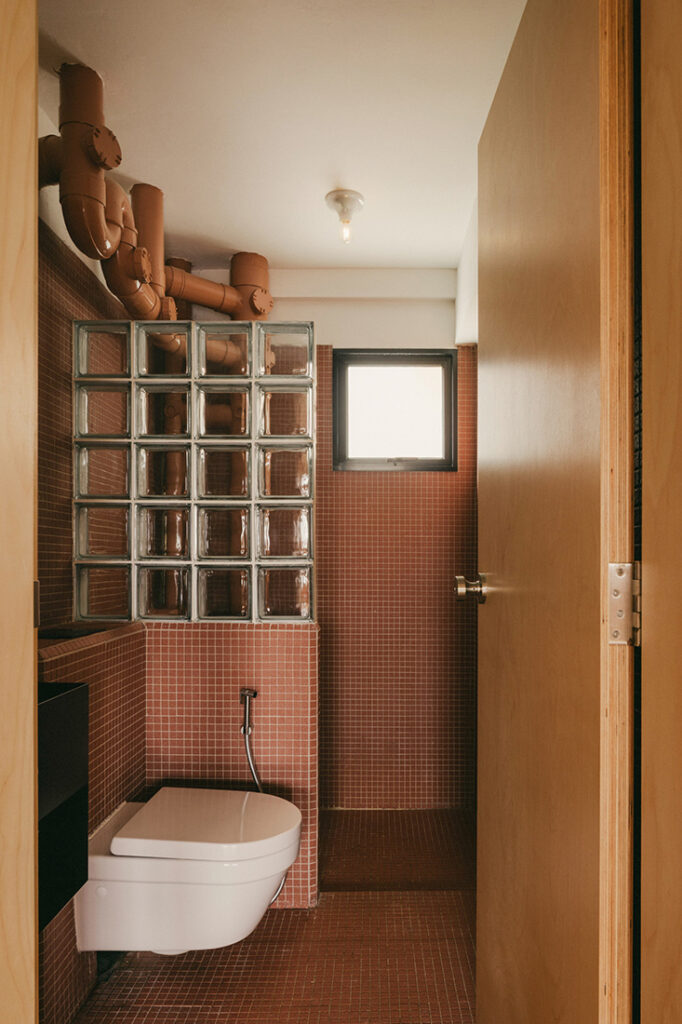
Elsewhere in the flat, finishes are used more broadly to signal shifts in function and movement. As Clifford notes: “Terracotta marks utilitarian zones such as the foyer, kitchen and yard, while engineered oak flooring softens the living and bedroom areas. As one moves along the house, rougher textures always signifies a change of space.”
Taken together, these decisions shape a home guided by lived experience rather than visual statement — one designed to support daily routines as the household grows.
LAR+D
www.local-architecture.sg
www.instagram.com/lard.sg
Photography by Marc Tan of Studio Periphery
We think you may also like Brutalist edges meet eco softness in a Bedok flat
DETAILS
PROJECT GALLERY
PROJECT GALLERY
Living Room
Dining Room
Kitchen
Corridor
Bathroom
Study
LATEST PROJECTS
HDB
1200 SQFT
Gentle Order – by Design Zage
Apartment
2088 SQFT
A party-ready kitchen and a private spa at The Interlace
Apartment
675 SQFT
A kitchen counter for everyone, including the cat
Apartment
1900 SQFT
One less bedroom, more room to gather
HDB
1216 SQFT
From awkward to cosy and ready for hosting
Apartment
1572 SQFT