As kitchens become more connected to the rest of the home, Pepa Casado of Futurea explains why adaptability, finishes and small details matter more.
Featured images: The new Kairos 2026 collection from Viefe
The kitchen has always had to work hard, but expectations around it are growing. No longer simply a room for cooking or a zone to be planned in isolation, it is increasingly expected to support conversation, storage, entertaining, work-from-home routines and everyday rituals, while still looking calm enough to sit comfortably beside the dining or living area.
That shift sits at the centre of the Viefe Kitchen Trends Report 2026–2028, developed by Spanish architectural hardware brand Viefe in collaboration with Futurea, the trend research studio founded by Pepa Casado. Presented recently in Singapore as part of an EDL x Viefe Product Launch and Trend Talk at the EDL Gallery, the report explores how kitchens are becoming more adaptable, integrated and attuned to wellbeing.
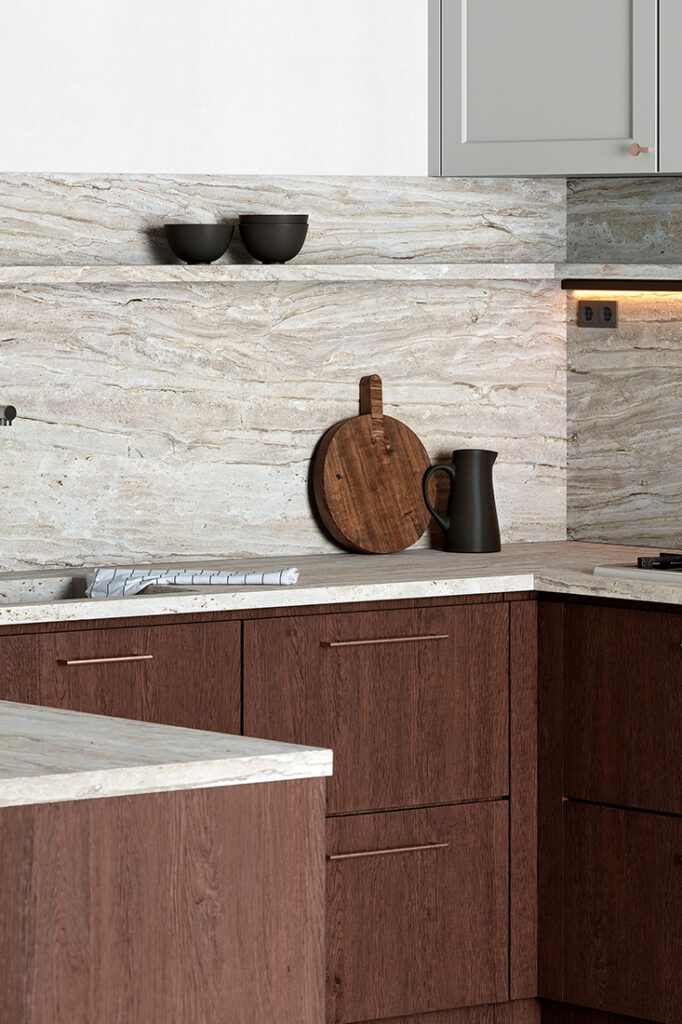
From utility to living space
For Viefe, this shift brings small details into sharper focus. When the kitchen is open to the rest of the home, handles and finishes are no longer purely practical choices. They are touched every day, seen from adjoining spaces, and can influence how cohesive the home feels.
“Ten years ago, the kitchen was a very utilitarian space, and the handles were very utilitarian too,” says Pepa. “But right now, the kitchen is fully integrated with the house. It is not just the space where you cook; it is also where you spend time with family and friends.”
This changes how designers and brands think about every visible part of the kitchen. “The technical and pragmatic side is obviously still there, but there are new layers to add – aesthetics, materials, colours and forms. Every element in the kitchen becomes important.”
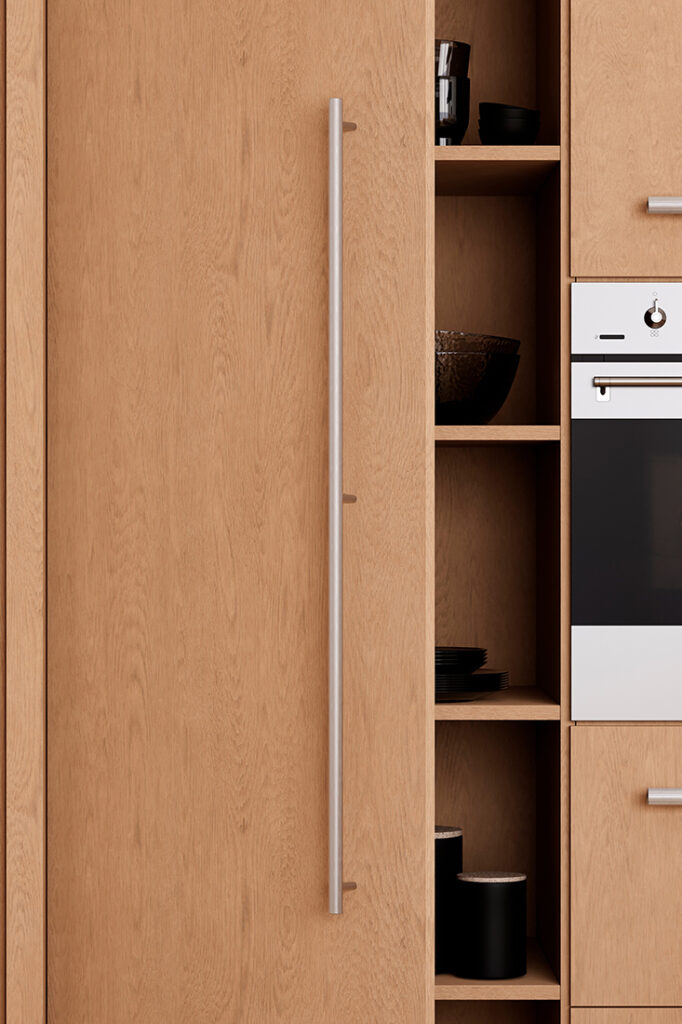
The compact-home test
For homeowners in Singapore, these ideas become most useful when tested against compact layouts, frequent cooking, storage needs and maintenance. A kitchen may be social and expressive, but it still has to deal with appliances, smells, clutter and daily use.
Rather than treating the kitchen as a fixed technical zone, the more useful takeaway is to consider how it sits within the wider home — visually, functionally and in relation to daily routines.
“We ask more and more from the house, and more and more from the kitchen, but at the same time homes are becoming smaller,” says Pepa. “The challenge is to design kitchens that respond to all those needs, but are also beautiful and comfortable.”
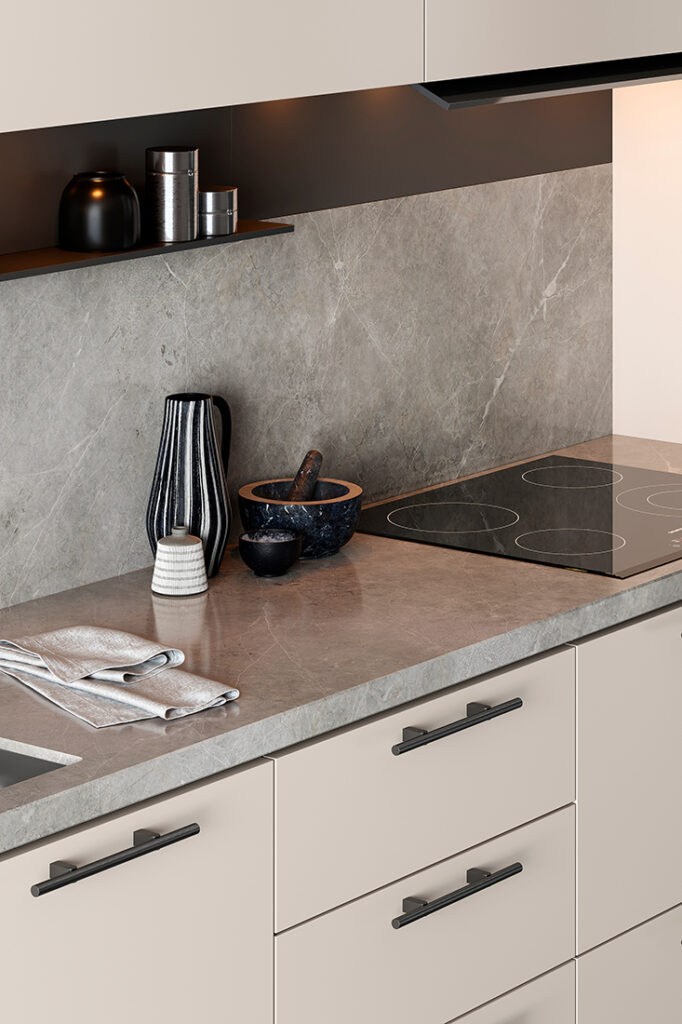
Adaptability, she adds, should not mean constant rearranging. “It is not about designing kitchens where you have to put things away or transform the space throughout the day,” she says. “It should be a space that can adapt in an easy and comfortable way.”
In practical terms, that could mean concealed zones that can be closed off when needed, storage that keeps appliances accessible but out of sight, or flexible elements that allow the kitchen to support more than one activity. It could also mean choosing fronts, worktops and hardware that feel more at home beside the dining and living areas.
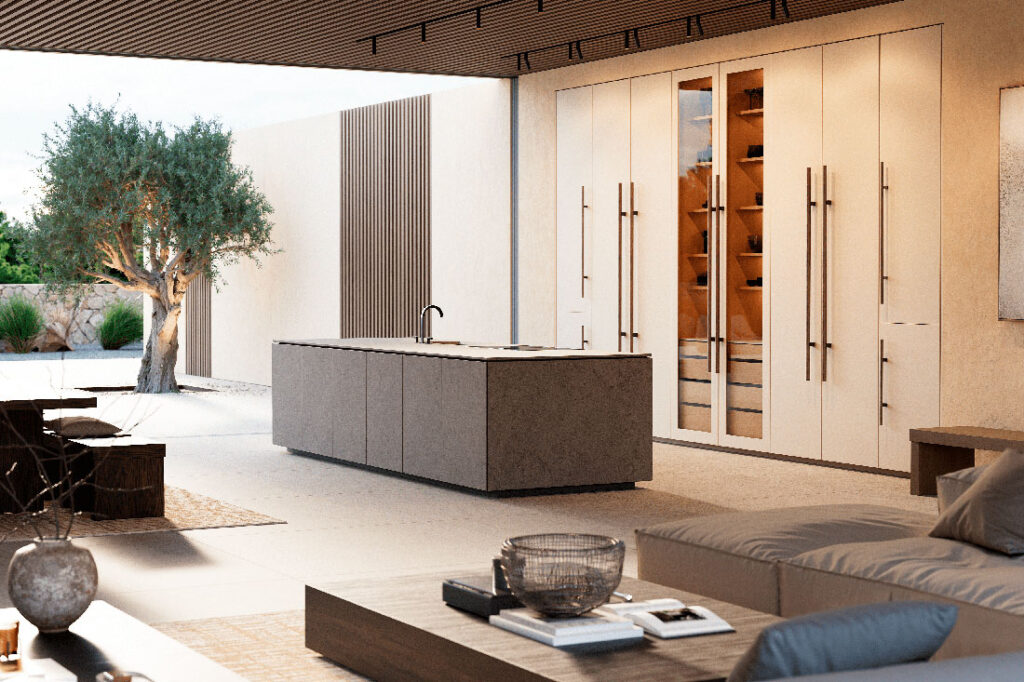
Small details, bigger impact
This is where Viefe’s Kairos 2026 collection fits in. Distributed in Singapore by EDL, the collection brings together coordinated series of handles, knobs, pull handles, door handles, wall hooks and door stoppers.
The point is not that a handle can transform a home on its own. Rather, it is that small details add up, especially in a kitchen that is visible from the dining or living area. A long pull on a pantry door, a discreet knob on an upper cabinet, or a finish repeated from cabinet to door can help the kitchen feel more resolved.
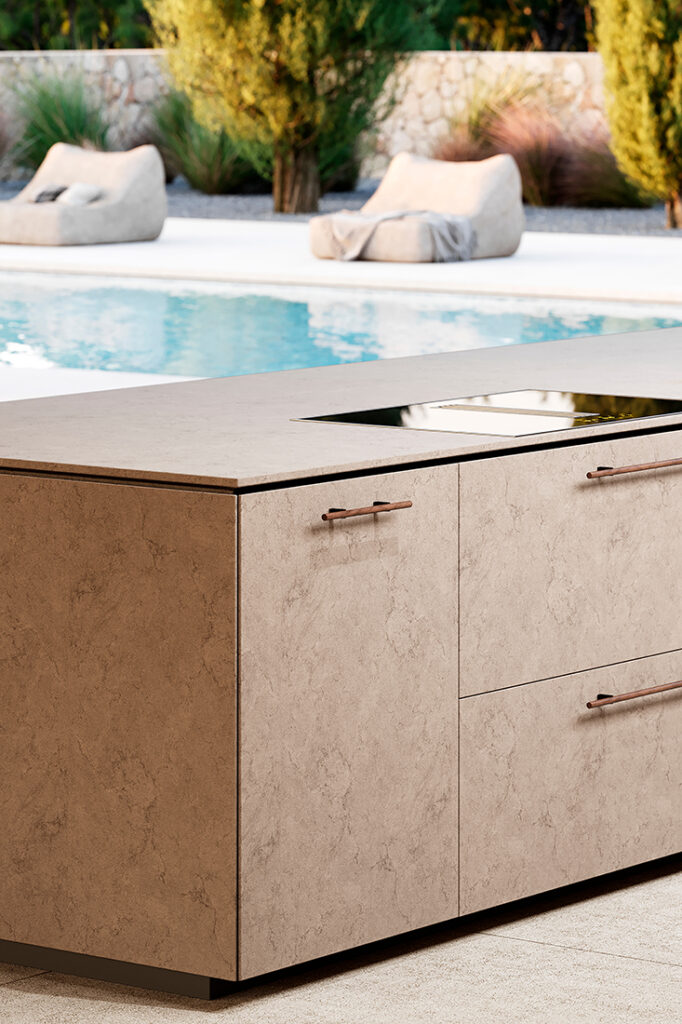
Pepa sees this as part of Viefe’s current direction. “They are working very hard on new materials,” she says, referring to natural wood and finishes that can be used across different settings, including outdoors.
This smaller scale of thinking is useful for homeowners too, especially when a full renovation is not on the cards. Changing handles, refining finishes or reworking selected details can refresh a kitchen without tearing everything out — and help the space feel easier to use, and more naturally part of the home.
Viefe in carried in Singapore by EDL
We think you may also like CES 2026 and the rise of practical intelligence at home
The kitchen’s expanding role